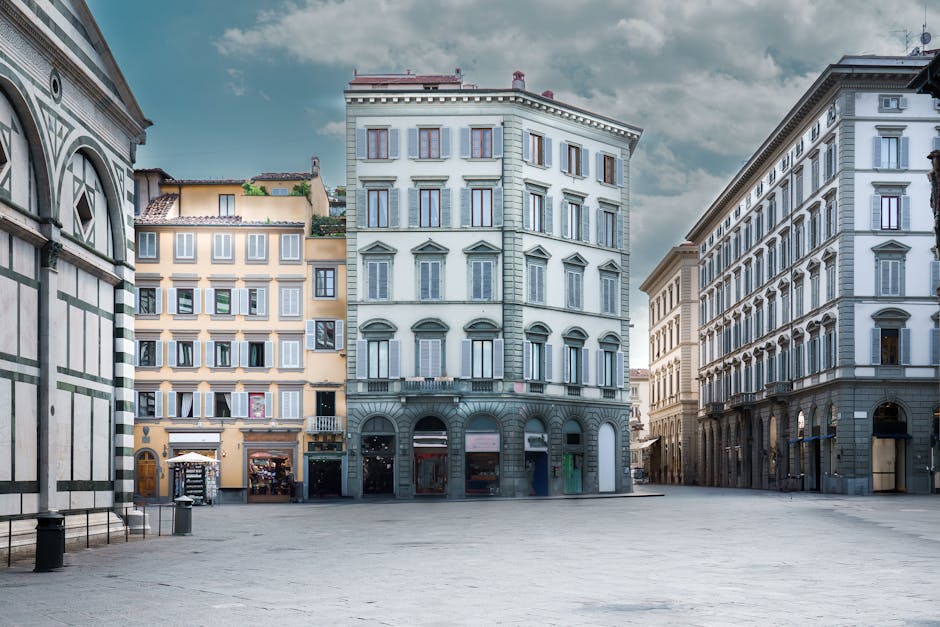






Introduction: Why a heritage walking route through Florence’s historic center
Florence, the cradle of the Renaissance, is an open-air museum listed as a UNESCO World Heritage site. Walking through its historic center means following in the footsteps of Dante, Michelangelo, Leonardo da Vinci and the great patron families like the Medici. This heritage walking itinerary is designed to give you a full immersion: monumental art, civic and religious architecture, traditional workshops and viewpoints over the Arno. It’s paced for a busy but doable single day, or it can be spread over two days depending on your rhythm.
Along the cobbled streets and piazzas, each stop offers multiple layers of meaning — political history, artistic innovation, medieval and Renaissance urbanism — as well as sensory experiences: the toll of church bells, the smell of leather in artisan shops, the warm light falling on ashlar facades. The goal of this route isn’t just to tick off monuments, but to enter a coherent urban story: how Florence, a small Tuscan city, shaped European taste and exported artistic forms that became universal.
This route favors slow walking, alternating museum visits with outdoor sequences, and breaks to taste the local cuisine. Distances are short — most points of interest lie within a 1.5–2 km radius — but the information density is high. In the itinerary you’ll find: exact coordinates (full addresses), usual opening hours, indicative prices in euros, detailed immersive descriptions of the sites and practical tips to optimize your visits (bookings, best times, accessibility options, transport and safety).
Before you start: always check official sites for the latest opening hours and ticket prices; many monuments require online reservations to avoid long lines. Wear comfortable shoes, bring a reusable water bottle (there are many drinking fountains), and pack a scarf or modest clothing if you plan to enter places of worship.
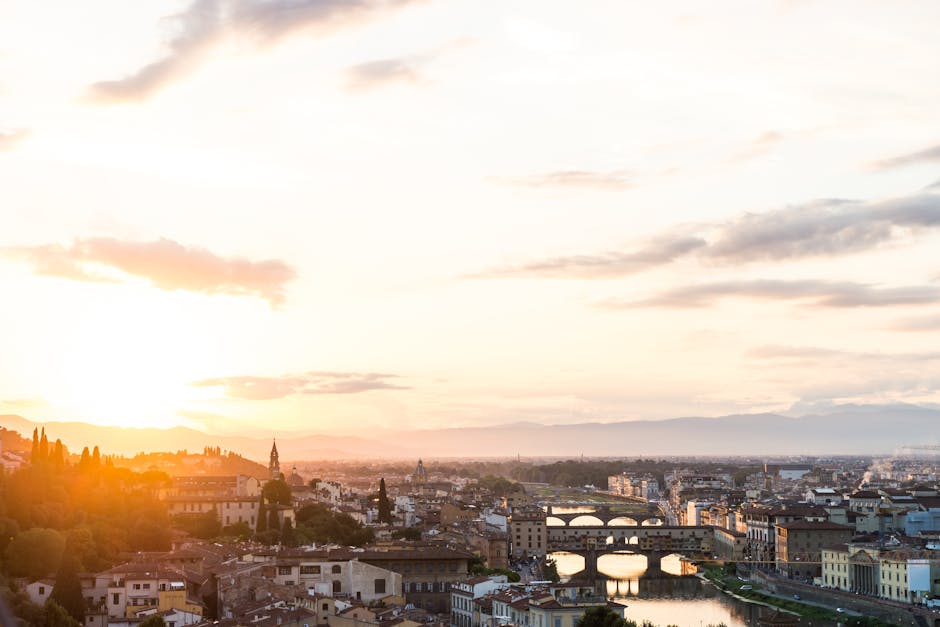
Behind every monument lies Florence’s story: you’re not just a spectator, you’re part of a living route. This guide walks you step by step, from the Duomo to Piazza Santa Croce, taking in essential museums and viewpoints over the Arno. Whether you’re an art enthusiast, an architecture buff or a curious traveler, this itinerary will help you make the most of your time and feel Florence’s soul on foot.
Section 1: The spiritual and artistic heart — Piazza del Duomo, Cathedral of Santa Maria del Fiore and the Campanile
Start your route at Piazza del Duomo, the nerve center of Florentine heritage. The Cattedrale di Santa Maria del Fiore (the Duomo) is located at Piazza del Duomo, 50122 Firenze FI, Italy. Its silhouette, dominated by Filippo Brunelleschi’s dome, is one of the city’s best-known symbols. The green, pink and white marble façade, the finely carved portals and the vast, luminous interior invite contemplation.
Address: Cattedrale di Santa Maria del Fiore, Piazza del Duomo, 50122 Firenze FI.
Opening hours (indicative): 09:00 – 17:00 (hours may vary by season and religious celebrations).
Price (indicative): Duomo complex ticket (access to cathedral, dome, baptistery, crypt, museum and campanile): around €18 – €20. Access to the nave may be free at certain times but booking is strongly recommended for climbing the dome.
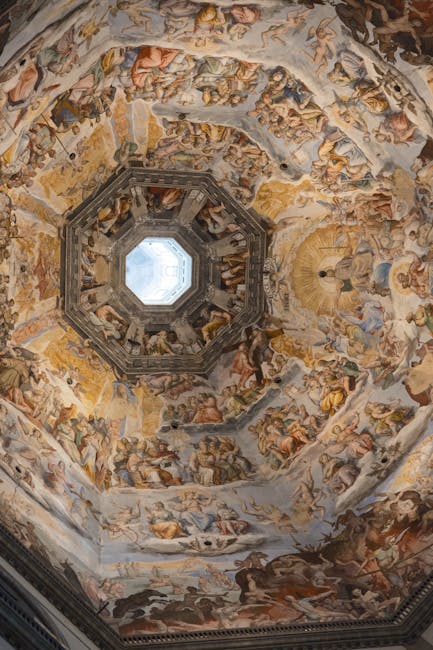
Immersive detail: enter the nave and look up to admire the Last Judgment painted by Giorgio Vasari and Federico Zuccari on the dome’s interior. The climb of 463 steps to the dome reveals intimate views of the brick structure, the play of stonework and, at the top, a breathtaking panorama over Florence. The Campanile di Giotto, adjacent to the cathedral, offers a different vantage point — a taller, more slender tower rich in sculpted bas-reliefs.
 Click here to book timed entry for Giotto’s bell tower
Click here to book your climb of Brunelleschi’s dome
Practical tips: buy a combined ticket online to avoid the line, arrive early for the dome climb (better light and shorter waits), wear closed shoes for the stairs, and allow 90–120 minutes if you plan to climb the dome and visit the museum. For photos, morning light illuminates the western façade; late afternoon brings out the marble reliefs.
Section 2: Walking through the Renaissance — Uffizi Gallery and Piazza della Signoria
After Piazza del Duomo, head to the Galleria degli Uffizi (Piazzale degli Uffizi, 6, 50122 Firenze FI). This museum houses some of the most famous Renaissance paintings: Botticelli’s The Birth of Venus, the Annunciation and works by Leonardo da Vinci, Michelangelo and Raphael. From there the walking route leads to Piazza della Signoria, Florence’s political and artistic salon, home to the Palazzo Vecchio and the sculptural ensemble on the Loggia dei Lanzi.
Uffizi address: Piazzale degli Uffizi, 6, 50122 Firenze FI.
Uffizi hours (indicative): 08:15 – 18:30 (often closed on Mondays); check seasonal opening times.
Uffizi price (indicative): Standard ticket around €20 – €25 (online reservation recommended; supplements for temporary exhibitions).
Immersive description: enter through the courtyard and climb the stairs into a maze of galleries; each room is lit to showcase works framed by windows overlooking the Arno and the Loggia dei Lanzi. At Piazza della Signoria, pause before the Fountain of Neptune and the replica of Michelangelo’s David; let your eyes travel across Palazzo Vecchio’s façades, a reminder of a civic authority that still feels palpable today.
Click here to reserve your skip-the-line ticket for Palazzo Vecchio
Practical tips: prioritize mornings for the Uffizi or book a themed guided tour (Botticelli, portraits, drawings) for a richer experience. Piazza della Signoria is a great spot for a café break on a terrace; avoid peak lunch hours if you want a sunny table. For photographing the Loggia dei Lanzi, the golden hour (late afternoon) gives excellent light on the sculptures.
Click here to book timed entry to the Uffizi
Section 3: Sculpture and workshops — Galleria dell’Accademia, Museo Nazionale del Bargello and artisan workshops
Make your way to the Galleria dell’Accademia (Via Ricasoli, 58/60, 50122 Firenze FI) to see Michelangelo’s sculptural masterpiece: the David. Nearby is the Museo Nazionale del Bargello (Via del Proconsolo, 4, 50122 Firenze FI), an old palace and prison transformed into the national sculpture museum, with works by Donatello, Verrocchio and other masters.
Accademia address: Galleria dell’Accademia, Via Ricasoli, 58/60, 50122 Firenze FI.
Accademia hours (indicative): 08:15 – 18:50 (often closed on Mondays); booking a skip-the-line ticket is advised.
Accademia price (indicative): Entry around €16 (standard rate; reductions for youth and EU residents under conditions).
Bargello address: Museo Nazionale del Bargello, Via del Proconsolo, 4, 50122 Firenze FI.
Bargello hours (indicative): 08:45 – 14:00 (hours vary; generally closed Monday or Sunday depending on season).
Bargello price (indicative): Entry around €8 – €10.
Immersive detail: the Galleria dell’Accademia highlights the contrast between David’s monumental scale and the sketches, models and artistic tools on display. At the Bargello, stone-walled rooms reveal works under nuanced museum lighting: Donatello in bronze, reliefs and portrait busts. Between the two museums, wander the alleys where leather and gilding workshops are still active; some studio-shops on Via dei Calzaiuoli and Via dei Neri welcome visitors to watch artisans work leather or mosaics.
Practical tips: buy tickets in advance, and if you’re a photographer, follow the rules (non-flash photography is often allowed in certain rooms). For workshops expect brief demonstrations, often free. If you plan to buy leather, haggle politely and ask about provenance (check for the « Made in Italy » label). There are guided « craft and artisan » tours that combine a few workshops with stops at historic shops.
Click here to book your skip-the-line ticket for the Accademia
Section 4: The Arno’s banks and a panorama — Ponte Vecchio, Palazzo Pitti and the Boboli Gardens
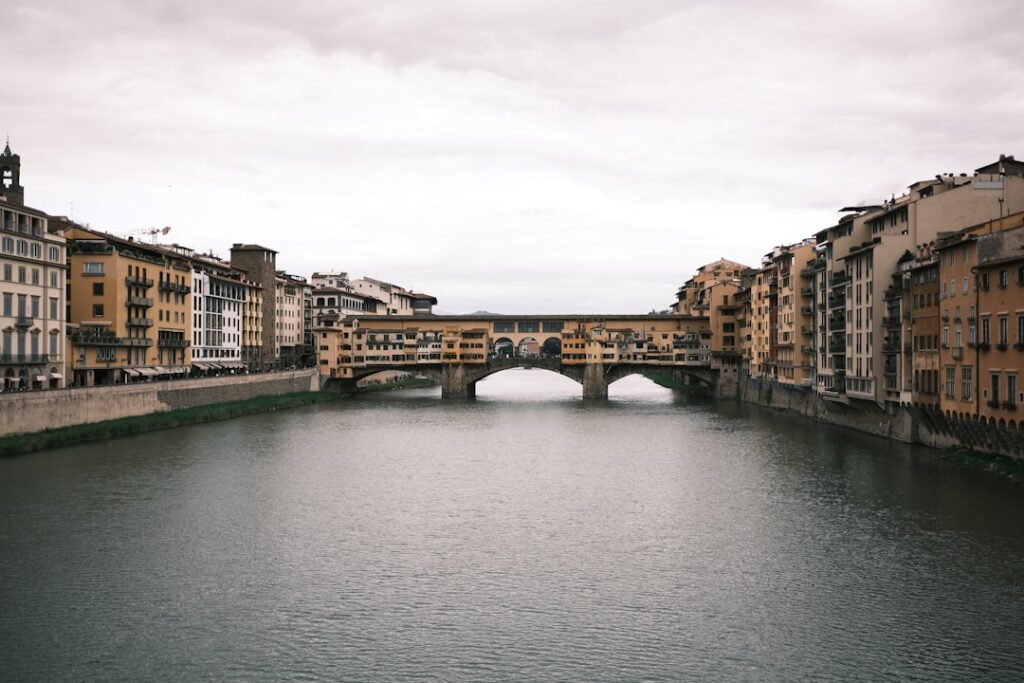
Head back down to the Arno and cross the Ponte Vecchio, famous for its jewelers and its medieval structure. The bridge connects the museum district to the Oltrarno neighborhood, more residential and artisanal. On the southern bank you’ll find the Palazzo Pitti (Piazza Pitti, 1, 50125 Firenze FI), the vast Medici palace housing multiple museums; right behind it stretch the Giardini di Boboli (Boboli Gardens), a grand Italian garden with sculptures, grottoes and sweeping landscape perspectives.
Ponte Vecchio address: Ponte Vecchio, 50125 Firenze FI.
Palazzo Pitti address: Palazzo Pitti, Piazza Pitti, 1, 50125 Firenze FI.
Palazzo Pitti hours (indicative): 08:15 – 18:50 (varies by section and internal museums).
Palazzo Pitti + Boboli price (indicative): Combined ticket around €12 – €16 (separate rates vary).
Immersion: while crossing Ponte Vecchio, notice the colorful façades reflected on the water and the overhanging shop structures. At Palazzo Pitti, stroll through the Royal Apartments to get a sense of princely taste and the painting collections. The Boboli Gardens behind the palace provide green breathing space: shaded paths, baroque fountains, amphitheaters and city views. Climb the hill for one of the best panoramas over the red roofs and the Duomo silhouette.
Click here to buy your ticket for Palazzo Pitti and Boboli
Practical tips: to avoid crowds on Ponte Vecchio, cross early in the morning or after 6pm. The gardens demand good shoes for sloping, sometimes stony paths. Bring a hat in summer: exposure can be strong. Oltrarno is great for lunch — look for a traditional osteria to try ribollita or a bistecca alla fiorentina (main course prices indicative €12–€35 depending on the restaurant).
Section 5: Religious and civic heritage — Basilica of Santa Croce, Piazza Santa Croce and San Lorenzo
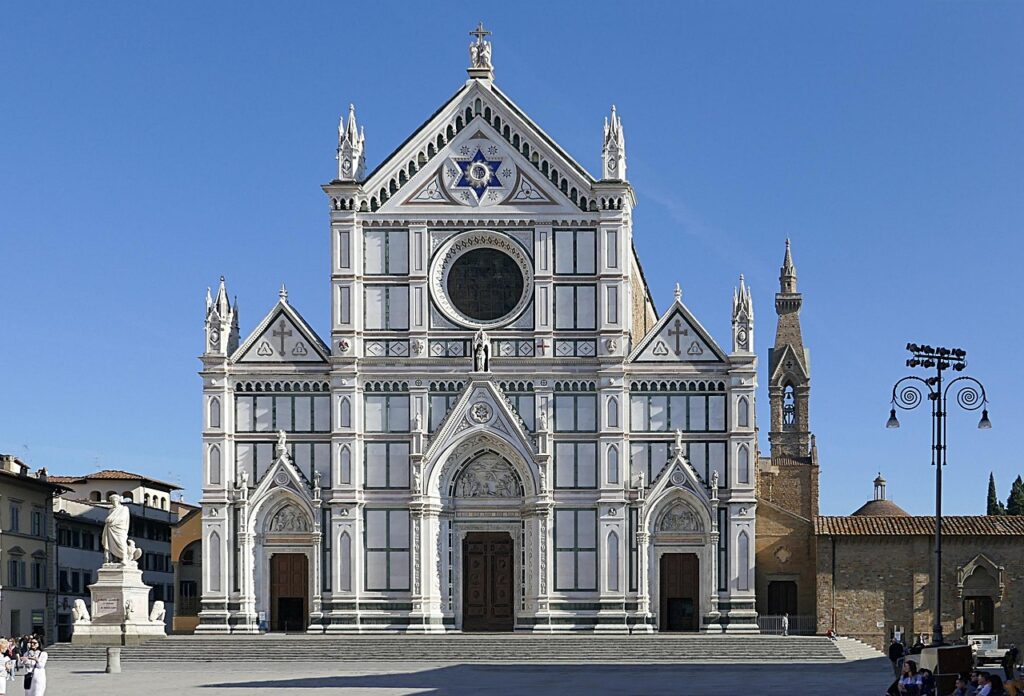
Finish your route with visits that tell civic and religious life: the Basilica di Santa Croce (Piazza Santa Croce, 16, 50122 Firenze FI) where figures like Michelangelo, Galileo Galilei and Machiavelli are buried, the Piazza Santa Croce with its markets and events, then the Basilica di San Lorenzo and the Mercato Centrale for a return to local flavors.
Santa Croce address: Basilica di Santa Croce, Piazza Santa Croce, 16, 50122 Firenze FI.
Santa Croce hours (indicative): 09:30 – 17:30 (check for closures during ceremonies or exceptional events).
Santa Croce price (indicative): Entry around €8 – €10.
Immersive description: the white-stone façade and the 13th-century sky contrast with the rich interior: decorated chapels, frescoes and monumental tombs. Piazza Santa Croce often buzzes with artisan markets or historical reenactments like Calcio Storico; it’s an excellent place to observe local life. A short walk away, the Basilica di San Lorenzo (Piazza San Lorenzo, 9, 50123 Firenze FI) and the Cappella dei Medici (in the Sacristy) illustrate the importance of private patronage in religious urban planning.
Click here to book your ticket for the Medici Chapels
The Mercato Centrale (Piazza del Mercato Centrale, 50123) lets you end the walk with an authentic meal: local products, cold cuts, cheeses and small stalls. Hours: often 08:00 – 00:00 for the food hall (individual stalls have variable hours). Price: for a full meal at the stalls, expect €8 – €20 per person depending on your choices.
Practical tips: Santa Croce and San Lorenzo are quieter in the late afternoon. If you want to visit the Cappella dei Medici, book separately — access is limited and in high demand. Use Mercato Centrale to buy gastronomic souvenirs: olive oil (250 ml bottle ≈ €8–€15), aged balsamic vinegar (small bottle ≈ €12–€30). Watch for pickpockets in very touristy areas; keep your documents and money secure.
Conclusion: Final tips for a complete heritage experience on foot
A heritage walking itinerary through Florence’s historic center is more than a list of sights; it’s about understanding a city whose every stone records a political decision, an artistic invention or a workshop’s gesture. To get the most from this route, plan ahead: book must-see tickets (Duomo, Uffizi, Accademia), choose time slots to avoid crowds and leave room for wandering down side streets.
Practical tip: the Firenze Card is an option for those who want to visit multiple museums over 72 hours — it often includes skip-the-line access but weigh its value against your itinerary. Online reservations will save you a lot of time; some sites require an exact entry time. For dining, favor small osterie and markets for the best value; avoid strictly tourist restaurants on main piazzas if you’re after authenticity and fair prices.
Health and safety: get travel insurance if you carry expensive photo gear. In summer, heat can be intense — stay hydrated and enjoy shaded cafés. In winter, museums provide warm refuges; check closure days (many close on Mondays or vary seasonally).
Finally, leave a few hours to watch the city rather than photograph it. Climb to the Piazzale Michelangelo viewpoint for the full panorama (accessible on foot or by bus; address Piazzale Michelangelo, 50125 Firenze FI) and let sunset highlight the Duomo’s volumes and the ochre roofs. Florence is best discovered on foot: every turn reveals a sculpture, a workshop, a trattoria steeped in history. Take your time, savor it, and let Florence tell you its thousand stories.