





INTRODUCTION
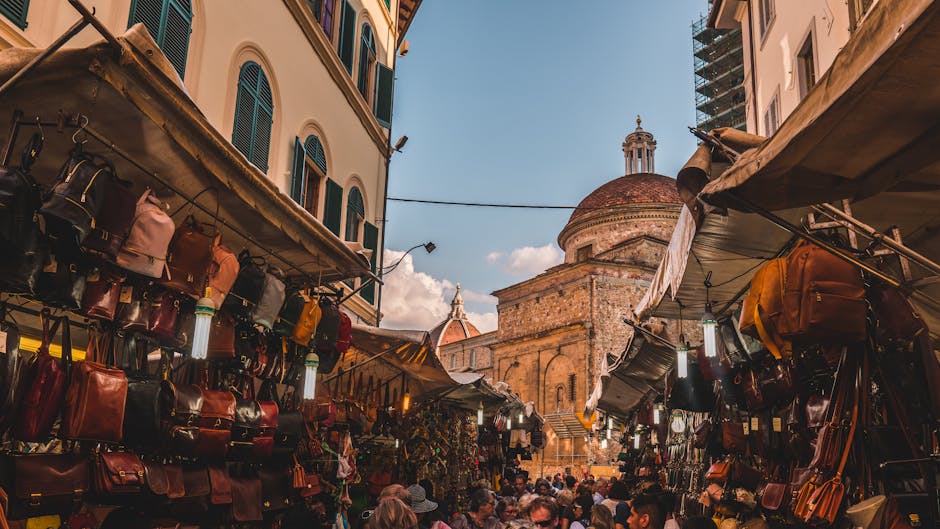
Florence is not just the birthplace of the Renaissance — it’s a city where commerce has shaped urban life for centuries. The squares and market halls of the Tuscan capital still host historic markets where artisans, producers, antique dealers and food lovers cross paths — a heady mix of authenticity and street theatre. Getting lost in these markets means stepping into the daily life of Florentines: smelling spices, feeling hand-worked leather, listening to the gentle barter, watching gestures passed down through generations. These places are both economic engines and living museums where heritage is sold, showcased and reinvented.
In this guide we’ll explore Florence’s main historic markets: Mercato Centrale (Mercato Centrale di San Lorenzo), the Loggia del Mercato Nuovo (Mercato del Porcellino), Mercato di Sant’Ambrogio, Mercato delle Cascine and the antique markets around Piazza dei Ciompi. For each spot I give the exact address, usual opening times, realistic price ranges, immersive descriptions and practical local tips — everything you need to plan a day of cultural shopping, avoid tourist traps and bring back meaningful souvenirs.
Expect encounters: the fishmonger who shares his secret for a fish soup, the cobbler who shows you how to spot good Tuscan leather, the chef slicing a chunk of porchetta just out of the oven. These markets are a full sensory experience: the smell of warm bread, bursts of dialect, rows of colorful vegetables, displays of hand-painted ceramics and filigree silver. They’re also places of history: Mercato Centrale sits near the Basilica of San Lorenzo and the old trade routes, while Mercato del Porcellino occupies a historic loggia where skins and fabrics were once traded.
Before you go, note a few practical rules: carry some cash for small purchases (many stalls now accept cards, but cash still rules), learn a few polite phrases in Italian (a “buongiorno” and a “grazie” often open conversations), check opening days and hours — some markets close on Sundays or run reduced hours — and be aware of rules on exporting certain foodstuffs or plants. Finally, be ready to negotiate tactfully for secondhand or handmade items: bargaining exists in Italy but it should remain respectful.
In the sections below, each dedicated to a specific market, I describe the atmosphere, star products, indicative prices in euros, the best times to visit, and tips on where to eat, buy leather or ceramics, or hunt for vintage pieces. Visual cues will help you picture the most photogenic scenes — from sunset over the Ponte Vecchio to fragrant charcuterie stalls at Mercato Centrale. Grab a reusable bag and comfortable shoes: Florence reveals itself through its markets.

Mercato Centrale di San Lorenzo: the culinary heart and a living workshop
Address: Piazza del Mercato Centrale, Via dell’Ariento, 50123 Firenze.
Opening hours: Ground floor (food market area): Monday–Saturday 7:00–14:00 (most stalls closed Sunday). First floor / food court: daily 10:00–24:00 (hours extended on some evenings).
Price guide: Free entry; coffees and snacks from €2–3; prepared dishes in the food court €8–18; charcuterie/cheese portions €5–12; cooking workshops from €65–120 depending on length.
Mercato Centrale is one of the best places to understand Florentine food culture. Built in 1874 and recently renovated, the building kept its original purpose: a hall where producers and artisans sell directly to the public. The ground floor, with metal stalls and visible scales, remains a traditional market: butchers, fishmongers, greengrocers, cheesemongers and herb vendors sit alongside fresh pasta and olive merchants. Head upstairs to a large modern food court where chefs offer contemporary takes on Tuscan classics — ribollita, lampredotto, bistecca alla fiorentina served as snacks or shared plates.
The vibe changes by the hour: mornings bring the buzz of daily shopping; between 10:00 and 12:00 is ideal for sipping an espresso and studying the variety of produce; afternoons are quieter; in the evenings the food court turns into a lively social spot. Product labels often show provenance — useful if you’re hunting for DOP olives or Tuscan pecorino.
Practical tips: bring a small insulated bag if you buy fish or meat; check prices before ordering (some stalls display them, some don’t); for shared plates budget €15–25 per person in the food court for a full meal and a drink. If you dream of a cooking class, book ahead — most workshops start around €65 for 2–3 hours and include tasting and take-home recipes.
Highlights: top-quality produce, live demos by master butchers and cheesemongers, wide variety of stalls. Downsides: can be very touristy in parts; some vendors cater more to visitors than locals (visit in the morning for a more authentic experience).
 Click here to taste local white wines at a nearby winery
Click here to visit the Accademia to see David

Loggia del Mercato Nuovo (Mercato del Porcellino): souvenirs, leather and the lucky boar
Address: Via Por Santa Maria, 50123 Firenze — between the Piazza del Duomo and the Ponte Vecchio, facing the Museo dell’Opera del Duomo and near the Porcellino statue.
Opening hours: Stalls typically open daily from roughly 9:00 to 19:00; hours vary by season and vendor (some close earlier in winter).
Price guide: Souvenirs and small leather goods €5–60; artisan leather bags and jackets €50–350 depending on quality; postcards and magnets €1–5.
The Loggia del Mercato Nuovo is a covered Renaissance loggia that hosts a busy souvenir market. Its strategic location, so close to the Duomo and Ponte Vecchio, puts it squarely on most visitors’ routes. The best-known feature is the fountain and bronze boar statue — the Porcellino: tradition says you rub the boar’s snout and slip a coin into its mouth for good luck — a photo-ready ritual, though be cautious (pickpockets often hover nearby).
This market is known for leather goods: belts, wallets, bags and jackets. Be careful to tell genuine handmade leather from mass-produced items. To spot quality leather, touch it (it should be supple and springy), smell it (real leather has a distinct scent), check the stitching (it should be even) and ask about origin (« Made in Italy » or « Made in Florence » are good signs but ask for a receipt if you want proof). Bargaining is possible but limited: on a €50 item you might offer 5–10% less; for larger purchases (several pieces) you can sometimes get 10–20% off.
Practical tips: beware of claims of « genuine leather » without a receipt; request one if the item exceeds €154.94 and consider VAT refund procedures if you’re non-EU. Avoid peak hours (11:00–15:00) when tourist traffic is highest. For a great Porcellino photo, arrive early to beat the crowds.
Click here to book your ticket to the Duomo complex
Mercato di Sant’Ambrogio: a Florentine market for fresh produce and small craft stalls
Address: Piazza Ghiberti, 50122 Firenze — a 10–15 minute walk from the Duomo, between the San Frediano neighbourhood and the historic centre.
Opening hours: Outdoor market and food stalls: Tuesday–Saturday 7:00–14:00. Some covered shops and butchers may open earlier and stay open into the afternoon. Sunday and Monday: variable, market usually smaller.
Price guide: Fruit and vegetables €1–5 per kilo depending on season; artisanal cheese €12–25/kg; charcuterie (salami, prosciutto) €15–30/kg; artisanal bread €2–5 per loaf.
Mercato di Sant’Ambrogio is less touristy than Mercato Centrale and is often called « the Florentines’ market. » Set on Piazza Ghiberti, it offers a balanced mix of food stalls and small craft stands. Vendors here prioritize nearby quality: local producers, Tuscan cheesemakers and butchers who know their regulars. The experience feels more intimate and more focused on everyday shopping than on souvenirs.
Wander the aisles to smell oven-warm bread, see fish freshly delivered (seasonal), and taste local specialties. Several small butchers sell ready-to-go portions: lampredotto sandwiches (the traditional tripe sandwich) from €4–6; arancini and fried snacks €3–5 each. The market is also ideal for cooking ingredients: dried chilies, sun-dried tomatoes, extra virgin olive oil (500 ml bottles from around €8–18 depending on quality).
Practical tips: go early (7:00–10:00) to get the best picks and the true Florentine rhythm; bring reusable bags and small pouches for delicate items; ask the cheesemonger for a taste before buying pricier cheeses. If you’ll be cooking in an apartment, this is the best place to buy fresh, affordable portions.
Mercato delle Cascine: Florence’s large open-air market in Parco delle Cascine
Address: Parco delle Cascine, Viale degli Olmi, 50144 Firenze (market runs along the park, on the northwest side along the main path).
Opening hours: Weekly market: Tuesday 7:00–14:00 (official market day). Special events and night markets may happen at other times depending on the season.
Price guide: New clothes and accessories €5–50; household items €3–30; fruit and vegetables €1–4 per kilo; secondhand items from €2.
Mercato delle Cascine is Florence’s big popular market, held every Tuesday in the vast Cascine Park — once a noble estate, now a public green space. This is a different experience: a long stretch of outdoor stalls selling clothes, accessories, tools, small furniture, secondhand books and sometimes food stands. Locals come for practical, low-cost shopping and to hunt for unusual finds. The atmosphere is relaxed and unmistakably local.
If you love thrift shopping, bargain hunting and street vendor theatre, Cascine is a must. Expect vintage leftovers, tools, vinyl records and occasional handcrafted items. Vendors here are used to haggling: for clothing or a bundle of items, offering 20–30% less is common. Be careful about quality: check seams and zippers to avoid unpleasant surprises.
Practical tips: arrive early for the best selection (or late morning if you want to score bargains on unsold items); bring a sturdy bag for bulky purchases; watch your belongings as crowds can attract thieves. Photographers will enjoy the park setting and long avenues for early-morning compositions.

Antiques and flea markets: Piazza dei Ciompi and the surrounding area
Address: Piazza dei Ciompi, 50122 Firenze (historic quarter, east of Piazza della Signoria).
Opening hours: Antique and flea market hours vary by season — stalls appear during the week and the market expands on Thursday, Friday and Saturday, generally 9:00 to 19:00; some vendors stay open on Sunday. Check local listings for exact dates (special events and fairs).
Price guide: Small trinkets and curios €5–40; lamps and old frames €50–250; antique furniture €100–1500 depending on condition and rarity; paintings and ceramics €40–600.
Antique lovers will find a cluster of stalls and small shops around Piazza dei Ciompi dedicated to vintage objects. Unlike food markets, these purchases require method: check provenance, condition, previous repairs and structural stability. Tables of old books, gilded mirrors and traditional Tuscan ceramics can hold real treasures — but you should know how to spot modern reproductions and heavy restorations.
Bargaining is common in this world: on a €400 listed item you might start negotiating at €300 if you can pay cash and take the piece immediately. Professional dealers sometimes offer delivery for an extra charge — agree on this before you pay. For significant artworks, ask for an invoice and authenticity paperwork if available.
Practical tips: bring a tape measure for furniture; consult a local restorer to assess condition for important purchases; check export restrictions for certain artworks and research VAT procedures for non-EU travellers. For one-off sales, check the municipality’s page or on-site notices for special fairs and market dates.
Click here to visit Palazzo Vecchio with an audio guide included

Practical tips for buying and taking purchases home: transport, insurance and best practices
Shopping in Florence’s historic markets is a delight but it takes some organisation. Here are concrete tips to make the most of purchases and avoid hassles:
- Cash and cards: bring some banknotes and coins: many stalls accept cards (mobile terminals) but not all. Carrying €50–100 in cash covers spontaneous buys and small vendors.
- Tax Free / VAT: for non-EU travellers the minimum for VAT refunds is generally €154.94 per invoice (check the exact amount at the time of purchase). Ask the seller for a tax-free form and keep the receipt for customs control.
- Transport and packaging: an insulated bag for food, bubble wrap for ceramics, and a sturdy daypack for market treasures. For large purchases (furniture, big paintings) negotiate delivery with the seller or contact a local shipping company.
- Authenticity and quality: for leather, ask about the hide’s origin and get a receipt; for silver jewelry ask for the 925 stamp; for artworks request certificates and provenance when possible.
- Security: keep valuables in an inner pocket and avoid flashing large sums or phones in busy markets. Pickpockets often target crowded spots like Mercato del Porcellino.
- Hours and seasons: choose mornings for food markets and arrive early at Mercato delle Cascine on Tuesdays to beat the crowds. Check for public holiday closures (Christmas, New Year’s Day, Republic Day).
Finally, remember that buying at a historic market is also a cultural act. Take time to talk with sellers, learn the story behind an object, and savour a local moment instead of hunting standard souvenirs. By respecting vendors and choosing quality, you support a living heritage that enriches Florence.
Must-do experiences and suggested routes
To get the most from Florence’s historic markets, here are two suggested routes — a half-day and a full-day — with practical tips and highlights.
Half-day route (morning) — for food lovers and leisured wanderers:
- 08:30 — Start at Mercato di Sant’Ambrogio (Piazza Ghiberti) to buy fresh bread, cheese and cured meats. Enjoy the local atmosphere. Duration: 1h30.
- 10:15 — Head to Mercato Centrale (Piazza del Mercato Centrale, Via dell’Ariento). Browse the ground floor then go upstairs to the food court for an espresso and an antipasto. Duration: 1h30–2h.
- 12:30 — Leisurely walk to the Loggia del Mercato Nuovo (Via Por Santa Maria) to see the Porcellino and hunt for a small leather souvenir. Finish around 13:30.
Full-day route — bargain hunting, eating and discovering:
- 08:00 — Mercato delle Cascine (Parco delle Cascine): browse textiles, dig through vintage stalls, enjoy a cappuccino by the park. Duration: 2h.
- 10:30 — Make your way to Sant’Ambrogio for fresh produce and local street food (lampredotto). Duration: 1h.
- 12:00 — Lunch break at Mercato Centrale food court. Duration: 1h30.
- 14:00 — Afternoon for antiques: Piazza dei Ciompi and nearby shops. Haggle for furniture or ceramics. Duration: 2–3h.
- 17:30 — Return to the Loggia del Mercato Nuovo for a sunset Porcellino photo and some late shopping. Finish around 18:30–19:00.
Logistics tip: walk between markets when you can — Florence is compact and its medieval streets offer charming shortcuts. Use taxis or the ATAF bus network for longer hops, and note that most markets allow baskets or small wheeled trolleys to carry heavier purchases home.
Click here to Climb Giotto’s bell tower and cathedral
CONCLUSION
Florence’s historic markets are more than shopping places: they are living spaces where memory, craft and daily life meet. From Mercato Centrale, the temple of Tuscan gastronomy, to the Loggia del Mercato Nuovo with its lucky Porcellino, through Cascine and the antique stalls around Piazza dei Ciompi, each market shows a different face of the city. Buying here means taking home a piece of history and supporting artisans and producers who keep sometimes centuries-old practices alive.
Beyond addresses and opening hours, the real value is human exchange: the producer who lets you taste his olive oil, the saddler who explains tanning, the bookseller who tells you a book’s backstory. Respect those exchanges, pay a fair price and ask questions — those gestures enrich the purchase. For travellers, remember the essentials: some cash, invoices for Tax Free refunds, quality checks before you buy, and vigilance against pickpockets in tourist-heavy spots.
Above all, give yourself time. Florence’s markets are meant to be savoured slowly, between a bite of lampredotto, a quick cappuccino and a conversation about the best wedge of pecorino. Whether you search for cooking ingredients, a handcrafted leather bag or an antique piece full of history, Florence offers an exceptional array of markets where heritage is lived and worn. Bring home not only objects but stories — and the certainty that in these markets, the city’s soul keeps being passed on.
