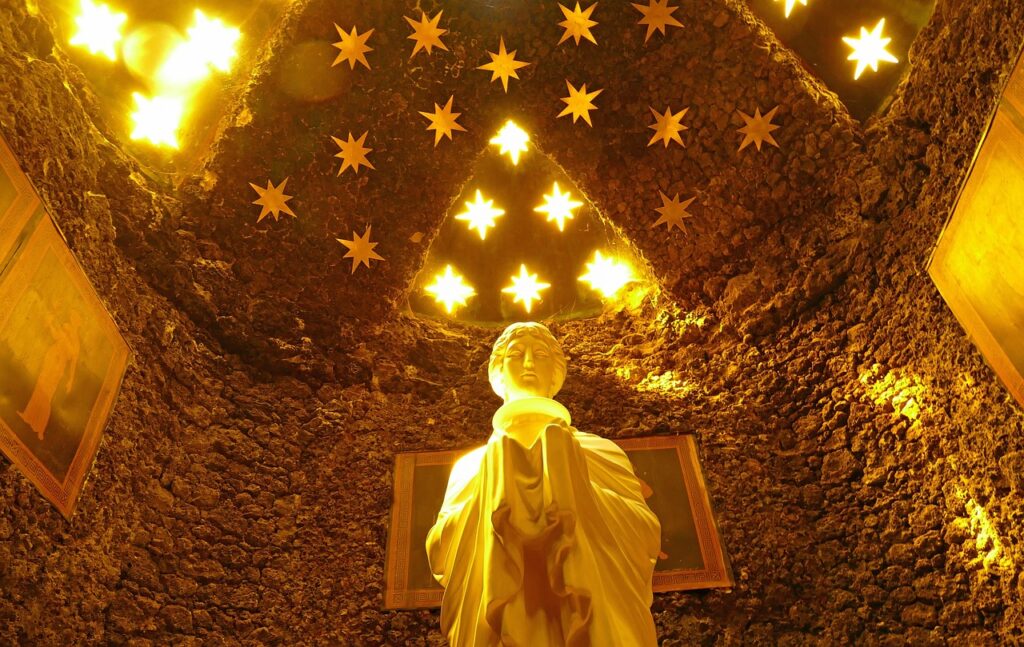






Introduction — Diving into the mysterious world of the Boboli grottoes
In the heart of Florence, tucked behind the imposing mass of Palazzo Pitti, lies the Giardino di Boboli, a vast Renaissance park that has set the scene for strolls, fêtes and architectural inventions of the Medici since the 16th century. Among its groves, fountains and statues rise singular constructions: grottoes and artificial caves — hybrid creations blending craft, sculpture, architecture and nature. These spaces, designed to surprise visitors, combine sculpture, trompe-l’œil, mosaics and water features to create caverns of dramatic effect — shady retreats and baroque stages celebrating Florentine aesthetic power.
The most famous is the Grotta del Buontalenti (also known as the Grotta Grande), the work of Bernardo Buontalenti around 1583, located in the center of the garden and backed by the terraces of Palazzo Pitti. It presents itself as an elaborately decorated artificial cave with sculpted stalactites, mythological statues, frescoes and grotesque elements. Originally, these structures were theatrical settings for festivities meant to astonish; today they act as a time capsule revealing the tastes, myths and techniques of the Court artists.
Exploring these grottoes also means tracing a story of power and taste: from the Medicis to the Lorenas, each generation reshaped the landscape. Beyond the Grotta del Buontalenti, the garden hides other mysterious niches, alcoves and small dark caverns that punctuate your walk. The modern visitor seeks not only illusion but also intimacy and cool shade on hot summer days.
In this article we offer a full, immersive visit: detailed descriptions of the grottoes, addresses, opening hours, prices in euros, practical local tips, accessibility information and recommendations to get the most from your trip to Florence. Lace up your walking shoes, grab your camera and bring your curiosity — the rest of this guide will help you own these enigmatic spaces like a savvy Florentine or a traveler hungry for authenticity.
 Click here to book your Pitti Palace and Boboli Gardens ticket

History and architecture of the grottoes: the Grotta del Buontalenti and its neighbors
The Grotta del Buontalenti is a masterpiece of baroque illusion. Designed by Bernardo Buontalenti for the Medici family, it merges natural and artificial elements to recreate a fantastical cave. From the outside the façade looks rustic; inside you discover a world of sculpted stalactites, niches sheltering statues — often drawn from Greco-Roman mythology — and stucco mosaics. The decoration plays with light and shadow: small windows, water basins and dim corners create a stage of contrasts.
The artificial grottoes of the Giardino di Boboli are not limited to a single cavity. Around the main grotto you’ll find exedras, loggias and small refuges, each designed to surprise the walker. The Grotta del Buontalenti sits on the lower terrace of the garden, close to Palazzo Pitti, and also served as a private salon for intimate receptions, rarely intended for the general public.
The ornamentation mixes marble, stucco, colored stones and shell marquetry — a whole baroque vocabulary meant to evoke idealized natural caverns. Some of the statues adorning the grotto are masterpieces by renowned artists; others are 19th-century copies made during restorations. Observant visitors will also notice more recent interventions intended to protect the structure from humidity and wear.
Click here to buy your combined ticket for David, Palazzo Pitti and the gardens

Exact address: Palazzo Pitti, Piazza de’ Pitti 1, 50125 Firenze FI, Italy. The grotto is visited as part of the Giardino di Boboli route and its entrance is included with the garden ticket (see the tickets section). The architectural and sculptural elements are fragile: please do not touch the reliefs and respect protective barriers.
Practical info — Tickets, prices, opening hours and access details
To plan your visit, here are the essential practical details. The Giardino di Boboli (Boboli Gardens) is managed by the Polo Museale Fiorentino and access conditions can vary depending on temporary exhibitions or conservation work.
- Main address: Giardino di Boboli, Piazza de’ Pitti 1, 50125 Firenze FI, Italia.
- Indicative prices (2024):
- Full ticket Giardino di Boboli: 12,00 €
- Reduced ticket (EU youth 18-25): 6,00 €
- Free entry: under 18 and holders of certain cultural aids (check conditions).
- Combined tickets (Palazzo Pitti + Giardino di Boboli + Museo degli Argenti): around 20,00 – 22,00 € depending on exhibitions.
- General opening hours (subject to seasonal variations):
- April to September: generally 08:15 – 18:30 (last entry 17:30).
- October to March: generally 08:15 – 16:30 (last entry 15:30).
- Annual closures: occasionally partial closures on January 1 and December 25; check before you go.
- Booking tips: reserve online on the official Florence Civic Museums site or the Giardino di Boboli website to avoid queues. Combined tickets and the Florence Card can offer better value if you plan to visit several museums.
Click here to buy a 5-day pass for the Uffizi, Pitti and Boboli
Access and entrances: there are several entrances to Boboli — the main entrance is at Palazzo Pitti, Piazza de’ Pitti 1. Other access points include Porta Romana (Piazza di Porta Romana) and an entrance on Via Romana. If you arrive by public transport, get off near the Ponte Vecchio (Via de’ Bardi) or from the main station Santa Maria Novella (Piazza della Stazione, 50123 Firenze) take ATAF buses 6, 11 or 14 depending on direction. Taxis can drop you off near Piazzale degli Uffizi/Ponte Vecchio.

Immersive visit: recommended route, duration and highlights
To fully enjoy the grottoes and the baroque atmosphere of Boboli, follow a route that mixes major sights and secret detours. Allow 2 to 3 hours for a relaxed walk through the garden including the grotto; if you plan to visit Palazzo Pitti and its museums (Galleria Palatina, Museo degli Argenti, Museo delle Porcellane), set aside a half day.
Suggested itinerary:
- Enter through Palazzo Pitti (Piazza de’ Pitti 1): start on the outer terraces that lead into the garden.
- Descend to the Grotta del Buontalenti: explore the interior, take in the textures and statuary. Take your time photographing the reliefs, but avoid flash where signs prohibit it.
- Walk toward the Viottolone and the Neptune Fountain: admire the landscape composition and climb back up toward the Limonaia and the upper groves.
- Pause at the Forte di Belvedere viewpoint if you want panoramic views of Florence (note: separate entry for the fortress).
Click here to book your Pitti Palace ticket with audio guide

Tips on timing and comfort: paths are often paved and sloped. Wear comfortable shoes, bring water (there are fountains but not always accessible drinking points), and pack a hat in summer. The grottoes provide welcome coolness by day and are also useful shelter from sudden rain.
Photography and conservation tips
Photographing the grottoes takes a bit of technique: low light, strong contrasts, and reflective surfaces. Use a fast lens, raise your ISO moderately and stabilize your camera. Respect signs that ban flash or touching. These sites are fragile heritage assets; their preservation relies in part on visitor behavior.
Local tips: access, food, safety and alternatives
Florence is a walking city: locals head up to Boboli for morning runs, picnics or culture outings. Here are local tips to optimize your visit.
- Best time to visit: early morning (opening) to avoid crowds, or late afternoon for warm light on the statues. In summer, prioritize the morning for cooler temperatures.
- Food and drink: There are a few cafés and kiosks near Palazzo Pitti and along the Ponte Vecchio riverside. For a fuller meal, cross the Ponte Vecchio into the Oltrarno neighborhood to find local trattorie. Average price for a coffee: €1.20 – €2.50; simple lunch: €12 – €25 depending on the place.
- Safety and health: The garden is generally safe, but paths can be slippery after rain. Avoid unmarked areas and respect barriers. Carry a small first-aid kit (plasters, antiseptic) for longer walks.
- Accessibility: The terrain is steep and includes many staircases. Access for visitors with reduced mobility is limited; check accessible routes and any lifts with the museum reception.
For those who want to dig deeper: join a guided tour run by local guides to learn more about the symbols, mythology and technical tricks behind the grottoes’ creation. Specialized guided tours typically cost between €15 and €30 per person, depending on length.
Click here to book your Pitti Palace ticket with audio guide

Complementary experiences and combined routes around Boboli
The Giardino di Boboli is ideally located to chain other must-see Florence sites. After visiting the grottoes, consider these routes to round out your day:
- Ponte Vecchio and the Lungarno: a few minutes on foot, Florence’s most famous bridge offers photogenic views over the Arno. Perfect for an evening stroll.
- Galleria Palatina (Palazzo Pitti): located in the same palace, the gallery displays renowned paintings (combined entry available). Address: Palazzo Pitti, Piazza de’ Pitti 1, 50125 Firenze. Typical hours: 08:15 – 18:50 (check posted times and ticketing).
- Giardino Bardini: a neighboring garden offering a different panoramic perspective over Florence; the entrance is on Via de’ Bardi and Viale dei Colli depending on access.
Click here to buy your ticket for Palazzo Pitti and its seven museums

For architecture fans, a visit to the Forte di Belvedere (Viale dei Colli, 50124 Firenze) complements the experience; the fortress often hosts contemporary art exhibitions and offers an exceptional panorama. Finally, if you’re budget- or culture-minded, look into the Florence Card which provides simplified access and sometimes savings for multiple museums.
Conclusion — Why the Boboli grottoes deserve your visit
The grottoes and artificial caves of the Giardino di Boboli offer a unique visitor experience: they condense artistic history, theatrical taste and the Medici love of tamed nature. The Grotta del Buontalenti, in particular, is a sculptural theater where illusion and reality converse, inviting visitors to multiple readings — aesthetic, historical and sensory.
Beyond their beauty, these spaces teach how Florentines of past centuries viewed power and spectacle: grottoes were sets for small fêtes, poetic hideaways and machines of wonder. Today they provide coolness, discovery and contemplation at the heart of a city that can get very busy.
To get the most from your visit: book tickets where possible, choose quiet hours, wear suitable shoes and follow conservation rules. Whether you love history, photography, are a curious traveler or simply looking for a green corner in Florence, the Boboli grottoes will surprise you. In short: take your time — get lost in the paths, step into the artificial caves and listen to the murmur of water and stone — that’s where the magic of the grottoes is reborn with every glance.
