





Introduction: Florence, a laboratory of faith and beauty
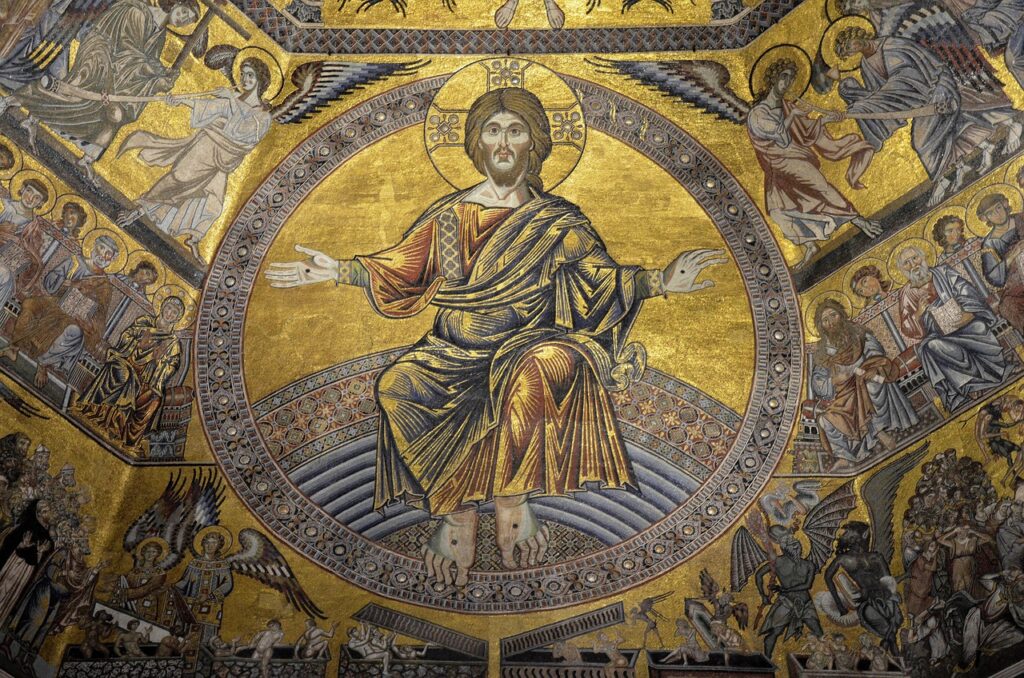
Florence is more than the capital of the Italian Renaissance: it’s a city where faith and art meet to form an open-air sacred landscape. Around the Piazza del Duomo, from hush-filled cloisters to painted chapels, every church tells a story of patronage, family rivalries and artistic innovation. The « Church Trail and Hidden Masterpieces » in Florence is a promise: from the global must-sees to the discreet treasures that only watchful eyes notice. This route leads you to the major sites — the cathedral Santa Maria del Fiore, the Baptistery, Giotto’s Campanile — but also to little-visited chapels, miraculously preserved frescos and workshop museums where you can still feel the presence of the artists’ studios.
This route is meant to be taken slowly: walk without a map, but with intentional pauses. Listen to bell chimes from a loggia, let yourself be absorbed by the changing light on an altarpiece, climb a hundred steps for an urban panorama and then descend into the shadow of a convent. The goal isn’t to tick off monuments, but to deepen your relationship with sacred space and daily Florentine life. You’ll see how a neighborhood chapel can house a fresco that influenced generations of artists, or how a liturgical museum preserves relics and medieval sculptures of astonishing finesse.
In this article I offer a well-documented itinerary: exact addresses, opening hours, prices in euros at the time of writing, immersive descriptions of the artworks and practical local tips to optimize your visit (best times, tickets to pre-book, appropriate clothing, photo rules and preferred transport). Whether you’re an art lover, a cultural pilgrim or a curious stroller, this route will give you the keys to discover Florence differently — as a place where architecture, color and prayer echo around every corner.
Finally, allow time for the unexpected. Some chapels open only for services or by request; others, like the Cappella Brancacci, attract specific guided visits. The practical tips provided here will help you plan, avoid queues and above all savor every discovery without rushing. Wear comfortable shoes, bring a water bottle and a small notebook: Florence has secrets to reveal to those who take the time to listen.
The Piazza del Duomo and the complex: spiritual heart and technical masterpiece
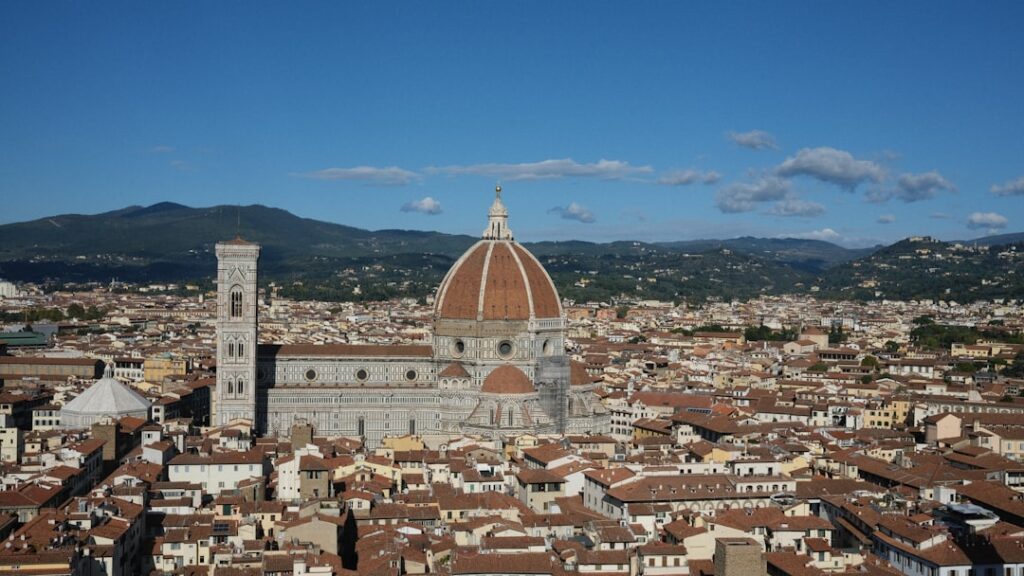
At the center of Florence stands the city’s most emblematic complex: the Cattedrale di Santa Maria del Fiore (Piazza del Duomo, 50122 Firenze). This site gathers several key stops on the trail: the cathedral itself, Brunelleschi’s Dome, Giotto’s Bell Tower, the Baptistery of San Giovanni and the Museo dell’Opera del Duomo. Together they tell the story of Florence’s civic ambition and the evolution of architectural and artistic techniques between the 12th and 16th centuries.
Santa Maria del Fiore — Cathedral
Address: Piazza del Duomo, 50122 Firenze.
Opening hours: generally 10:00–17:00 (closed during religious ceremonies; Sunday hours vary).
Price: free entry to the nave (security checks), paid access to certain areas of the complex via the Biglietto Unico (see below).
Cupola di Brunelleschi — Dome climb
Address: access via Piazza del Duomo, climb from inside the cathedral.
Opening hours: roughly 08:30–19:00 (last ascent 30–60 minutes before closing).
Price: Biglietto Unico for the complex about €25 (at time of writing); skip-the-line tickets and guided tours cost more. The climb: 463 steps, no elevator.
Campanile di Giotto — Bell Tower
Address: Piazza del Duomo, 50122 Firenze.
Opening hours: roughly 08:15–19:00 (times vary by season).
Price: included in the Biglietto Unico (€25), or a separate ticket about €15. Panoramic view after 414 steps.
Battistero di San Giovanni — Baptistery
Address: Piazza del Duomo, 50122 Firenze.
Opening hours: approximately 08:15–10:15 then 15:00–19:00 (split hours depending on season).
Price: included in the Biglietto Unico; sometimes separate entry €6–€10.
Museo dell’Opera del Duomo
Address: Piazza del Duomo 9, 50122 Firenze.
Opening hours: 09:00–19:00 (hours may change).
Price: included in the Biglietto Unico or individual ticket roughly €13–€15.
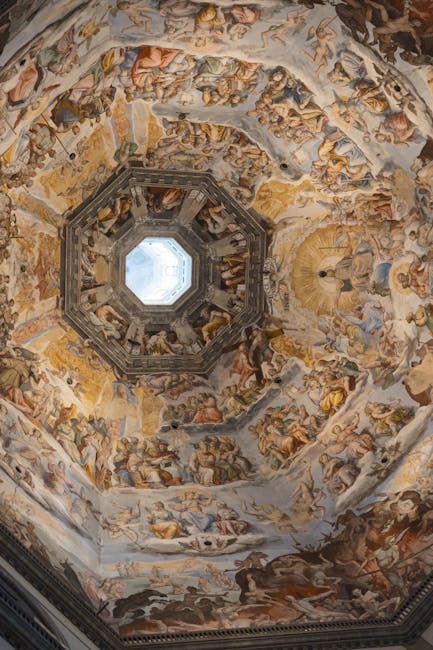
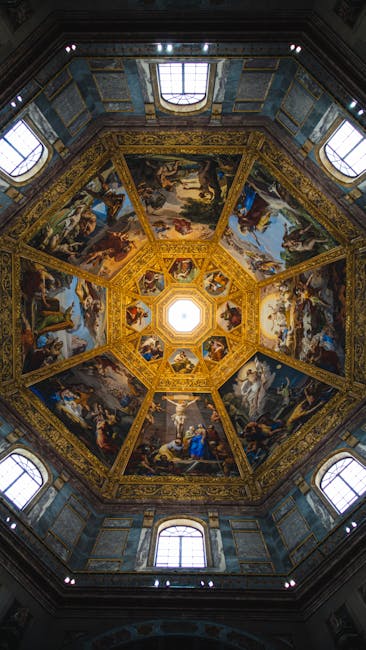
Immersive description: approach the cathedral and let your eyes follow the alternating bands of white, green and pink marble; feel the sun-warmed stone under your palms when you touch an ancient pillar. The climb to the dome is a sensory rite: the steps narrow, light saturates the air and, beneath the frescoes by Giorgio Vasari and Federico Zuccari, you feel at the heart of a cosmic narrative. From the top of the dome or from the bell tower, the city spreads in a sea of terracotta roofs, cloisters and secret gardens — a panorama that puts every subsequent chapel into context.
Practical tips: book the Biglietto Unico online to avoid queues (especially in high season). Wear sturdy shoes and carry water. People with vertigo should avoid the dome climb; in summer bring a hat and a small towel. Respect dress codes in the cathedral: shoulders and knees covered. Allow at least 2–3 hours to explore the complex without rushing.
 Click here to Book your ascent to Brunelleschi’s Dome
Click here to Reserve a timed ticket for Giotto’s Bell Tower
Basilica of Santa Croce and the tombs of giants: art, memory and workshops
The Basilica di Santa Croce (Piazza Santa Croce, 16, 50122 Firenze) is often called the « Pantheon of Italians » — it houses the tombs of Michelangelo, Galileo, Machiavelli and many others. But beyond the graves, Santa Croce contains decorated chapels, frescos and historic leather workshops that visitors can explore during an afternoon rich in history.
Practical information
Address: Piazza Santa Croce 16, 50122 Firenze.
Opening hours: generally 09:30–17:30 (closing times vary Sundays for services).
Price: entry about €10–€12 (standard rate, reductions for students and seniors). The complex sometimes hosts paid temporary exhibitions.
Immersive description: enter through the sober façade and let the dimness quiet your voice. The Gothic interior, lined with side chapels, feels intimate: filtered light reveals the faded pigments of the frescos, and the air carries the scent of wax and incense. Approach Michelangelo’s tomb: the stone seems to vibrate with raw presence. The historic workshops around the basilica — notably leather and gilding studios — give the area a living frame: you can often watch master artisans restoring liturgical items or working on bindings near the square.
Hidden masterpiece: the Bardi Chapel workshop or the Peruzzi Chapel (access permitting) houses frescos by Giotto and his followers. Often less visited, these chapels offer a contemplative experience. In the sacristy, small paintings and predella panels reveal themselves to those who take the time to look: tiny gilded ornamentation, faces with restrained expressions, reused sculptural elements from earlier centuries.
Practical tips: arrive early to enjoy the quieter areas. If you’re a photographer, check the shooting rules — some areas ban flash. Check for religious services (Sunday morning) to avoid entering during an office. After the visit, have a coffee in the square and watch students and artisans pass by: that lively scene is an integral part of the neighborhood’s charm.
Santa Maria del Carmine and the Cappella Brancacci: the fresco that changed painting
In the Oltrarno district, the church of Santa Maria del Carmine (Piazza del Carmine 14r, 50124 Firenze) houses the famous Cappella Brancacci, a milestone in Renaissance painting. Frescos by Masaccio and Masolino, later completed by Filippino Lippi, offer a lesson in composition, perspective and the treatment of the human figure. For anyone following the church trail, this chapel is essential to understanding the major stylistic shift from Gothic to Renaissance.
Practical information
Address: Piazza del Carmine 14r, 50125 Firenze (Oltrarno).
Opening hours: generally 09:00–17:00; time slots may vary due to restorations and guided visits.
Price: entry about €6–€10 for the chapel alone; guided tours recommended from €12–€20. Some options include access to the full church and other convent rooms.
Immersive description: upon entering the chapel the first impression is one of dramatic lighting. The biblical scenes — such as the « Fall of Adam and Eve » or « The Resurrection of Theophilus’s Son » — are painted with a new energy: flesh sculpted by light, draperies treated like carved forms, human expressions conveying the narrative with unprecedented realism. Masaccio imposes a simple, convincing geometry, turning religious storytelling into an exercise in human observation.
Hidden masterpiece: look at the peripheral details — carved niches, artist’s alterations, old restorations that reveal original colors. The adjoining cloister, often open, is a peaceful haven dotted with carved stones and inscriptions left by generations of students and artisans. Views from Oltrarno at sunset create a striking contrast between the intimacy of the frescos and the city’s expanse.
Practical tips: capacity for the Cappella Brancacci is limited; book in advance, especially in high season. If possible, choose a guided tour (2–3 hours) to understand the iconographic and technical details. After the chapel, wander the Santo Spirito neighborhood, full of artisan workshops and small trattorie where you can taste authentic Florentine food away from the tourist crowds.
Santo Spirito, Badia Fiorentina and lesser-known gems
The Oltrarno quarter and the streets around Piazza della Signoria hide churches and chapels that may be less spectacular but are deeply moving. The Basilica di Santo Spirito (Piazza Santo Spirito, 30, 50125 Firenze) is a perfect example: a modest façade conceals a luminous interior designed by Brunelleschi, with altarpieces and sculptures that invite contemplation. A short walk away, the Badia Fiorentina (Via del Proconsolo 10, 50122 Firenze) offers insight into the city’s medieval religious history, while Orsanmichele (Piazza degli Orsanmichele, 50123 Firenze) displays sculpted niches by Renaissance masters.
Santo Spirito — Information
Address: Piazza Santo Spirito 30, 50125 Firenze.
Opening hours: 09:00–18:00 (hours may change for masses and cultural events).
Price: free entry to the basilica; some chapels or private events may charge €3–€8.
Badia Fiorentina — Information
Address: Via del Proconsolo 10, 50122 Firenze.
Opening hours: variable, often 10:00–17:00; visits may be limited during abbey services.
Price: small entrance fee possible €3–€6 depending on exhibitions.
Orsanmichele — Information
Address: Piazza degli Orsanmichele, 50123 Firenze.
Opening hours: 10:00–17:00 (closed some days).
Price: entry around €5–€7 (museum rate to access sculptures and the internal museum).
Immersive description: Santo Spirito charms with clear volumes and simplicity; take a bench and watch the light fall in bands across the floor; side chapels sometimes contain works by overlooked young Florentine artists. At Badia Fiorentina, the cloister is a place to hear history: carved stones, fragile paintings and an acoustics that turns a whisper into prayer. Orsanmichele, originally a grain market converted into a church, fascinates with its exterior niches housing bronze and marble statues — each niche is a showcase of the competition between Florence’s guilds for artistic supremacy.
Practical tips: use quieter hours (early afternoon) to enter these peaceful places. Santo Spirito is perfect for an authentic lunch in a non-touristy trattoria; Orsanmichele is quick to visit but deserves a careful inspection of its statues and information panels. The Badia sometimes hosts vocal and organ concerts — check local listings for an immersive evening experience.
Click here to Reserve your Palazzo Vecchio entry with audioguide
Practical tips and suggested itinerary for a day and a half
Planning your route is the key to a rich, stress-free experience. Here are two suggested itineraries, along with logistical and local tips to optimize time, costs and enjoyment.
Half-day itinerary (morning)
– Start: Piazza del Duomo — aim for opening time for the cathedral (10:00) and book the dome ascent if you want to avoid heat and crowds.
– 1h: Museo dell’Opera del Duomo to see the originals of the Baptistery doors and medieval sculptures (address: Piazza del Duomo 9; early opening is an advantage).
– 1h: Campanile di Giotto if you want a quick view (consider climbing before the dome if you have the energy).
– 45 min: short coffee break and stroll around Piazza della Repubblica.
Full-day itinerary
– Morning: Duomo (dome + museum), then the Baptistery.
– Midday: cross to Oltrarno, lunch at Santo Spirito (choose a local trattoria to try bistecca alla fiorentina served family-style).
– Afternoon: Santa Maria del Carmine (Cappella Brancacci) then walk to Santa Croce — allow 1.5–2 hours there.
– Late afternoon: Badia Fiorentina or Orsanmichele depending on mood; sunset from Ponte Vecchio or climb to Piazzale Michelangelo for a spectacular panoramic view.
Logistical tips
– Tickets: favor the Biglietto Unico and online booking for the Cupola. Museums often have limited slots every half hour.
– Dress: to enter churches, keep shoulders and knees covered; some sacristies enforce stricter behavior.
– Photography: flash is banned in most chapels; some works require a special photo permit. Follow signs and staff instructions.
– Transport: Florence is best discovered on foot; taxis exist but are expensive. To reach Piazzale Michelangelo, walk up from Oltrarno (about 20–30 minutes) or take bus no. 12/13 depending on traffic.
– Safety: watch for pickpockets in busy tourist areas (Duomo, Ponte Vecchio). Keep your documents and valuables close and use a bag that can be closed.
Cultural tips: hire a local guide for a half-day to deepen your understanding of the frescos’ symbolism and the patrons’ histories. Guides can sometimes help secure access to chapels not open to the general public. Above all, leave room for the unexpected: a closed monument, a surprise exhibition or a door that opens onto a secret cloister can enrich your trip far more than a rigid schedule.
Conclusion: Traveling through churches is reading the city
The Church Trail and hidden masterpieces of Florence is more than a tourist route: it’s an architectural, spiritual and social reading of the city. Crossing each threshold, looking up at a fresco or climbing a vault, you’re not merely witnessing works of art; you become a reader of a story that intertwines faith, civic power, private patronage and technical innovation. Florence is layered: grand sculptures and monumental façades speak of public ambition, while intimate chapels and cloisters reveal personal stories and acts of humility.
Along this route, you’ll meet Michelangelo in his stone, Masaccio in his pictorial revolution, Brunelleschi in his ingenious elevation. But you’ll also encounter artisan workshops, trattorie smelling of flour and olive oil, streets where the stone still bears generations’ footsteps. These encounters transform the visit: they make Florence not a frozen museum but a living city where art is renewed through everyday use. By planning thoughtfully, respecting places and their schedules, and granting yourself the luxury of slowness, you will fully taste the intensity of these masterpieces and the depth of sacred spaces.
Click here to Reserve your ticket to see Michelangelo’s David
Finally, remember that Florence always offers more: a hidden corner, a chapel open for service, a fleeting exhibition. Keep your eyes curious and your calendar flexible. Whether you visit for art, spirituality or simply the emotional lift that great architecture brings, the Church Trail and hidden masterpieces will leave you with lasting images and a renewed sense of wonder. Take your time, breathe the stone and leave enriched with stories and images you’ll treasure for a long time.