





Introduction
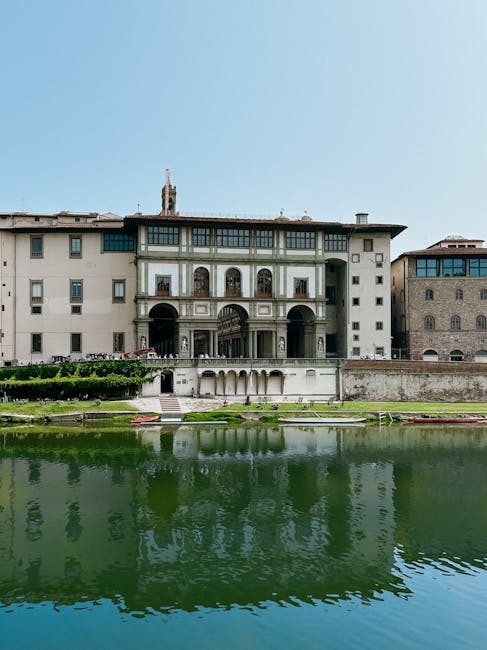
The Galleria degli Uffizi is one of Italy’s — and the world’s — most iconic museums, tucked into the very heart of Florence, the cradle of the Renaissance. Visiting the Uffizi is more than just seeing a collection of masterpieces; it’s stepping into the artistic and intellectual history of Europe, where every room tells a story of a period, a patron, or an aesthetic revolution. The building itself, designed by Giorgio Vasari between 1560 and 1580 at the request of Cosimo I de’ Medici, is a work of art: its columns, aligned windows and perspective stretching toward the Arno have shaped Florence’s cityscape for centuries.
This practical guide is written to help you prepare a concrete and immersive visit: how to buy tickets, the best times to go, the works you absolutely shouldn’t miss, how to find your way around the rooms, and suggested routes to continue exploring Florence afterwards. You’ll find exact addresses, usual opening hours, indicative prices in euros, and practical tips—from arriving at the museum to making the most of the terraces and shops. Whether you’re a seasoned art lover or a curious traveler wanting to better understand the Renaissance, this guide will walk you through the visit step by step.
Allow enough time: a full visit can take anywhere from two hours for a quick overview to five hours for a detailed exploration with breaks. Note that the Galleria degli Uffizi runs temporary exhibitions and evening openings, which can affect schedules and prices. We’ll also add local advice on respectful behavior inside the rooms, photography rules, and the best nearby spots to extend your experience — for example the Ponte Vecchio, Piazza della Signoria and the Museo Nazionale del Bargello.

Plan Your Visit: Tickets, Opening Hours and Practical Access
Exact address: Galleria degli Uffizi, Piazzale degli Uffizi, 6, 50122 Firenze FI, Italy. This is the physical and administrative starting point for any visit. Typical official opening hours are: Tuesday to Sunday from 08:15 to 18:30, closed on Mondays. Warning: hours can change due to special events, temporary exhibitions or seasonal reopenings — always check the official website before you go. Doors open early in the morning and the first hour is often the quietest.
Indicative prices (subject to official changes):
- Standard full-price ticket: around €12.
- Reduced tickets (young Europeans, students, seniors depending on conditions): often between €2 and €6.
- Online reservation fee: about €4 (can vary depending on how you book).
- Temporary exhibitions: variable supplement, typically between €4 and €10.
- Official guided tour: from €25 to €50 per person depending on length and guide.
These prices are given as a guideline; seasonal fluctuations and special rates (free days, Firenze Card, Museum Card) can change the final cost.
How to book: favor online booking via the Direzione degli Uffizi official site to avoid long queues. There are also combined tickets (Uffizi + Accademia, or Uffizi + Palazzo Pitti) and tourist passes like the Firenze Card that offer priority access and can be cost-effective if you plan to visit several museums.
 Click here to book your ticket for the Uffizi Gallery

Access and transport:
- On foot: most routes from the historic center converge on Piazza della Signoria and the nearby bridge; the Uffizi is a two-minute walk from Piazza della Signoria.
- City bus: ATAF lines serve stops nearby; check local apps (ATAF) for timetables and connections.
- Train: from Stazione di Santa Maria Novella (main train station), count 15–20 minutes on foot or 10 minutes by bus/taxi.
Practical ticketing tips
– Buy tickets several days in advance during high season (April–October) and for weekends.
– If you’re torn between morning and late afternoon, choose the first hour after opening or the end of the day to avoid crowds.
– Keep a printed or digital copy of your ticket and bring your ID.
– Expect security checks: bag inspections and metal detectors are routine, so avoid bulky luggage.
Unmissable Masterpieces: Routes and Detailed Descriptions
The Galleria degli Uffizi houses cornerstone works of Western painting. Here’s a thematic route to make sure you don’t miss the highlights, with immersive descriptions for each stop.
1) Sandro Botticelli — The Birth of Venus and Primavera: these two panels, displayed in the rooms dedicated to mythological gardens, perfectly illustrate the mix of myth, Medici patronage and the Renaissance’s renewed visual language. The Birth of Venus dominates with its elegant silhouette: Venus’s luminous skin contrasted with the billowing draperies pushed by Zephyr; study the details — pearls, the flowers Zephyr scatters, and the texture of the seashell. These works are on the second floor, rooms 10–15 by the usual numbering.
2) Michelangelo — Il Tondo Doni (Doni Tondo): this circular painting by Michelangelo shows a sculptural power translated into paint. The figures have an almost carved intensity; the compact composition and rich palette are striking. The Tondo sits in the rooms devoted to sixteenth-century masters.

3) Leonardo da Vinci — Annunciation and other works: while Leonardo’s greatest masterpieces may be found elsewhere, the panels at the Uffizi trace the evolution of his drawing and sfumato technique. Step closer to study the softened contours and the subtle modeling of faces.
4) Raffaello (Raphael) — studies and paintings: the maps and portraits on display reveal his mastery of draftsmanship and refined color, offering insight into the balance between humanism and idealism.

5) Caravaggio, Titian, Pontormo and others: from Caravaggio’s dramatic chiaroscuro to the Venetian color of Titian (Tiziano), each room tells the story of a school, a city or a generation. Take time to stop at portraits — often small in format — to read the eyes and the textures of fabric.
Finding Your Way Around: Maps, Audio Guides and Guided Tours
The layout of the Galleria degli Uffizi follows a chronological and thematic route. The first floor is often dedicated to the early masters and the Gothic-to-Renaissance transition, while the second floor groups the big names of the High Renaissance. Informational panels and labels (in Italian and English) accompany each work, but the collection’s size can quickly become overwhelming without a map.
Useful equipment:
- Museum map: available at the entrance and often included with your ticket. It shows rooms, restrooms, exits and points of interest. Keep it handy to plan your stops.
- Audio guide: available to rent (indicative price: ~€6–€7). It covers a selection of major works and saves time if you don’t want to join a guided tour.
- Guided tours: offered in several languages; a 1.5–2 hour guided tour lets you focus on 10–15 essential works with historical context and anecdotes. Prices vary: €25–€50 per person depending on operator and group size.
Route tips:
- Start with the most popular rooms (Botticelli, Leonardo, Michelangelo) early in the morning to avoid crowds.
- If you’re short on time, make a short list: 5 to 8 priority works and explore around them.
- Take breaks: there are rest areas and a café/restaurant where you can recharge.
- Themed tours (architecture, portrait, mythology) help you appreciate the collection’s coherence.

Behavior, Photography and Accessibility
Rules of conduct: the Galleria degli Uffizi is a conservation space and deserves respect. Here are common rules and tips for a pleasant and respectful visit.
– Photography: generally allowed without flash and without tripods. However, some rooms or specific works may have restrictions, especially during temporary exhibitions. Always follow signs and the instructions of floor staff. Flash is strictly forbidden because it damages pigments.

– Dress and demeanor: wear modest attire, avoid eating in the galleries and keep voices low. Children are welcome but must be closely supervised by adults. Do not touch works, even accidentally: barriers or floor markings indicate the minimum distance.
– Accessibility: the Galleria degli Uffizi has made efforts toward accessibility. Elevators and routes for wheelchairs are available. The main entrance may involve steps; it’s advised to call the museum in advance if you have specific needs (tel. +39 055 294883). Special services and rates may be offered for visitors with reduced mobility.
– Security: routine entry checks, rules for bulky items and internal surveillance. Staff are on hand to guide and answer questions; don’t hesitate to ask for help locating a work or in case of emergency.
Around the Uffizi: Continue Your Exploration in Florence
The Uffizi’s location on the banks of the Arno and a short walk from the Ponte Vecchio makes it an ideal starting point for an afternoon in Florence. Here are some suggestions to round out your day.
– Ponte Vecchio (Address: Ponte Vecchio, Florence): just a few dozen meters from the Uffizi, this medieval bridge spans the Arno and offers spectacular views of the Uffizi façade and the Vasari Corridor. It’s especially photogenic at sunset.
– Piazza della Signoria (Address: Piazza della Signoria, 50122 Firenze FI): located in front of the Uffizi’s main entrance, it hosts the Loggia dei Lanzi and the Fountain of Neptune. It’s an excellent spot to see sculpture, architecture and public life.
– Palazzo Vecchio (Address: Piazza della Signoria, 50122 Firenze FI): the former Medici palace offers richly decorated rooms and a city view from its tower (check prices and opening times seasonally).
Click here to Book your ticket and audio guide for Palazzo Vecchio

– Galleria dell’Accademia (Address: Via Ricasoli, 58/60, 50122 Firenze FI): if you haven’t yet seen Michelangelo’s famous David, combine the two museums; book separately in advance.
Click here to book tickets for the Uffizi Gallery and the Accademia
– Food & drink: for a break, head to the Caffè degli Uffizi (on-site or nearby depending on season) or explore the trattorie around Via dei Neri for traditional Tuscan dishes: ribollita, pappa al pomodoro, bistecca alla fiorentina. Average prices: a coffee €1–€3, a main course €12–€35 in central restaurants.

Local Tips and Tricks for a Successful Visit
Here’s a collection of tips gathered from local guides and curators to help you get the most out of your visit.
- Arrive at opening time: get there 15–20 minutes before 08:15 and be among the first in; the natural light in certain rooms is ideal and the crowd is smaller.
- Choose a quiet morning off-season: November to February (outside holidays) sees lower attendance and a more intimate experience.
- Take your exterior photo keepsake: to avoid the temptation of flash photography inside, take photos of the façade, piazzale and Arno views.
- Join a themed tour: tours focused on mythology or the representation of women in the Renaissance offer fresh perspectives on the works.
- Budget your time: don’t force a marathon; it’s better to come back another day than try to see everything in one session.
- Watch for temporary exhibitions: they may highlight a particular artist or school and justify a return visit.
- Check Italian public holidays: museums may be closed or operate reduced hours on certain days (Christmas, New Year’s, etc.).
Conclusion
Visiting the Galleria degli Uffizi is an experience that blends aesthetic emotion, intellectual curiosity and urban discovery. From the majesty of Botticelli’s works to the depth of Michelangelo’s Doni Tondo and a collection that spans centuries, every corner of the gallery invites contemplation and reflection. This guide has given you practical information — exact address (Piazzale degli Uffizi, 6, 50122 Firenze FI), typical hours (Tuesday–Sunday 08:15–18:30, closed Monday — check before you go), indicative prices (standard ticket ≈ €12, reservation fee ≈ €4, supplements for temporary exhibitions), plus advice on tickets, accessibility, photography and guided tours — so you can prepare for a calm visit.
Remember: the quality of a visit isn’t measured by the number of works you see but by the intensity of the experience. Take time to study a painting, read its label, and let yourself be surprised by a tiny iconographic detail: a flower, an expression, a gesture rendered with minute precision. Also make the most of the Uffizi’s privileged location to continue your Florence route — from the Ponte Vecchio to Piazza della Signoria, and stop into small trattorie to sample authentic Tuscan cuisine.
Finally, stay alert to seasonal changes and official information: opening hours, prices and access conditions can evolve. For a stress-free visit, book ahead, arrive early, and let yourself be guided by the light and beauty of the works. The Galleria degli Uffizi is not just a museum: it’s a living conversation between past and present, a place where art continues to inspire and educate. Enjoy your visit to Florence — take the time to listen to what the masterpieces have to say.