





Introduction
Florence is often described as the cradle of the Renaissance — a place where stone, light and human ingenuity came together to create architecture that changed the history of art. This themed route through Renaissance architecture in Florence does more than list famous names: it walks you through a close reading of façades, plans, proportions and technical innovations that shaped the aesthetic renewal of the 15th and 16th centuries. As you wander the cobbled streets, you’ll notice that the Florentine Renaissance didn’t stop at palaces and churches: it transformed public space, loggias, inner courtyards and even the layout of squares into a demonstration of mathematical harmony and civic power.
This guide aims to offer a sensory and practical immersion. It gathers exact addresses, opening hours, indicative prices in euros and local tips to help you visit calmly. You’ll learn why Filippo Brunelleschi is hailed as the genius behind the dome of the Cattedrale di Santa Maria del Fiore, how the loggias of the Medici palazzi reflect family political strategies, and how the urban planning by Giovanni di Bicci and Renaissance visionaries makes Florence legible at a glance. Each stop on the route highlights details often invisible to the hurried visitor: stone joints, column proportions, and the play of shadow and light at different times of day.
The text is designed to be used on the ground: precise addresses (for your GPS), indicative prices in euros (to plan your budget), opening hours (to schedule your visits) and practical tips on buying tickets, avoiding queues, or catching the best light for a photo. You’ll also find practical recommendations like where to grab a coffee between visits, which entrance to favor, and how to combine nearby monuments to make the most of your time. The Renaissance isn’t just a style: it’s a spatial experience that reveals itself if you take the time to look. Pack comfortable shoes, a notebook, and your curiosity: Florence awaits, dense with masterpieces and details to discover.
Finally, this themed route includes itinerary suggestions that respect both the chronological logic of innovations and the city’s geography. It’s aimed at returning visitors as much as newcomers, and includes variations whether you have half a day or a full day. Visual cues
and the descriptions will help you picture the architecture even before you arrive.
Cattedrale di Santa Maria del Fiore (Duomo) and Brunelleschi’s Dome
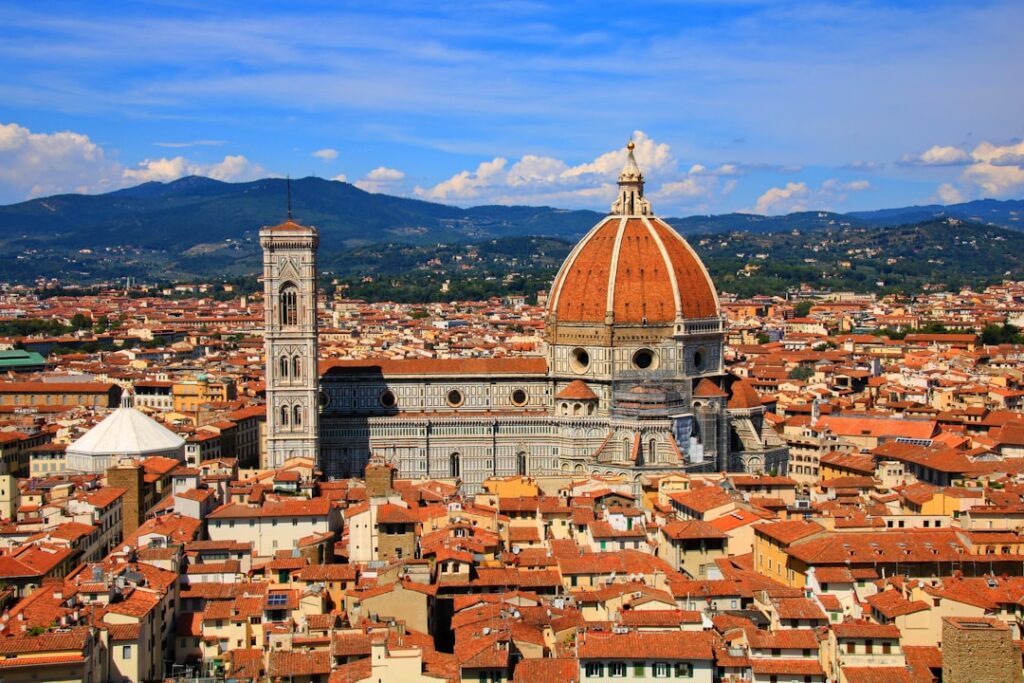
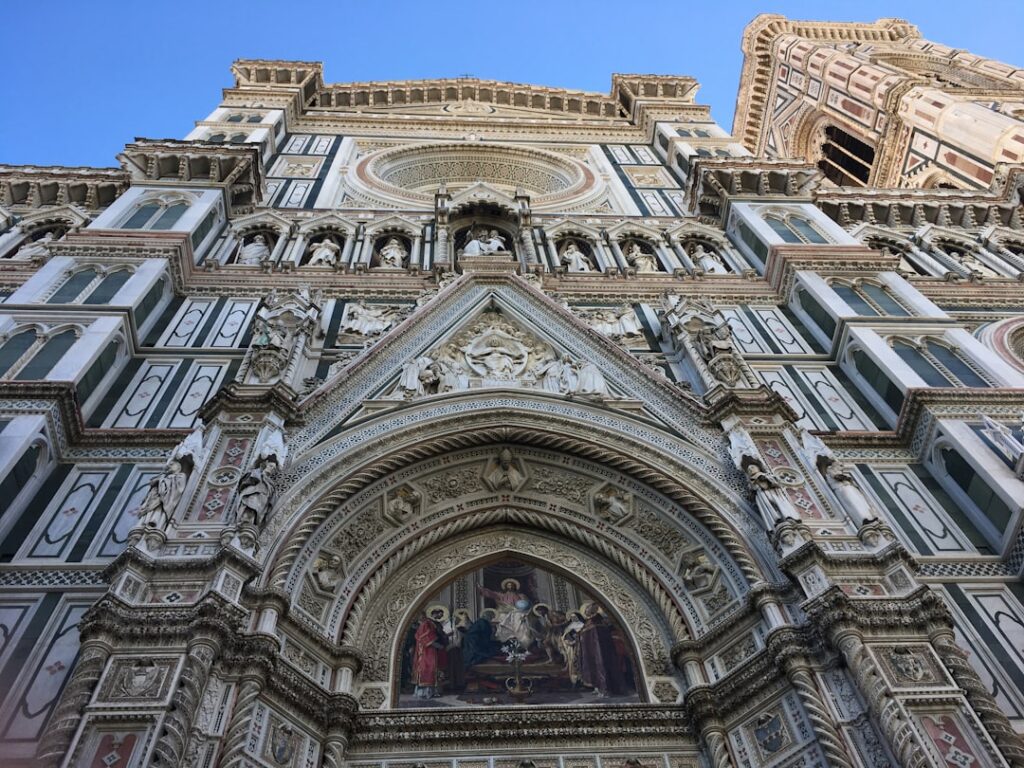
The Duomo complex, the spiritual and technical heart of Renaissance Florence, comprises the Cattedrale di Santa Maria del Fiore, Giotto’s Campanile, the Baptistery of San Giovanni and the Museo dell’Opera del Duomo. Address: Piazza del Duomo, 50122 Firenze FI, Italy. The ensemble is emblematic of mastery over volumes and the polychromy of stone (white, green and pink marble). The focal point is undoubtedly the dome designed by Filippo Brunelleschi — a technical revolution: a self-supporting double shell completed in 1436.
Opening hours: Cathedral (visits, outside of mass) generally 10:00–17:00; Museo dell’Opera del Duomo 09:00–19:00; Giotto’s Campanile 08:15–19:15. Indicative prices: combined ticket (access to the Duomo, Baptistery, museum, campanile and climb to the dome) around €25–€30 if bought online; dome climb alone around €20. These rates vary by season and temporary exhibitions — book online to avoid long lines, especially in high season.
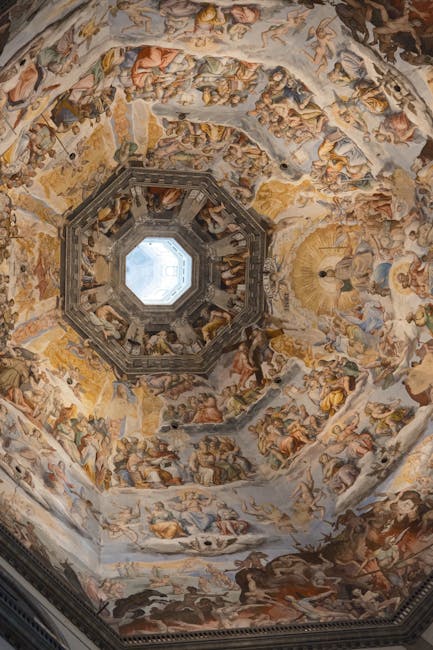
Immersive description: approach the sculpted façade and feel the grain of the marble under your fingers. The dome, seen from Piazza del Duomo, is a familiar mass but its reading changes when you climb: inside, the shell envelops you with a rhythm of tightly set bricks and spiral staircases where light filters through high oculi. The dome terrace offers a panoramic view over Florence’s red roofs and the Arno.
Practical tips: arrive early for the dome climb (morning slots are the least crowded), wear closed shoes for narrow steps, and bring water. Visits are strictly limited in number and security screening is mandatory. If you suffer from vertigo, opt for the climb up Giotto’s Campanile for a similar view with less strain. Check cathedral mass times, as services can restrict independent visitor access.
 Click here to book your ascent of Brunelleschi’s dome
Click here to book your ticket for Giotto’s Campanile climb
Uffizi Gallery and the City Loggias
The Galleria degli Uffizi is more than a museum: it’s a testament to Florence’s cultural and architectural politics. Address: Piazzale degli Uffizi, 6, 50122 Firenze FI, Italy. Designed by Giorgio Vasari in the 16th century to house administrative offices (“Uffizi” means « offices »), the building forms a long U-shaped space that frames the visual connection between the Palazzo Vecchio and the Arno River. Hours: 08:15–18:50 (closing varies on Mondays or public holidays); Indicative price: standard ticket around €20–€25 (booking strongly recommended).
Immersive description: walking through the inner courtyard and up the stairs, you sense how the gallery itself is arranged like a collection of spaces — long corridors and porticoes framing the paintings. The interior rooms, bathed in diffuse light, reveal masterpieces by Botticelli, Leonardo da Vinci, Michelangelo and Raphael. The architectural reading is twofold here: the building’s architecture stages the works; the paintings themselves often depict architectures and perspectives that inspired the city.
Practical tips: buy your ticket online for a specific time slot (lines without reservations can last hours). Allow at least 2 to 3 hours for a focused visit; architecture lovers should add an extra hour to study the loggias and the Arno views from the windows. Audio guides help explain the relationship between painting and urban space. If you visit in summer, start at the Uffizi in the morning then cross the Ponte Vecchio to the Oltrarno district for a less touristy stroll.
Click here to reserve your timed Uffizi Gallery entry with audioguide
Palazzo Vecchio, Piazza della Signoria and Civic Urbanism
The Palazzo Vecchio is Florence’s civic heart, both the seat of municipal power and an architectural manifesto. Address: Piazza della Signoria, 50122 Firenze FI, Italy. Hours: 09:00–19:00 (closing varies by season and events); Indicative price: €12–€15 for the palace and museum, with additional options for the Arnolfo tower around €8. The expansive Piazza della Signoria acts as a forum where public sculptures — replicas and originals — engage in dialogue with the palace architecture.
Immersive description: entering through Michelozzo’s courtyard, you face the space of power: richly decorated rooms, frescoes and the grand staircase leading to political salons. Arnolfo’s tower rises, challenging the sky, and offers a commanding view over the city. Outside, the Loggia dei Lanzi hosts ancient and Renaissance sculpture, creating an open-air museum where the flow of citizens and visitors maintains the square’s civic function.
Practical tips: combine the Palazzo Vecchio visit with nearby museums (Uffizi, Museo Nazionale del Bargello) for a fuller understanding of Florentine power. Climb Arnolfo’s tower for an overview — slots for the tower are limited. At midday, avoid the piazza when it fills with tourists; instead seek a trattoria on the small side streets for lunch. Don’t forget your ID if you’re purchasing reduced-price tickets.
Click here to book Arnolfo Tower climb and Palazzo Vecchio entry
Palazzo Pitti, Boboli Gardens and the Theatricality of Courtyards
The Palazzo Pitti and the Giardino di Boboli represent another face of Florentine Renaissance: the translation of urban models into residential and landscaped space. Palazzo Pitti address: Piazza de’ Pitti, 1, 50125 Firenze FI, Italy. Hours: Palazzo Pitti (museums) 08:15–18:50; Giardino di Boboli 08:15–16:30 (hours vary by season); Indicative price: combined palace + Boboli ticket around €16–€22.
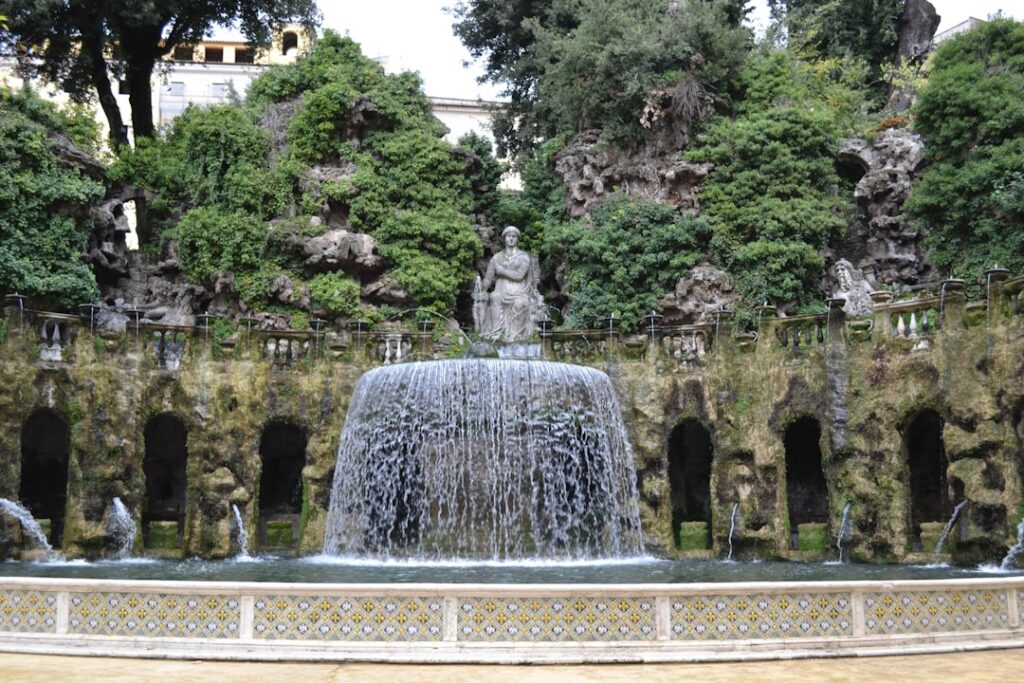
Immersive description: passing through the grand piazza gate, you enter a monumental courtyard where the palace’s imposing façade speaks of authority. The carefully decorated royal apartments reveal aristocratic taste for interior scenography — woodwork, painted ceilings and structured perspectives toward the garden. The Boboli Gardens, vast and sculptural, are a lesson in landscape urbanism: terraces, fountains, artificial grottoes (like the Grotta del Buontalenti) and axial views that strengthen the relationship between nature and artifice.
Practical tips: wear suitable shoes for the park, which is often sloped and uneven underfoot. Visit the garden early in the morning or late afternoon to enjoy softer light and cooler temperatures in summer. Thematic guided tours (garden history, fountains and sculpture) help to understand the garden’s composition. If you’re staying in the Oltrarno, approach the palace via the Ponte Vecchio for a photogenic entrance.
Click here to book entry to Pitti Palace and Boboli Gardens
San Lorenzo, the Medici Chapels and the Sculptors’ Workshop
The Basilica di San Lorenzo and the Cappelle Medicee embody the alliance between family patronage and architectural innovation. San Lorenzo address: Piazza San Lorenzo, 9, 50123 Firenze FI, Italy. Cappelle Medicee address: Piazza Madonna degli Aldobrandini, 6, 50123 Firenze FI, Italy. Hours: San Lorenzo 10:00–17:00; Cappelle Medicee 09:00–17:30; Indicative price: combined visit around €8–€12.
Immersive description: San Lorenzo, partially rebuilt by Brunelleschi, offers a modular structure where geometric clarity takes precedence — columns, bays and domes respond to one another in a proportional logic. The Cappelle Medicee, with designs by Michelangelo (notably the Medici tombs), are a space of remarkable sculptural density: polychrome marbles, funerary allegories and an almost theatrical atmosphere.
Practical tips: take a guided tour to understand Brunelleschi’s formal innovations (a preference for simple geometry and proportions) and how Michelangelo transformed funerary sculpture into an emotional experience. Bookshops around the basilica sell useful reproductions and sketches to deepen your study of proportions. Note: some chapels may close for religious services; check local times.
Click here to reserve your entrance to the Medici Chapels
Conclusion
Renaissance architecture in Florence reveals itself as a language: each palace, church and loggia speaks of an era when knowledge, money and political will converged to reinvent the inhabited space. This themed route has offered a structured reading — from Brunelleschi’s Duomo to the Boboli Gardens, passing through galleries and civic palaces — emphasizing not only the works themselves but also their material context, exact addresses, opening hours and practical prices. While visiting these sites, watch the details: the stone joints, the placement of a window, the way a façade dialogues with a square — these elements are the grammar of the Renaissance.
To get the most out of Florence, combine documentary preparation (online bookings, checking official hours) with openness to the unexpected: a side street, a craftsman’s workshop or an overlooked loggia can reveal as much as a major museum. Respect local codes (dress modestly in places of worship, be discreet during processions), and favour off-peak hours (early morning or late afternoon) for calmer visits and better photos. Finally, keep in mind that the prices and hours given are estimates useful for travel planning; they can change with the season, temporary exhibitions and conservation needs. Always consult official sites before you go.
This thematic guide is an invitation to read the city as one reads an architectural treatise: in layers, through relationships and in detail. Florence is not merely a place to photograph; it is a space to live, understand and feel. Whether you’re an aspiring architect, an art lover or a curious traveler, let proportion, harmony and light guide you: you’ll see that the Renaissance is never entirely behind us — it lives on in the way we still conceive public space, monuments and residences today.