




INTRODUCTION
Calcio Storico Fiorentino, often shortened to Calcio Storico, is far more than a sporting event: it’s a communal ritual that blends history, neighborhood pride and baroque spectacle in the heart of Florence. Born during the Renaissance and fed by centuries of tradition, it comes alive every June in the improvised arena of Piazza Santa Croce, temporarily transformed into a battleground where historic costumes, popular songs and rough clashes meet. For visitors, spending a day at Calcio Storico is like stepping into a Florence where the past still breathes, and where the colors of the four districts — Santa Croce (blue), Santo Spirito (white), Santa Maria Novella (green) and San Giovanni (red) — clash in shouts and brass bands.
Piazza Santa Croce sits in front of the imposing Basilica di Santa Croce, the burial place of great Florentines such as Michelangelo and Galileo. The atmosphere around Calcio Storico reaches beyond the arena: it’s a carnival of customs, the aromas of Tuscan cooking, old banners and period-dressed stewards who stage the opening ceremony. The spectacle mixes wrestling, primitive rugby and theatrical warfare; it’s often described as violent, grandiose and deeply symbolic. For the curious tourist, it’s a unique opportunity to witness Florentine civic passion, hear acclamations that echo through centuries and photograph scenes that could have been lifted from a Renaissance fresco.
This guide walks you through everything: how to get there, where to buy tickets, the informal rules and local traditions to respect, and nearby monuments to visit to extend the historical experience. We give exact addresses, opening hours, approximate prices in euros and practical tips — security, transport and the best vantage points for memorable photos. Whether you’re a history buff, a photographer or simply curious about popular spectacles, this dossier will help you plan a successful day in Florence around Calcio Storico.

History and Meaning: From Medieval Ball Game to Renaissance Florence
Calcio Storico traces its roots to ancient and medieval ball games adapted by Renaissance Florence. Originally it served as military training and a way to bind neighborhoods together. The word “calcio” comes from medieval Italian “calciare” (to kick), but the game also includes holds, ground fighting and group tactics. Its golden age was in the 15th and 16th centuries, when it became a court spectacle under the Medicis, mixing entertainment with displays of civic power.
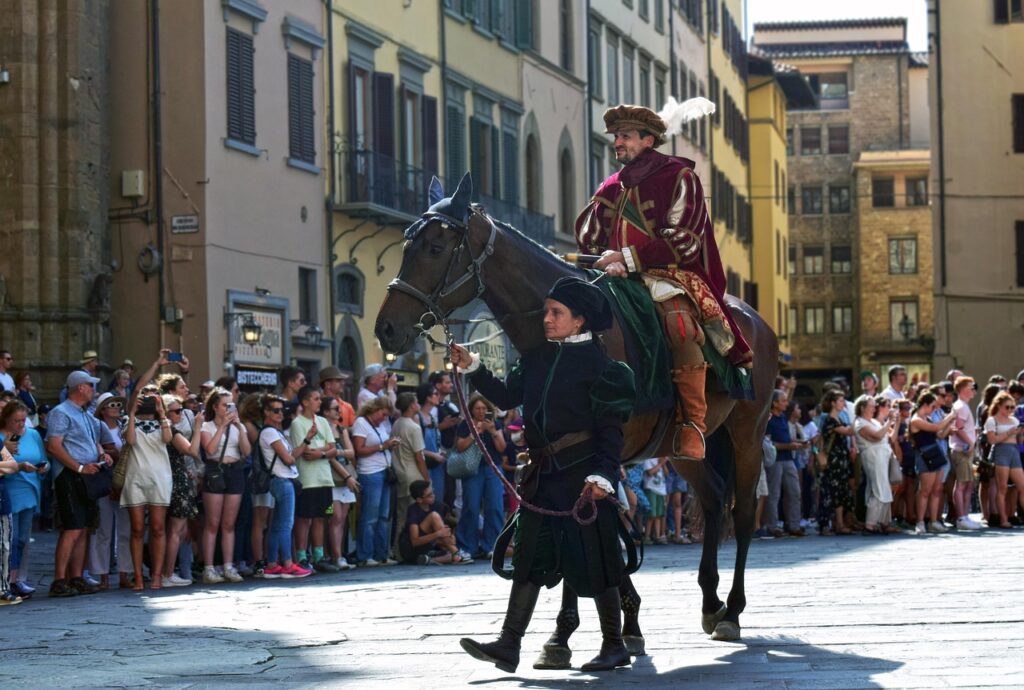
Modern matches keep that solemn character: teams represent Florence’s four historic districts — Santa Croce, Santo Spirito, Santa Maria Novella and San Giovanni. Each game is preceded by an elaborate opening ceremony, complete with period costumes, hand-painted banners and actors performing ritual salutes. The festival traditionally takes place during the week of the Feast of San Giovanni (June 24), Florence’s patron saint. Although physically intense and at times brutal, the game follows longstanding traditional rules enforced by each team and the referees.
Historians and locals see Calcio Storico as a bridge between past and present: it showcases a commitment to collective memory and a desire to keep urban customs alive. Matches are also a chance for controlled rivalry between neighborhoods, turning the streets into a stage for local identity. Fans paint their faces and hang banners from windows, recreating the atmosphere of bygone city-states.
 Click here to visit the Italian Football Museum in Florence

Where and When: Piazza Santa Croce and Practical Details
Calcio Storico is played on Piazza Santa Croce, located at: Piazza Santa Croce, 50122 Firenze FI, Italy. To turn the square into an arena, organizers cover the surface with a mix of sand and water that becomes a muddy, theatrical playing field — adding drama and difficulty to the clashes. Official dates vary slightly from year to year, but qualifying rounds usually take place on the weekends leading up to June 24, and the final is traditionally held on June 24, the Feast of San Giovanni.
Schedule: festivities often start in the late afternoon with the procession; the opening ceremony typically begins around 5–6pm, and matches are played in the evening. Stalls and general bustling activity start much earlier in the day. It’s recommended to arrive at least 2–3 hours before kick-off if you want to soak up the atmosphere and secure a good spot, especially if you plan to stay in the unreserved public areas.
Prices and tickets: free viewing from the square can be limited and overcrowded. Temporary grandstands are installed; seated tickets are paid. Prices vary by category and proximity to the field: generally you’ll find tickets around €35 to €150 for the official stands. VIP packages and private boxes can go beyond that range depending on the year’s offerings. Ticketing and sales points are announced by the Comune di Firenze and official tourist offices — always check official sources before buying to avoid unauthorized resellers.
Additional Visits: Monuments and Nearby Sights
Attending Calcio Storico pairs perfectly with exploring the iconic monuments just steps from Piazza Santa Croce. The Basilica di Santa Croce (Address: Piazza Santa Croce, 16, 50122 Firenze FI, Italy) is generally open from 9:30am to 5:30pm (hours vary by season). Entry is usually around €8 to €10; access to the museum and chapels may involve an extra fee. Don’t miss the tombs of Michelangelo and Galileo Galilei, as well as Giotto’s frescoes.
Less than a 10-minute walk north lies Piazza della Signoria and the Palazzo Vecchio (Address: Piazza della Signoria, 50122 Firenze FI, Italy). Palazzo Vecchio’s hours are typically 9:00am to 7:00pm, with museum admission around €12 to €18 depending on temporary exhibitions. The interior tour plunges you into Renaissance Florence’s political life and offers stunning views from the Arnolfo Tower.
Click here to climb Arnolfo Tower and visit Palazzo Vecchio
Art lovers will also want to visit the Galleria degli Uffizi (Address: Piazzale degli Uffizi, 6, 50122 Firenze FI, Italy), usually open from 8:15am to 6:50pm. Uffizi tickets start around €12 to €20 (reduced rates available), but advance booking is strongly recommended, especially on event days like Calcio Storico when the city is full.
Click here to visit the Accademia Gallery and see the David
Click here to book your Uffizi ticket
Click here to book a skip-the-line ticket for Palazzo Vecchio
Practical Tips and Safety for Attending Calcio Storico
Calcio Storico is an intensely popular spectacle where enthusiasm can be contagious. Here are concrete tips to get the most out of the event:
- Book tickets in advance: Official grandstand seats sell out quickly. Use official channels such as the Comune di Firenze website or local tourist offices to avoid scams. Indicative prices: €35–€150.
- Arrive early: To snag a free spot or to soak in the atmosphere, arrive several hours early; for grandstands, at least an hour before gates open is recommended.
- Getting there: Piazza Santa Croce is within walking distance of most central Florence attractions. Central parking is scarce; favor trams or taxis. Use public transport to avoid traffic. The nearest tram stop is often Alamanni – Stazione (routes may vary).
- Safety: Organizers set up a significant security presence. Respect cordoned-off areas and staff instructions. If you’re in a group, designate a clear meeting point in case you get separated.
- Clothing: The field gets muddy — wear closed shoes and avoid delicate outfits. Bring a jacket: June evenings can turn cool.
- Respect local customs: Calcio is also a civic celebration. Avoid provocative behavior toward supporters and honor local traditions.
For photographers, the golden hour and close-ups of flags and costumes deliver powerful images; however, respect restricted areas and participants’ privacy. Finally, plan your route after the match: streets can be packed and transport delayed; having an alternate exit plan or pausing in a nearby café is often a smart move.

Conclusion
Seeing Calcio Storico in Florence means diving into a living tradition where history, theater and popular passion combine to create a one-of-a-kind spectacle in Europe. Piazza Santa Croce, with the Basilica di Santa Croce as a backdrop, becomes the epicenter of a communal ritual that turns the city into a festive arena. Between the colorful neighborhood flags, historic costumes and fierce struggles on wet sand, each match tells a local story reaching back to the Renaissance. Visitors often leave struck by the emotional intensity of the crowd and the visual power of a tradition that has survived the centuries.
To prepare your visit: note the piazza’s exact address (Piazza Santa Croce, 50122 Firenze FI, Italy), check hours and prices for nearby sites (Basilica di Santa Croce — entry about €8–€10, Palazzo Vecchio — visit €12–€18, Galleria degli Uffizi — tickets from €12), and book grandstand seats if you want guaranteed comfort. Arrive early, pack clothes suited to mud and crowds, and follow safety guidelines. Doing so will turn a simple tourist outing into an unforgettable sensory and cultural experience.
Finally, remember that Calcio Storico is not just a show: it’s a window into the soul of Florence. By mixing popular fervor, art and history in a single square, you’ll grasp what makes the city so special — a place where the past is never entirely gone and where every public event is a living celebration of memory. Plan ahead, show respect, watch closely and let yourself be carried away: Calcio Storico invites you to share in Florence’s story, right on the sandy stage of its legends.
