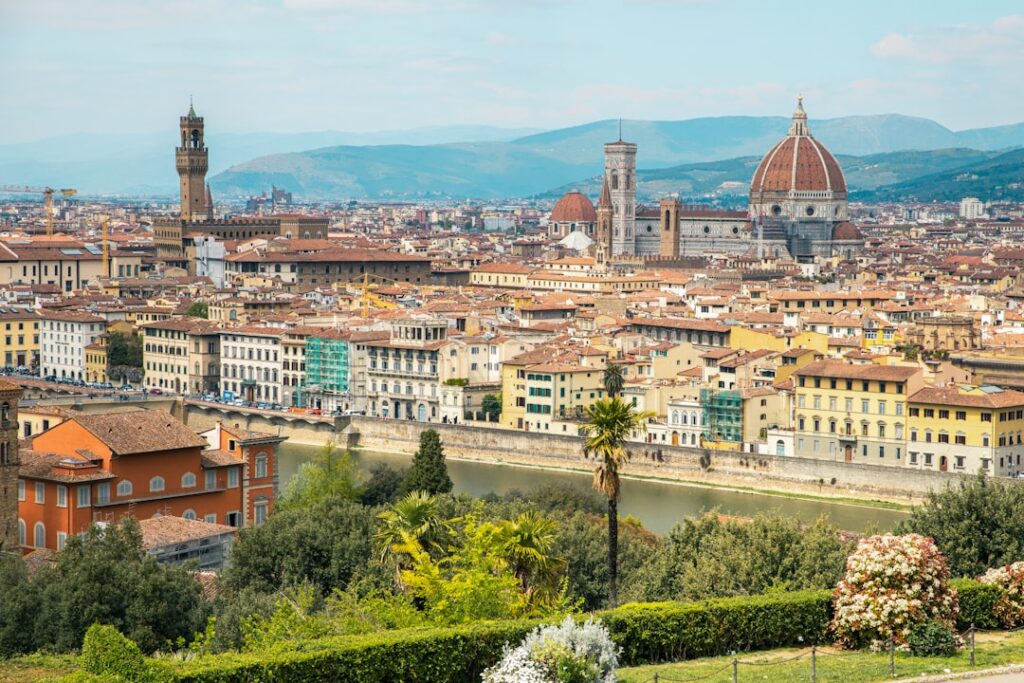






Introduction: Florence, a city of celebration and memory
Florence is not just an open-air museum; it’s a city whose calendar is punctuated by living traditions, some dating back centuries, that blend the sacred and the secular, civic history and popular fervor. Walking its streets during a celebration is like passing through layers of history: Roman antiquity, the communal Middle Ages, the grandeur of the Florentine Republic and the Medici era all speak through processions, reenactments, equestrian pageantry and neighborhood fêtes.
This article offers a complete tour of ten emblematic festival traditions in Florence, with practical details for each event: exact locations, addresses, typical schedules, possible admission prices, and tips to enjoy them like a local. Whether you’re drawn to the city’s religious side (processions, patronal feasts) or its more secular faces (historical competitions, markets and food fairs), you’ll find immersive descriptions and useful planning advice.
We’ll cover famous ceremonies such as the Scoppio del Carro fireworks in front of the Cattedrale di Santa Maria del Fiore, the jousts and Calcio Storico tournaments in historic squares, community celebrations at Piazza Santo Spirito and Piazza Santa Croce, as well as gastronomic highlights like the Fiera di San Lorenzo at the Mercato Centrale. Each tradition is presented with: the full name of the place or monument, exact address (handy for your GPS), opening times or event schedule, ticket prices in euros when applicable, an immersive description and practical tips (transport, dress code, best vantage points, crowd-avoidance hacks).
Pictures and visuals are often essential to make these moments tangible: throughout the text you’ll find image markers designed to illustrate the most visual scenes — from the decorated cart before the pyrotechnic display to a cavalcade on the Arno at dusk. These visual cues will help you imagine the staging and prepare your photo gear. Before you travel, keep in mind that some traditions shift slightly each year (linked to Easter Sundays, liturgical calendars or anniversary commemorations); always check official dates on the city of Firenze websites or with local tourist offices.
Finally, experiencing Florence during a festival also means respecting local codes: silence and reverence during religious processions, measured enthusiasm and caution during historical races and jousts, and above all politeness toward the residents and volunteers who run and sustain these rituals. Follow us now into the heart of these celebrations, for ten traditions that make Florence’s festive pulse beat.
 Click here to book your ticket to see the David at the Accademia

1) Scoppio del Carro (The explosion of the cart) — An age-old fireworks ritual
The Scoppio del Carro is one of Florence’s most spectacular Easter traditions, blending religious rite and pyrotechnic theatre. It traditionally takes place on Easter Sunday in Piazza del Duomo, in front of the Cattedrale di Santa Maria del Fiore (address: Piazza del Duomo, 50122 Firenze FI, Italy). The ceremony begins in the morning with a solemn mass in the cathedral and continues with a procession of confraternities to the elaborately decorated cart (the « BRUCIATOIO »), which is pulled through the city by oxen from the church of Santo Stefano al Ponte or other locations depending on the year.
The climax comes when the « Colombina, » a mechanical dove lit at the cathedral’s high altar, flies along a rope to the cart on the square, triggering a synchronized fireworks display. The symbolism is powerful: blessing the crops and promising prosperity. Access to the square is free but you need to arrive early to secure a good spot; areas near the Baptistery arch (Battistero di San Giovanni, Piazza San Giovanni, 50122 Firenze FI) fill up fast. The show is free; there’s no ticketing.
Typical schedule: events start around 10:30–11:00 on Easter Sunday with mass and the procession. Religious activities follow the cathedral’s timetable: tourist visits to the Duomo (Giotto’s Bell Tower and Brunelleschi’s Dome) are generally open from 8:15 to 19:00 (times vary seasonally). Practical tip: aim for the steps of the Cattedrale di Santa Maria del Fiore or the north side of the square for an unobstructed view; bring ear protection if you’re with children. Also avoid bulky bags, as security checks and the crowds can make moving around difficult.
- Location: Piazza del Duomo, 50122 Firenze FI
- Access: No metro, but many ATAF buses serve the historic center (stops « Duomo », lines 1, 6, etc.)
- Price: Free
- Tip: arrive at least 1 hour early, or book a paid balcony table in a café overlooking the square
Click here to book your ticket to climb Brunelleschi’s Dome

2) Calcio Storico Fiorentino — The medieval football of legends
Calcio Storico Fiorentino is a spectacular reenactment of a game descended from medieval football, played in Florence since the 15th century. It traditionally takes place each June in Piazza Santa Croce (address: Piazza Santa Croce, 50122 Firenze FI), in front of the Basilica di Santa Croce, which is transformed into a sand arena. Four teams representing the city’s historic districts (Santa Croce, Santo Spirito, Santa Maria Novella and San Giovanni) face off in violent, highly codified matches mixing tackles, scrums and rare goal attempts.
The spectacle is intense: historical costumes, chanting supporters, drums and the players’ solemn entrance. Matches are preceded by a costumed march from Piazza della Signoria (address: Piazza della Signoria, 50122 Firenze FI), offering a colorful parade through the historic center. Tickets for the wooden stands in Piazza Santa Croce are paid and sold online and at box offices; prices vary: unnumbered seats from about €20–30, covered grandstands €50–120 depending on seat location and booking date.
Typical schedule: matches take place in the evening, often from 18:00 to 22:00, over several days in June (check the official calendar for the current year). Tip: choose side stands rather than behind the goals for a better overall view; bring a scarf or a small cushion to ease the wooden benches. Calcio can be rough — exercise caution if you’re with young children. Public transport serves the center (ATAF buses), but some streets are closed on match days; allow extra time for returning.
- Location: Piazza Santa Croce, 50122 Firenze FI
- Tickets: online via the official Calcio Storico site or local vendors
- Price: €20–120 depending on seat
- Tip: book early; bring a phone and external battery for photos
3) Festa della Rificolona — The lantern festival on September 7
The Festa della Rificolona (Festival of Lights and Lanterns) is celebrated every year on the eve of the Nativity of the Virgin, September 7. Its roots come from rural Florence where shepherds and craftsmen paraded with lanterns (rificolone) to attend the vigil for the Virgin. Today it mainly takes place in the Oltrarno neighborhood, especially around Piazza Santissima Annunziata (address: Piazza Santissima Annunziata, 50121 Firenze FI) and Piazza Santo Spirito (address: Piazza Santo Spirito, 50125 Firenze FI), where children and families carry decorative, colorful lanterns through the streets.
The atmosphere is intimate and family-focused: artisans sell lanterns, there are stalls with Tuscan specialties and games for kids. The emphasis is on creativity — paper, glass or recycled-material lanterns. Public participation is free; some lantern-making workshops are organized by local groups for a small fee (€5–15). Schedule: the night procession usually starts around 21:00 and lasts one to two hours depending on the route. Before the procession, markets and street concerts often begin in the late afternoon.
Practical tip: bring a small headlamp for walking in the dim lanes after the festival, wear comfortable shoes for cobblestones and join a lantern-making workshop to learn the craft and walk away with your own rificolona. For photos, favor angles where lantern light reflects on pietra serena façades and Oltrarno’s benches. Some shops and cafés extend hours for the occasion, offering plates of Tuscan cured meats (crostini, prosciutto) to share.
- Main areas: Piazza Santissima Annunziata, Piazza Santo Spirito
- Price: Free (workshops €5–15)
- Schedule: market in late afternoon; procession around 21:00
- Tip: take part in a workshop, arrive early to secure a good spot along the route
4) Festa di San Giovanni — Florence’s patron saint day
The Festa di San Giovanni honors Florence’s patron saint, St. John the Baptist. It is held every year on June 24 and combines religious commemorations, floral spectacle and sporting contests. The celebrations center on Piazza San Giovanni (Piazza San Giovanni, 50122 Firenze FI) and the Cattedrale di Santa Maria del Fiore, but the day spills over into Piazza della Signoria and along the Arno banks for popular festivities.
Highlights include the mass and religious procession, concerts, artisan markets and sporting events such as archery evenings or historical races. The Regata delle Antiche Repubbliche Marinare (when it takes place in Florence) or local regattas on the Arno may complement the day. For museums and monuments: the Basilica di San Giovanni and the Baptistery of San Giovanni are places to visit (Battistero di San Giovanni, Piazza San Giovanni, 50122 Firenze FI; opening times vary, often 8:15–19:00 for visits; admission fees vary, the baptistery is sometimes free to attend but full visits cost €6–10 depending on exhibitions).
Practical advice: the center gets very crowded; for a panoramic view, head up to Piazzale Michelangelo (Viale Michelangelo, 50125 Firenze FI) at sunset where fireworks or illuminations are often visible. Restaurants around Piazza della Signoria and Via dei Calzaiuoli offer special menus for the celebration — expect set menus from about €20–40 per person at local eateries. If you plan to attend religious services, masses are held early in the morning and later in the day; check posted schedules at the cathedral or the Opera di Santa Maria del Fiore website.
- Location: Piazza San Giovanni and the historic center
- Price: public events free; museums and baptistery €6–15 depending on the attraction
- Schedule: celebrations on June 24, timing varies for ceremonies and concerts
- Tip: book a table in advance if dining downtown; limited transport options at night
Click here to book access to the Duomo complex and Giotto’s Bell Tower

5) Historical reenactments and cortei storici — Renaissance processions in costume
Historical reenactments (rievocazioni storiche) and cortei storici (historical parades) punctuate the Florentine year: costumed marches that often start at Piazza della Signoria and go to Piazza Santa Croce, passing along Via dei Calzaiuoli (address: Via dei Calzaiuoli, 50122 Firenze FI). These parades frequently celebrate precise events like the arrival of an important historical figure, the commemoration of a treaty or the awarding of a civic honor.
Participants wear costumes faithfully reproducing fabrics, armor and insignia of various guilds and noble families. Parades are often accompanied by drums and shawms as well as demonstrations of historical fencing or traditional crafts (blacksmiths, goldsmiths). The cortei are free and attract many historical-photography enthusiasts; official photographer zones and reserved paid spots (€20–40) sometimes provide unobstructed views.
Typical schedule: most parades begin late afternoon, around 17:00–19:00, to take advantage of golden light on the pietra serena façades. Tip: for great photos position yourself along Via de’ Tornabuoni (address: Via de’ Tornabuoni, 50123 Firenze FI) where aristocratic façades make a prestigious backdrop. If you want to participate, contact local associations (Contrade, Compagnie d’Arme); joining often requires membership and costume rental (€50–250 depending on complexity).
- Starting points: Piazza della Signoria, Via dei Calzaiuoli
- Price: parades free; paid photo boxes €20–40
- Schedule: late afternoon to evening
- Tip: arrive 30–60 minutes early for a good photo position; respect participants’ space
Click here to visit Alessandro Dari’s Museo del Gioiello
Click here to reserve skip-the-line entry to Palazzo Vecchio

6) Fiera dei Morti and traditional markets — Flavors, souvenirs and craftsmanship
Markets and fairs are central to Florence’s festival traditions. Among them, the Fiera dei Morti (Fair of the Dead) in November gathers artisans, antique dealers and food vendors at Piazza Santa Maria Novella (address: Piazza Santa Maria Novella, 50123 Firenze FI) and surrounding streets. The famed Mercato Centrale (address: Mercato Centrale, Piazza del Mercato Centrale, 50123 Firenze FI) is a permanent meeting point where, during special events, local cuisine (lampredotto, crostini, ribollita, Tuscan wines) is showcased through pop-up stands and cooking demos.
These fairs offer a sensory immersion: scents of spices and sauces, displays of artisans (leather, jewelry, ceramics), live music and tastings. Prices vary: handmade goods €10–200 depending on item; food stalls serving street portions €3–12. Schedule: special fairs usually run 9:00–20:00 for several days, while the Mercato Centrale keeps broad hours (food floors often 8:00–24:00; market hall 7:00–14:00 for traditional stalls — check seasonal times).
Practical tips: food lovers should book a cooking workshop at the Mercato Centrale (workshop prices €30–80), buy deli items (olive oils, balsamic vinegars, condiments) and avoid buying leather from vendors without certification — favor quality artisan shops around Via dei Calzaiuoli and Via del Corso. In November, bring a jacket — Florentine autumn can be chilly and damp in the morning and mild in the afternoon.
- Location: Piazza Santa Maria Novella, Mercato Centrale
- Price: goods €3–200; workshops €30–80
- Schedule: fairs 9:00–20:00; Mercato Centrale hall 7:00–14:00, food floors 8:00–24:00
- Tip: bring reusable bags for purchases; haggle politely at antique stalls
7) Festa della Rificolona — neighborhood activities and Oltrarno celebrations
While the Rificolona was described earlier for its lantern procession, it’s important to explore how the festival transforms the Oltrarno neighborhood into a stage for local initiatives over several days. Oltrarno, literally « across the Arno », gathers historic workshops along Via Maggio (address: Via Maggio, 50125 Firenze FI) and Via Romana (address: Via Romana, 50125 Firenze FI), with meeting places like Piazza Santo Spirito hosting concerts, designer markets and community meals.
The festival highlights artisans’ studios: glassblowers, ceramists, bookbinders and tailors showcase their skills. Street shows — juggling, puppetry and acoustic concerts — also feature. Schedule: Oltrarno events often run in the evenings from 18:00 to midnight on festival days. Price: most activities are free, some workshops paid (€5–20); meals and special menus in local trattorie cost €12–35 per person.
Practical tip: stop by the Giardino dei Semplici (Orto Botanico dell’Università di Firenze, Via Micheli 3, 50121 Firenze FI) for a botanical breather after the crowds; admission is around €3–5. Book a table early in Oltrarno trattorie (for example Trattoria 4 Leoni, Piazza della Passera 1R) if you want a quiet dinner amid the festivities. For getting around, walk or cycle: narrow lanes and pedestrian zones make cars impractical during celebrations.
- Neighborhood: Oltrarno (Via Maggio, Via Romana, Piazza Santo Spirito)
- Price: activities free; workshops €5–20; meals €12–35
- Schedule: evenings 18:00–midnight
- Tip: visit workshops early in the evening to talk with artisans; bring a shawl for cool nights
Click here to book entry to Pitti Palace and Boboli Gardens
8) The Processione del Voto and other religious rites
The Processione del Voto and other religious processions mark the Florentine liturgical year, often in response to historic events (plague, victories, civic vows). These processions pass notable sites like the Basilica di Santa Croce (Piazza Santa Croce, 50122 Firenze FI) and Piazza della Repubblica (Piazza della Repubblica, 50123 Firenze FI). They’re typically organized by religious confraternities and parish communities and can last several hours, with prayer stops, Gregorian chants and floral offerings.
Processions are free and open to the public; they symbolize continuity of civic faith and are often solemn. Schedule: departures vary — morning or late afternoon depending on the solemnity; check parish announcements for exact times. For visitors it’s vital to respect the atmosphere: photography is generally allowed, but avoid flash during moments of prayer and stay discreet. These processions are deeply emotional for Florentines and often bear collective memory (for example commemorations tied to victims of historic events).
Practical tips: to follow a procession, position yourself near official stopping points (churches, main squares) to fully appreciate chants and ornaments; bring a light coat for long waits. For deeper insight, contact a parish office (for example the Opera del Duomo, Opera di Santa Maria del Fiore, Piazza del Duomo) for official times and information. Attending a mass before the procession gives fuller context to the liturgical meaning of the event.
- Location: major basilicas and squares (Santa Croce, Duomo, Piazza della Repubblica)
- Price: Free
- Schedule: morning or late afternoon depending on the ceremony
- Tip: show respect and keep quiet; avoid flash during liturgical moments

Conclusion: The vibrancy of a living calendar
Florence speaks through its stones and tells its story through its festivals. Florentine festival traditions are not mere tourist spectacles; they’re the living continuation of a collective memory, expressions of neighborhoods proud of their roots, and the stage for a way of life where the sacred meets the everyday. From the solemnity of the Scoppio del Carro to the raw energy of Calcio Storico, and from the simple pleasures of markets to the glow of rificolone lanterns, every event offers a different window onto the city and its people.
For the traveler the approach is twofold: look with curiosity and participate with respect. Arrive knowing the locations (Piazza del Duomo, Piazza Santa Croce, Mercato Centrale, Oltrarno, Piazza della Signoria, Battistero di San Giovanni, Palazzo Vecchio, Piazzale Michelangelo), typical schedules and possible costs, but also leave room for the unexpected — meeting an artisan, a spontaneous song in an alley, or sharing a street-food bite with locals. Think practical: wear shoes suited for cobbles, book paid events in advance, and be flexible in case of closures or delays during major festivities.
Finally, remember the human dimension: behind every procession and reenactment are volunteers, associations and families who keep these rites alive. Respecting their codes (reverence, signage, participant-only access) is the best way to make your experience unobtrusive and authentic. Through its traditions, Florence invites a journey through time without denying modern life: every festival is an open window onto the city’s soul, to be approached with attention and wonder.
Whether you plan your visit to watch the Scoppio del Carro before the majestic Cattedrale di Santa Maria del Fiore, to feel the adrenaline of Calcio Storico on the sand of Piazza Santa Croce, or to wander with a rificolona through Oltrarno’s lanes, these traditions will reveal a living, vibrant and deeply lovable Florence. Buon festa and safe travels to Florence!
