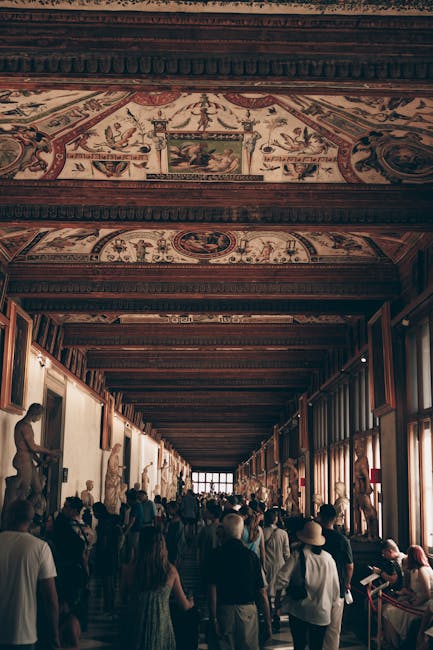






Introduction: Why a 3-Hour Uffizi and Accademia Cultural Itinerary?
Florence, the cradle of the Renaissance, packs an astonishing concentration of art into just a few streets. For travelers short on time but hungry for substance, seeing both the Galleria degli Uffizi and the Galleria dell’Accademia in a focused three-hour visit isn’t just possible — it can be deeply rewarding. You’ll take in must-see masterpieces, sense the workshops and patrons behind them, and get a real feel for the city’s spirit. This plan is made for people with limited windows — train connections, layovers, quick weekend breaks — who still want to experience the core of artistic Florence without rushing so much that they miss the point.
This guide gives you a precise timeline, exact addresses and practical info (prices, opening hours, ticket tips), plus immersive descriptions of the major works and museum spaces. You’ll also find local tips: where to grab a quick espresso, how to dodge the worst crowds, and how to walk efficiently between sites. The approach is pragmatic: start at the Uffizi, closer to the historic center with rooms where you can almost « breathe » the Renaissance, then head to the Accademia to finish in front of Florence’s ultimate icon, Michelangelo’s David.
Three hours may sound short, but it’s plenty for a rich, coherent experience if you make a few upfront choices: book skip-the-line tickets, arrive before or right at opening, and focus on a selected set of highlights. This route is deliberately selective — it’s not trying to replace an exhaustive visit, but to offer a deep, structured immersion. You’ll leave with lasting images — Botticelli’s Venus, the early painters’ rooms, the majesty of the David — and concrete pointers for a deeper return. Each step below includes address, approximate pricing in euros, opening-hour notes as of writing, and practical tips to keep your day smooth and memorable in Florence.

Practical Planning: Addresses, Prices, Opening Hours and Tickets
First things first — here are the official, practical details you’ll need to plan your three-hour window.
- Galleria degli Uffizi
Address: Piazzale degli Uffizi, 6, 50122 Firenze FI, Italy.
Hours (approx.): Tuesday to Sunday, typically 08:15 – 18:30; closed Mondays. Check the official site for holidays and special late openings.
Price: typical standard ticket ≈ €20–€25 (booking fees extra for online purchases). Reduced rates for youth and EU residents under certain conditions; free entry for some categories — see the official ticketing page. - Galleria dell’Accademia
Address: Via Ricasoli, 58/60, 50122 Firenze FI, Italy.
Hours (approx.): Tuesday to Sunday, typically 08:15 – 18:50; closed Mondays. Check current hours before your visit.
Price: typical standard ticket ≈ €12–€16 (booking fees extra for online purchases). Reduced rates for EU youth and other groups.
Ticketing tip: buy skip-the-line tickets online from official sites or reputable agencies. For a 3-hour plan, book your Uffizi entry at the exact hour (for example 09:00) and your Accademia slot about 1h30 later (for example 10:45) — the aim is to spend 75–90 minutes at the Uffizi, then 45–60 minutes at the Accademia. Both museums are under 15 minutes on foot from each other via via della Ninna and via Ricasoli, near Piazza della Signoria.
Tip to avoid queues: aim for opening time, or choose late-evening slots if the museums offer night openings. Carry ID if you qualify for reduced or free entry. Also budget a small extra amount (≈ €1–€3) for lockers or brochures if needed.
 Click here to book a timed entry for Uffizi and Accademia

Minute-by-Minute Itinerary: Make the Most of Your 180 Minutes
Here’s a sample timeline for a three-hour slot, based on an early-morning start (example: 09:00). Adjust to match your booked entry times.
09:00 — Enter the Galleria degli Uffizi (Piazzale degli Uffizi, 6). Begin on the first-floor rooms where the key Renaissance panels are displayed. Prioritize the major works: Botticelli’s “The Birth of Venus” and “Primavera.” Take a moment to notice ceiling lighting, the faded but expressive color palettes, and the painters’ technical passion. A focused but attentive 60–75 minute walkthrough is ideal here.
10:15 — Exit the Uffizi and walk to the Galleria dell’Accademia (Via Ricasoli, 58/60). The stroll takes about 10–15 minutes at a relaxed pace: you’ll pass historic alleyways, come close to Piazza della Signoria and its outdoor sculptures, and get a glimpse of the Palazzo Vecchio.
10:30 — Arrive at the Accademia. Head straight to the main hall where Michelangelo Buonarroti’s David stands. Spend 25–35 minutes in front of the statue to appreciate its proportions, the marble’s texture, and the expressive force of the figure. Don’t miss Michelangelo’s unfinished drawings and sculptures in adjacent rooms — they reveal the artist’s creative process.
11:05 — Wrap up at the Accademia; use any remaining minutes for a quick browse in the gift shop or the temporary exhibitions. Finish your window with an espresso at a nearby café or a stroll toward the central market if time allows.
Timing tips: if your Accademia ticket is for a fixed time, schedule your Uffizi start accordingly. Keep in mind the Uffizi can hold your attention longer than expected in front of certain paintings — plan a buffer. Also honor no-photo zones and the recommended distances around fragile works.
Click here to book a skip-the-line visit to the Accademia Gallery
Must-Sees and How to Read Them: What to See, Why and How
With such a short visit, you need to make choices. Here are the essentials and quick reading keys for each masterpiece so you can get the most out of limited time.
- The Birth of Venus — Sandro Botticelli, Galleria degli Uffizi: Notice the spiral composition, the elegant lines and the pale palette. The painting signals a return to classical models and a new ideal of beauty. Pay attention to how Botticelli renders hair and drapery — that’s where his sense of movement lives.
- Primavera — Sandro Botticelli, Galleria degli Uffizi: A dense allegorical scene; every figure carries symbolic meaning (Venus, Mercury, the Three Graces). Try spotting floral details and the rich botanical motifs, which speak to the Renaissance’s growing interest in nature.
- David — Michelangelo Buonarroti, Galleria dell’Accademia: More than a statue, it’s an emblem of Florentine republican freedom. Move close to study veins and chiselled muscle: Michelangelo seems to sculpt motion even in stillness. Note the scale (5.17 m) and the figure’s slight leftward gaze — a pose originally designed to be seen from the street when it stood outside the Palazzo Vecchio.
- Other Uffizi treasures to spot: works by Leonardo da Vinci (for example “Annunciation” depending on room placement), Gentile da Fabriano’s “Adoration of the Magi,” and Titian’s portraits. Also seek out pre-Renaissance panel paintings — their techniques contrast strikingly with later perspectival innovations.
Visual approach: for each painting, start with an overall take, move closer to read iconographic details, then step back to understand the composition. Give yourself a moment to imagine the original colors and vitality, often dulled by time and restorations. This method gives you depth despite a short visit.
Click here to Book your ticket to see David with Agudio Guide app

Local Tips, Comfort and Good Spots Near the Museums
Florence is very walkable — favor walking to connect the Uffizi and the Accademia. Here are practical tips and useful addresses.
- Getting around: The area between Piazza della Signoria, Ponte Vecchio and via Ricasoli is compact. Count on 10–15 minutes on foot between the Uffizi and the Accademia. Taxis can be slower in the historic center; walking or a scooter is usually faster.
- Quick bites: For a fast espresso and pastry try Pasticceria Nencioni (Via Ricasoli, close to the Accademia) or a traditional bar on Via de’ Calzaiuoli. For a speedy sandwich, Panini Toscani near Piazza della Signoria serves local specialties.
- Lockers and luggage: Some museums offer paid cloakroom services. Otherwise use luggage storage at Santa Maria Novella station if you arrive by train. Avoid large bags: most museums have security checks and may refuse overly bulky items.
- Accessibility: The Accademia provides accessible routes and elevators for some rooms, but parts of these historic buildings remain less accessible; check online accessibility information before your visit.
- Camera bags and rules: Non-flash photography is often allowed in some rooms, but the Uffizi and Accademia sometimes restrict photos. Follow signage and never touch the artworks.
Queue-busting tip: if you’re tight on time, buy combined “Uffizi + Accademia” tickets through certain official operators and schedule entries about 90 minutes apart. At the tail end of the high season crowds thin out, but booking ahead is still wise. And get an early start: morning light in the Uffizi’s glazed rooms creates a special atmosphere, and the crowds are usually lighter.
Click here to Reserve timed entry for Uffizi and Accademia

Conclusion: Three Hours Well Spent in Florence’s Renaissance Heart
Three hours to visit the Galleria degli Uffizi and the Galleria dell’Accademia is a great compromise between time constraints and cultural ambition. By following a structured route — book ahead, start at the Uffizi to trace the painting evolution of the Renaissance, then finish at the Accademia with Michelangelo’s sculptural power — you maximize both the emotional and intellectual impact of your Florence stop. You’ll leave with vivid mental pictures: Venus floating on her shell, Botticelli’s mythic figures, David’s contained tension, and the intimate geography of alleys that link these sites.
This concentrated format demands choices, but they’re informed and rewarding. They turn a hurried visit into a coherent experience: you learn to look, compare and understand artists’ gestures in historical context. The practical information provided — exact addresses, opening times, price ranges, timing tips and local tricks — helps you manage your time effectively and avoid common tourist traps.
Remember this can be the first step in a longer exploration: the works you see in three hours will make you want to come back, dive deeper into lesser-known museums, or simply linger more in the surrounding neighborhoods. Florence invites repeat visits, and each trip peels back another layer of meaning. Whether you’re an informed art lover or a curious traveler on a tight schedule, this cultural itinerary gives you a concentrated dose of beauty, history and emotion — the very essence of Florentine Renaissance.