





Introduction
Florence is, without exaggeration, an open-air museum. Between the façades of the Cattedrale di Santa Maria del Fiore, the profile of the Ponte Vecchio and the galleries full of masterpieces at the Galleria degli Uffizi and the Galleria dell’Accademia, the city is a unique playground for photographers. Whether you’re a photography enthusiast or a traveler wanting to bring home immaculate visual memories, shooting inside Florence’s museums requires not only an eye for composition but also respect for strict rules and techniques suited to spaces often limited by lighting, crowds and conservation regulations.
This guide will walk you through everything: general rules (flash, tripods, phone use), technical tips (white balance, ISO, composition), and practical notes for each major site — the Galleria degli Uffizi, the Galleria dell’Accademia, the Opera del Duomo, the Palazzo Vecchio, the Palazzo Pitti and the Giardini di Boboli, as well as the Museo Nazionale del Bargello. Each section includes exact addresses, common opening hours, indicative prices in euros, and local tips to help turn your museum shots into memorable images.
Photographing in a Florentine museum is more than point-and-shoot: it’s about understanding the often-subdued lighting of exhibition rooms, timing your visits to avoid peak crowds, knowing which areas allow non-flash photos, and sometimes obtaining permits for professional shoots. Artwork conservation is the institutions’ top priority: certain materials (gilded frames, fragile pigments, historic textiles) are highly sensitive to intense light. Following the rules also means helping preserve the heritage for future generations.
Finally, Florence has its own unspoken social codes. Front-of-house staff (ushers and guards) are used to advising visitors; a smile and a polite question will often earn you extra information, and occasionally exceptional permission for specific shots. This article aims to give you concrete tools to succeed with your images while respecting the sites, the works and the staff.

General rules and regulations in Florence museums
First and foremost, it’s essential to know the common rules applied across Florence’s main museums. They’re in place to protect the artworks and ensure a quality visit for everyone. Here are the rules you’ll encounter most often:
- Photography without flash: Most Florence museums allow photography as long as you don’t use flash. Flash can alter pigments and speed up deterioration of works. Practically speaking, this means shooting with ambient (often low) light, which requires adapted settings (higher ISO, wide aperture).
- Tripods and selfie sticks prohibited: Most institutions don’t allow tripods, monopods or extendable selfie sticks (unless you have prior professional authorization). These items are a physical risk to visitors and artworks and obstruct circulation.
- Commercial shoots and special requests: If you want to carry out a professional shoot (advertising, editorial), you must request official authorization from the museum’s communications office and often pay a fee. Without permission, such activities are strictly forbidden.
- Restricted zones / protected works: Some rooms or specific objects (for example historic textiles or manuscripts) may be entirely off-limits for photography, even without flash. Signs and staff will indicate this.
- Respect other visitors: Don’t block aisles, silence your devices, and avoid long exposures in heavily trafficked areas. Tour groups and guided visits often have dedicated time slots; don’t set up in the middle of a passage.
These general rules apply, for example, to the Galleria degli Uffizi (Piazzale degli Uffizi, 6, 50122 Firenze FI), the Galleria dell’Accademia (Via Ricasoli, 58/60, 50122 Firenze FI), and the Museo dell’Opera del Duomo (Piazza del Duomo, 9, 50122 Firenze FI). Hours and prices vary by season and special exhibitions — for instance, standard tickets for the Galleria degli Uffizi often hover around €20 (with extra online booking fees) and the Galleria dell’Accademia around €12. It’s best to check official sites before your visit.
 Click here to reserve timed entry for Uffizi and Accademia

Quick practical tips:
- Check the prohibition signs at the entrance to each room.
- Ask staff politely if any additional lighting can be provided (rare, but sometimes possible for educational needs).
- Get your camera ready (manual mode or aperture priority, set ISO) before entering to avoid fiddling and disrupting other visitors.
Photographic techniques to nail your art shots
Shooting a beautiful photo of a Botticelli painting or a Michelangelo sculpture calls for a technical approach. Museums present specific lighting and spatial constraints: here are techniques tailored to those conditions.
1) Essential settings: Choose a wide aperture (f/1.8–f/4) if you have a fast prime lens to capture enough light and separate the artwork from the background. If you’re using a compact camera or smartphone, enable night mode or HDR to improve dynamic range without using flash. Ramp up ISO carefully — 800 to 3200 depending on your camera — while watching for noise. Prefer aperture priority (Av/A) or full manual to control depth of field.
2) Stabilization: When tripods aren’t allowed, rely on optical stabilization in your lens or camera, or brace the camera against a wall, bench, or your knees to reduce motion blur. A useful trick: shoot bursts and keep the sharpest frame.
3) Composition and perspectives: For paintings, avoid distortion by positioning yourself perpendicular to the work when possible. Sculptures often benefit from multiple angles: try modest low-angle shots to convey monumentality without alienating viewers. Use architectural lines (moldings, jambs, frames) to direct the eye. The rule of thirds works well, but don’t hesitate to center perfectly symmetrical pieces (e.g., altarpieces) for a classic look.
4) Handling reflections and cases: Many works are protected by glass. To reduce reflections, put the lens as close to the glass as you can without touching it and tilt the camera slightly. A circular polarizer can help a lot — though it may be considered semi-professional gear, so check museum policy. With smartphones, shield the glass using your sleeve or body to limit ambient reflections (always maintain distance and respect flow of visitors).
5) Make the most of ambient light: Some museums, like the Galleria degli Uffizi, use lighting designed to create soft shadows. Shoot with side light to highlight texture (brushwork, impasto, sculptural surfaces) and emphasize three-dimensionality. In darker rooms, favor tight compositions over wide, grainy scenes.
6) Responsible post-processing: In post, correct white balance (modern LED lighting can cause color casts), slightly reduce highlights and increase local clarity to bring out detail without altering pigment colors. Avoid edits that change the artwork’s original appearance (excessive saturation or erasing signs of age) if your intention is documentary or respectful of the art.
Click here to book timed entry for the Uffizi Gallery

Finally, practice outside the main rooms: workshops, models, explanatory labels and display cases offer great subjects to test settings before tackling the major works. Master these techniques and you’ll produce images that honor the artwork while revealing its beauty.

Venue-by-venue tips: addresses, hours, prices and photo advice
Florence hosts several unmissable institutions. Below you’ll find practical details and photo tips tailored to each.
Galleria degli Uffizi
Address: Piazzale degli Uffizi, 6, 50122 Firenze FI.
Typical hours: usually Tuesday to Sunday 08:15–18:30 (closed Monday; times may vary).
Indicative price: standard ticket around €20 (plus online reservation fees). Booking recommended.
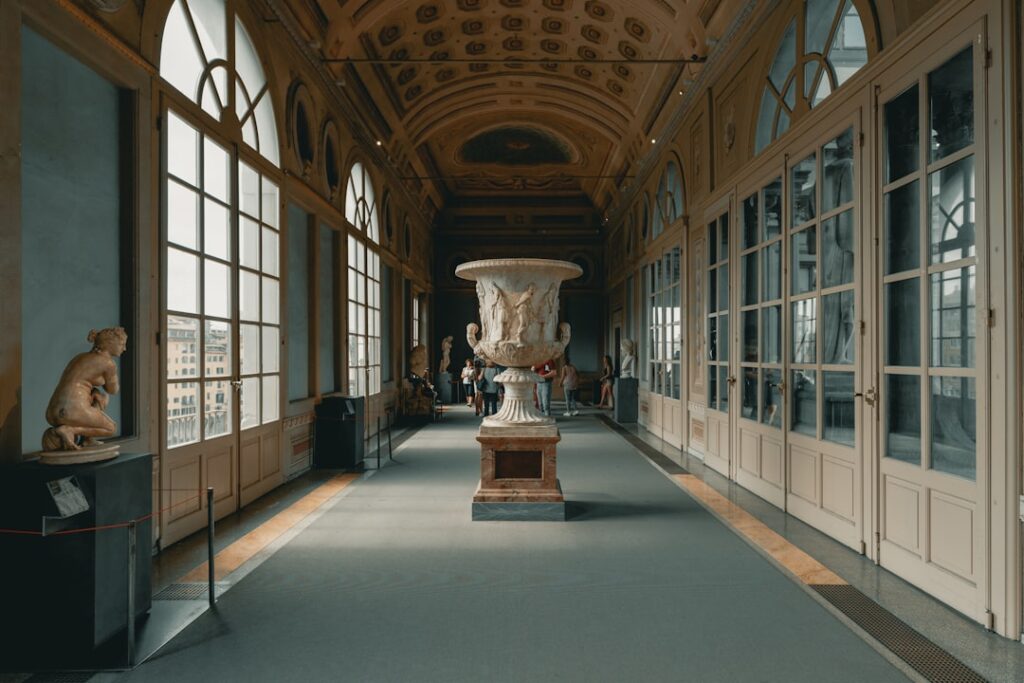
Description: The Galleria degli Uffizi is one of the world’s most visited museums, housing works by Botticelli (The Birth of Venus, Primavera), Leonardo da Vinci, Raphael and Titian. The galleries are long and often crowded, with lighting calibrated specifically for conservation.
Photo tips: Aim for early opening hours to beat the crowds (first time slots in the morning are ideal). Side rooms are often darker — prioritize wide apertures and higher ISO. For iconic paintings, try tight crops on details (faces, hands) to avoid the tourist crush. Ask staff discreetly about access to less busy areas during quiet hours.
Click here to book your ticket for the Uffizi Gallery
Galleria dell’Accademia
Address: Via Ricasoli, 58/60, 50122 Firenze FI.
Typical hours: usually Wednesday to Monday 08:15–18:50 (closed Tuesday).
Indicative price: standard ticket around €12 (booking fees vary).
Description: Famous for housing Michelangelo’s “David,” the Galleria dell’Accademia offers a concentrated experience. The rooms are relatively compact, and the lighting around the David is designed to preserve details while offering good visibility.
Photo tips: Non-flash photography is allowed, but crowds make frontal shots of the David tough. Favor side angles or sculptural details (hands, muscles, expression) to get less-touristy images. Avoid long exposures in place — a short burst will help you pick the sharpest frame.
Click here to book a skip-the-line ticket for the Galleria dell’Accademia
Museo dell’Opera del Duomo
Address: Piazza del Duomo, 9, 50122 Firenze FI.
Typical hours: often open daily 09:00–19:00 (seasonal variations).
Indicative price: Duomo complex pass around €20 (includes baptistery, dome, museum; prices vary).
Description: The Museo dell’Opera del Duomo houses original sculptures removed from the cathedral façade and bell tower, as well as medieval and Renaissance works. Proximity to Piazza del Duomo means heavy foot traffic, but the museum rooms are designed to showcase sculptural forms.
Photo tips: Get close to capture sculpture texture; side light is often more flattering. For works on pedestals, be mindful of posts and barriers — use them as compositional elements rather than trying to remove them digitally. If you want to photograph Brunelleschi’s dome from inside, check the permitted zones and any shooting restrictions.
Click here to book the Brunelleschi Dome climb

Palazzo Vecchio and Museo Nazionale del Bargello
Palazzo Vecchio — Piazza della Signoria, 50122 Firenze FI. Typical hours: 09:00–19:00 (variable). Indicative price: around €12–€15 for museum and tower visits.
Museo Nazionale del Bargello — Via del Proconsolo, 4, 50122 Firenze FI. Typical hours: 08:15–14:00 / 08:30–19:00 depending on season. Indicative price: around €7–€10.
Description: Palazzo Vecchio, the historic seat of Florentine power, offers richly decorated rooms and a panoramic tower. The Bargello is the go-to place for sculpture (Donatello, Cellini). Interiors in both venues are especially photogenic, combining frescoes, woodwork and statuary.
Photo tips: In Palazzo Vecchio, play with large spaces and ornamental details. For the Bargello, shadows are common; favor a fast lens and get closer to works (while respecting barriers). Views from Palazzo Vecchio’s tower provide panoramas of Piazza della Signoria and the riverfront — great in late afternoon.
Click here to book a ticket for Palazzo Vecchio
Click here to buy an entry ticket for the Museo Bargello

Palazzo Pitti and Giardini di Boboli
Address: Piazza de’ Pitti, 1, 50125 Firenze FI.
Typical hours: Pitti museums 08:15–18:30 / Boboli gardens season-dependent 08:15–16:30 or 09:00–17:30.
Indicative price: combined tickets for the Palace and gardens around €16–€20 (depending on exhibitions).
Description: The Palazzo Pitti complex and the Giardini di Boboli combine sumptuous interiors (Palatine Gallery, royal apartments) with sculptural outdoor spaces. The gardens offer rare open-air perspectives right in the city center.
Photo tips: Indoors, work with backlighting in rooms with tall windows. Outdoors, the gardens are perfect for portraits and architectural details; avoid midday sun for softer light. Boboli statues photographed in morning or evening light look sculptural and dramatic.
Click here to book a ticket for Pitti Palace and Boboli
Practical information common to most sites
- Booking: most museums recommend or require online booking. Have an electronic copy of your ticket ready.
- Luggage: large suitcases and oversized bags are often prohibited; cloakrooms or paid storage may be available (a few euros).
- Guided tours: consider small-group guided tours for easier access and context that will help you take more meaningful photos.
Legal aspects, copyright and image use
Photographing artworks raises legal questions. In Italy, as elsewhere, photographing a physical object in a museum is generally allowed for personal, non-commercial use. However, publishing, selling or commercially exploiting those images can be subject to copyright and museum rules.
1) Copyrighted works: Some recent works may still be protected by copyright (70 years after the author’s death in Europe). For Renaissance works (Michelangelo, Botticelli), copyright has expired. Still, museums may impose restrictions for conservation or exhibition reasons. If you plan commercial use (selling prints, promotional use), contact the museum’s communications office for written permission and possible fees.
2) Museum rights over staging: Some museums claim rights over photographs taken on their premises, especially if an image includes the staging of a temporary exhibition. Read the conditions posted at the entrance; often, « non-commercial » photography is tolerated while reproduction and distribution may be limited.
3) Online publishing and social networks: For personal use and sharing on social media (Instagram, Facebook), you’re unlikely to face issues if you follow museum rules (no flash, no bulky gear). If you’re a professional blogger or influencer, notify the museum and request accreditation. Some institutions offer media kits or paid authorizations for broader usage.
4) Moral respect for the work: Even if a work is in the public domain, avoid manipulations that alter its meaning or could be seen as disrespectful. For example, don’t retouch a painting to the point of changing its historic colors if your aim is documentary. Always credit the source and location (museum name, city) when publishing.

Local tips and logistics for photographers in Florence
To make the most of your time and photos in Florence, consider these practical and strategic local tips.
- Best times to visit: Early morning at opening and the last hours before closing are usually less crowded. Weekdays in the low season (November–February) are ideal for peace and quiet. In high season (April–September), book early and plan morning slots.
- Getting around: The historic center is compact — walk whenever possible. Use a discreet, closed backpack for gear. Keep equipment secure to avoid theft or accidental damage.
- Combined tickets: Many sites offer combination passes (e.g., Opera del Duomo Pass) that save time and money. Check validity periods before buying.
- Eating: After a morning in the museums, choose nearby cafés and osterias: Trattoria Mario (Via Rosina, 2r) is popular for a typical lunch, while Caffè Rivoire (Piazza della Signoria) offers a coffee break overlooking the square. These places get busy — arrive early to avoid queues.
- Safety: Watch out for pickpockets in tourist areas (Ponte Vecchio, Piazza del Duomo). Keep your kit close and avoid changing lenses in crowded rooms.
- Language: A few Italian phrases help: « Posso scattare una foto? » (May I take a photo?) is usually well received. Staff typically speak English, but a polite Italian phrase can open doors.
Click here to buy pass for the Duomo complex and Giotto’s bell tower

Finally, alternate indoor visits with outdoor walks: the view from Piazzale Michelangelo (viale Michelangelo, 50125 Firenze FI) offers panoramic shots of Florence with the Duomo and red roofs in the background — a perfect way to finish a day of museum photography.
Conclusion
Photographing inside Florence’s museums is a rewarding but regulated experience: the extraordinary beauty of the works comes with conservation constraints and heavy visitation. To capture great images, prepare technically (aperture, ISO, stabilization), follow the rules (no flash, no tripod, get permits for commercial use) and adapt your approach to each venue. The museums mentioned — Galleria degli Uffizi (Piazzale degli Uffizi, 6), Galleria dell’Accademia (Via Ricasoli, 58/60), Museo dell’Opera del Duomo (Piazza del Duomo, 9), Palazzo Vecchio (Piazza della Signoria), Museo Nazionale del Bargello (Via del Proconsolo, 4) and the Palazzo Pitti complex (Piazza de’ Pitti, 1) — each offer different settings and challenges your photographic eye will learn to handle.
In practice: book in advance, choose morning slots to limit crowds, test settings on secondary objects before tackling the major pieces, follow posted rules and contact the communications office for any commercial use. Don’t overlook the small details either: the texture of an impasto, a crackle in the paint, the shadow cast by a sculpture — all the little elements that make museum photography rich.
Remember that your role as a museum photographer is twofold: capture beauty for memory and help preserve that beauty for others. Respectful behavior, good preparation and appropriate techniques will leave you not only with beautiful images but also with the satisfaction of contributing to the preservation of Florence’s heritage. Good luck and happy photographing in Florence!