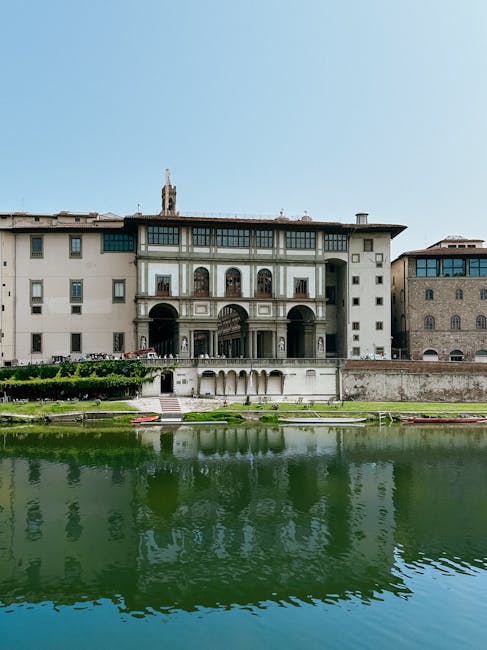






Introduction: Why the Florentine Renaissance Still Speaks to Us
The Florentine Renaissance is not just a chapter in history textbooks — it’s a whole city that breathes this legacy in every stone, square and artwork. Strolling through Florence (Firenze) feels like wandering through a cultural laboratory where the artistic ingenuity, civic architecture and scientific experimentation of the 15th and 16th centuries still shape how we perceive beauty, proportion and the role of art in public life. This article offers a themed walk — a structured way to explore the city that highlights the places, monuments and experiences that embody the Florentine Renaissance today, while giving you practical info, opening hours, addresses and hands-on tips.
This themed route is meant to be immersive: it blends major museums like the Galleria degli Uffizi and the Galleria dell’Accademia, urban walks — from the Piazza del Duomo to the Ponte Vecchio — and pauses in gardens and palaces where Renaissance thinking operated as much as a social machine as an aesthetic one. For each stop you’ll find the full address, a ballpark price in euros, typical opening hours (always check before you go), and detailed descriptions to help you spot masterpieces and understand their historical context.
This guide also includes practical tips to make the most of your time: booking tickets in advance, less crowded time slots, pedestrian routes that let you experience the visual sequences the Medici and architects like Filippo Brunelleschi carved into the city. You’ll also find café recommendations, panoramic viewpoints and tricks for photographing façades and interiors without feeling overwhelmed by the crowds. Florence is best experienced slowly — but with a well-prepared themed visit, every stop becomes a meaningful, sensory lesson.
Before we dive into the step-by-step itinerary, keep one simple rule in mind: to understand the Florentine Renaissance today, alternate museums, public spaces and walks. It’s by confronting sculpture in its public setting, painting within church altarpieces and urban design that you truly perceive the virtuosity of this period. This guide is flexible: you can follow the route in one full day or spread it over two or three days to savor each stop.

1) The Spiritual and Technical Heart: Piazza del Duomo, Cathedral of Santa Maria del Fiore and the Bell Tower
Piazza del Duomo is the mandatory starting point for any Renaissance-themed visit. At the center of the square stands the Cattedrale di Santa Maria del Fiore (Cathedral of Santa Maria del Fiore), a masterpiece of Gothic-Renaissance architecture. Address: Piazza del Duomo, 50122 Firenze FI, Italy. The cathedral, famed for its dome designed by Filippo Brunelleschi, is a symbol of technical ingenuity and civic ambition.
Address and access:
- Cattedrale di Santa Maria del Fiore — Piazza del Duomo, 50122 Firenze FI, Italy.
- Campanile di Giotto (Giotto’s Bell Tower) — Piazza del Duomo, 50122 Firenze FI, Italy (adjacent to the cathedral).
- Battistero di San Giovanni (Baptistery of St. John) — Piazza del Duomo, 50122 Firenze FI, Italy.
Opening hours and ticketing (subject to change — always check the official site):
- Duomo (interior access) — Typical hours: 10:15–16:45 (closed during religious services). Indicative price: entry to the nave is free, but access to the monumental areas is via the combined pass.
- Cupola di Brunelleschi (Dome climb) — Hours: 08:15–19:00. Indicative price: the Opera del Duomo combined pass is roughly €20–25 (covers access to the Duomo, Bell Tower, Museo dell’Opera del Duomo, Baptistery and Brunelleschi’s Dome depending on the formula).
- Campanile di Giotto — Hours: 08:15–19:00. Included in the combined pass. Reserve a time slot.
- Battistero di San Giovanni — Hours: 08:15–10:15 then reopening 11:00–19:00 (seasonal variations). Separate ticket or included in some passes: about €7–10.
Immersive description: climbing Brunelleschi’s dome gives you a visceral understanding of Renaissance proportions and structural innovation. The ascent — 463 narrow steps with views that unfold in stages — is a perfect metaphor: the Renaissance isn’t absorbed instantly; it’s earned through intellectual and technical effort. At the top, the panorama over terracotta roofs, the Arno and the silhouette of Palazzo Vecchio is breathtaking.
Local practical tips:
- Book the Duomo Pass online at least 48–72 hours in advance during high season: dome time slots sell out fast.
- Avoid bringing large suitcases — access is limited and stairs are narrow.
- If you’re uncomfortable in tight spaces, consider climbing the Campanile di Giotto instead for similar views with less effort.
- Allow at least 1h30–2h for the Duomo complex to visit the Museo dell’Opera del Duomo and the Baptistery mosaics.
 Click here to book your ticket to climb Brunelleschi’s Dome
Click here to book your ticket to climb Brunelleschi’s Dome

2) Galleries of Artistic Power: Galleria degli Uffizi and Galleria dell’Accademia
Two museums are essential to understand Florentine Renaissance painting and sculpture: the Galleria degli Uffizi and the Galleria dell’Accademia. Each tells a different chapter: the Uffizi trace the development of painting, patronage and religious commissions, while the Accademia highlights sculpture and the invention of the human ideal embodied by Michelangelo.
Galleria degli Uffizi — practical info:
- Address: Piazzale degli Uffizi, 6, 50122 Firenze FI, Italy.
- Hours: typically 08:15–18:30 (closed on Mondays, special hours on public holidays).
- Price: full ticket around €20–25. Reduced rates for young EU citizens, free entry under certain conditions; booking strongly recommended (online reservation fees may apply).
Immersive description: on the ground floor at the Uffizi, the rooms unfold like chapters in a book: Madonnas by Duccio and Giotto, Fra Angelico altarpieces, then the explosion of perspective with Piero della Francesca and the dramatic compositions of Botticelli — notably « The Birth of Venus » and « Primavera. » The frames, dimmed light, explanatory panels and an audio guide help you reconstruct the Medici patronage network. Spend time in front of a painting rather than rushing: five focused minutes can reveal the mastery of color and composition.
Galleria dell’Accademia — practical info:
- Address: Via Ricasoli, 60/62, 50122 Firenze FI, Italy.
- Hours: typically 08:15–18:50 (closed on Mondays). Check seasonal hours.
- Price: full ticket about €12–16. Booking is recommended, especially to see Michelangelo’s David with less waiting.
Immersive description: the first encounter with the David is almost ceremonial: the statue, carved from a single block of marble and left with a subtle finish, catches light in a way that makes it seem alive. The Accademia also houses sketches and unfinished sculptures by Michelangelo, tools and maquettes — clues to his creative process. For photos, follow the « no flash » signs and use a medium focal length lens to capture the whole figure without distortion.
Local practical tips:
- Book ahead and choose late afternoon times for the Uffizi (softer light, less « museum smell »).
- For the Accademia, arrive 10–15 minutes before opening if you don’t have a timed ticket.
- Consider a thematic guided tour (e.g., « Botticelli and the Medici ») for a richer reading of the Uffizi galleries.
- Don’t skip the secondary rooms in both museums: you’ll often find lesser-known gems that are unexpectedly moving.
Click here to book a skip-the-line visit to the Accademia
Click here to book your ticket for the Uffizi Gallery
Click here to book your ticket for the Uffizi Gallery
Click here to book a skip-the-line visit to the Accademia
3) Palaces, Squares and the Political Stage: Palazzo Vecchio, Piazza della Signoria and the Public Loggias
Renaissance Florence was not only artistic — it was political. Civic power was written in stone across public buildings, square statues and urban ceremony. The center of this political theater is the Piazza della Signoria, dominated by the Palazzo Vecchio.
Practical info:
- Palazzo Vecchio — Address: Piazza della Signoria, 50122 Firenze FI, Italy. Hours: 09:00–19:00 (last entry 18:00). Price: full ticket about €12–14; guided tours and the Arnolfo tower climb may be extra or sold as a combined option.
- Piazza della Signoria — Public square, open 24/7 (watch for special events and temporary installations).
- Loggia dei Lanzi — Located on Piazza della Signoria; free access to view public sculptures, including famed originals and copies.
Immersive description: Palazzo Vecchio, with its crenellated tower, reads as a civic fortress turned representational palace. Inside, the apartments and reception rooms show how families and magistrates used art to legitimize power: monumental frescoes, gilded ceilings and iconographic programs celebrating victories and civic virtues. The main hall, the Salone dei Cinquecento, is where painting becomes political rhetoric, crafted to impress delegates and visitors.
Local practical tips:
- Climb the Palazzo Vecchio tower (when open) for a bird’s-eye view over Florence and the Arno — great for orienting yourself in the city.
- The Loggia dei Lanzi offers a museum-in-the-open-air experience: contrast bronze and marble detailing with the urban backdrop to understand how sculptures were made highly visible.
- In the late afternoon, Piazza della Signoria is ideal for watching urban rituals: pop-up markets, concerts or cultural happenings often animate the square.
- Avoid eating standing in the square during high season: municipal regulations can restrict vendors and crowding.
Click here to book access to the Arnolfo tower and the Palazzo Vecchio
Click here to book access to the Arnolfo tower and the Palazzo Vecchio
4) Gardens, Private Palaces and the Musical Life: Palazzo Pitti, Boboli Gardens and Oltrarno Workshops
To round out your reading of the Renaissance, cross the Arno to the Oltrarno, the neighborhood that houses artisan workshops, private palaces and Italian-style gardens that framed Florentine cultural life. Two essential stops: Palazzo Pitti and the Giardino di Boboli.
Practical info:
- Palazzo Pitti — Address: Piazza de’ Pitti, 1, 50125 Firenze FI, Italy. Hours: 08:15–18:50 (varies by internal museums: Galleria Palatina, Museo degli Argenti, etc.). Price: combined palace + gardens ticket roughly €16–20; internal museums may charge separate fees for temporary exhibitions.
- Giardino di Boboli (Boboli Gardens) — Address: Piazza Pitti, 1, 50125 Firenze FI, Italy. Hours: often 08:15–18:30 (seasonal variation). Price: about €10–12 (sometimes combined with the Galleria Palatina).
Immersive description: the contrast from the city’s bustle to the gardens’ calm is striking. Boboli is more than a park: it’s a manifesto of Renaissance landscape aesthetics, with symmetrical avenues, antique statuary and artificial grottos (like the Grotta del Buontalenti). From the terraces, views over the Arno, the city and the Duomo’s dome create a theatrical composition designed to be enjoyed from the palace apartments.
Local practical tips:
- Pair a visit to the Galleria Palatina (inside Palazzo Pitti) with a leisurely walk through Boboli to grasp the relationship between private collections and reception spaces.
- Visit Oltrarno workshops (via dei Serragli, via Santo Spirito) to watch traditional techniques in bookbinding, marquetry and goldsmithing — practices closely aligned with the Renaissance spirit of craft transmission.
- Bring water and a hat in summer: the paths are sunny and there’s a lot of walking.
- For temporary exhibitions, ticket desks may offer multilingual audio guides; choose morning slots for fewer crowds.
Click here to book your ticket for Palazzo Pitti and the Boboli Gardens
Click here to book your ticket for Palazzo Pitti and the Boboli Gardens

5) Contemporary Scenes, Workshops and Renaissance-Inspired Experiences
The Renaissance isn’t confined to museum walls: it lives on in today’s workshops, festivals and contemporary interventions. Florence offers conservation workshops, mosaic schools and culinary experiences that extend the Renaissance logic of skill transmission and technical refinement.
Addresses and experiences to consider:
- Opificio delle Pietre Dure — Address: Via Alfani, 78, 50121 Firenze FI, Italy. A renowned center for conservation and hardstone work; workshops and visits by appointment. Hours and tours: variable, by request. Price: workshops and visits are paid, priced by program.
- Scuola del Cuoio (Leather School) — Address: Via San Niccolò, 17r, 50125 Firenze FI, Italy (near Oltrarno). Leathercraft workshops inspired by historical techniques. Hours: 10:00–18:00 depending on season. Price: workshops start around €30–50 depending on the session.
- Culinary « Renaissance taste » workshops with various chefs in the historic center: pasta and sauce classes, pairings with Tuscan wines. Price: €60–120 per person depending on duration and ingredients.
Immersive description: joining a conservation workshop or a jewelry-making lesson is a direct way into the workshop culture of the Renaissance, where master and apprentice shared a craft grounded in precise gestures. These experiences let you understand materials, surfaces and attention to detail: marble polishing, gold leaf preparation, pigment mixing. They’re also a tangible way to add material culture to the intellectual museum visits.
Local practical tips:
- Book workshops several weeks in advance, especially during the high season.
- If you want to observe an ongoing restoration, contact the Opificio delle Pietre Dure ahead of time — access is limited to protect the works.
- For cooking classes, ask whether the recipes use local ingredients (e.g., Tuscan DOP olive oil, Chianti Classico wines) for a fuller taste immersion.
- Check if workshops include a collection visit or a short historical module to situate the technical gestures in their Renaissance context.
Click here to book a workshop at Alessandro Dari’s Museo del Gioiello
Click here to book a workshop at Alessandro Dari’s Museo del Gioiello

Conclusion: Making the Renaissance a Lived Path
The Florentine Renaissance is not a static collection of objects to be glanced at: it’s a network of gazes, workshops and public spaces that invites reflective practice. By following this themed route — from the Duomo complex to major museums, from political squares to private gardens, including contemporary workshops — you’ll build a living interpretation of the era. The addresses, hours and prices here let you plan your days efficiently, but remember the most important thing is the time you give to observation: a painting, a statue, a panorama reveal themselves when you stop and look.
Final tips:
- Get skip-the-line tickets for the Uffizi and Accademia and reserve your time slot for Brunelleschi’s Dome. Physical constraints (stairs, crowds) call for planning ahead.
- Schedule breaks in historic cafés (for example near Piazza della Signoria or in the Oltrarno) to process what you’ve seen and let images settle.
- Talk to local artisans: a piece of jewelry, a small binding or a leather repair offers a tangible memory of the technical lineage between the 15th century and today.
- Finally, think about light: the golden hours (about an hour after sunrise and an hour before sunset) transform stone and color, and are ideal for photographing the city while preserving the depth and character of the sites.
Exploring the Florentine Renaissance today means alternating panoramas, museum rooms and living workshops. It also means accepting that each visit reveals a different facet: civic power, technical invention, religious devotion, private luxury and artisanal skill. By making this themed route your own, you won’t just see Florence — you’ll feel it as a place where the past continues to converse with the present, in stone, paint, vegetation and the hands of its craftsmen.