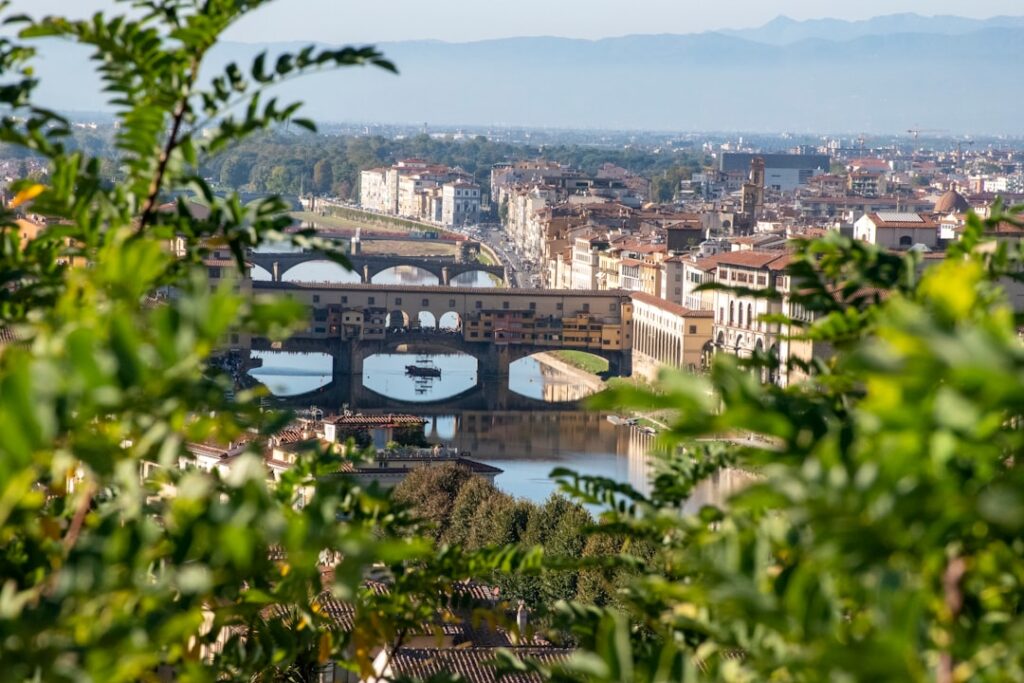






Introduction — Florence, a crossroads of Tuscan flavors
Florence isn’t just the capital of Renaissance art — it’s a true culinary crossroads where markets, small farms and family-run shops have been producing the flavors that define Tuscany for generations: sheep and cow cheeses, rustic cured meats, grassy fruity olive oil, and vineyards spilling over rolling hills. A food tour around Florence takes you off the beaten track to meet local producers, taste cheeses aged in the Chianti hills, and learn the simple but crucial techniques that make a Pecorino Toscano or a fresh ricotta truly special.
This guide maps out an immersive route: from the buzzing stalls of the Mercato Centrale di Firenze to the shaded tables of a traditional fattoria in the Fiesole hills, via a historic cheese shop in the city center and a stop in Greve in Chianti for charcuterie and wine. You’ll find full addresses, opening hours, indicative tasting and purchase prices, plus practical tips for planning your day — transport, bookings, local etiquette and little secrets to get the most out of every stop.
The goal is twofold: to guide your palate and to offer a sensory narrative. In Florence, cheese is tasted with the eyes and nose as much as with the mouth. Picture a board with a mild Pecorino, a creamy caciotta, a still-warm ricotta, paired with local rosemary honey and a Chianti Classico that lifts every bite. Each producer has a story: hand molding, cave aging, flocks fed on the surrounding hills — small details that explain why cheeses from towns a few dozen kilometers apart can taste so different.
This guide is practical and lively. It’s written for travelers with a half or full day to dedicate to food discovery, and for true food lovers willing to travel to a fattoria for a guided visit. You’ll find suggested routes, prices in euros for common tastings and purchases, and opening hours to plan your schedule. I also share tips on storing cheeses, how to ask for a tasting plate in Italian, and how to combine cultural visits (basilicas, palaces and viewpoints) with tasty breaks between monuments.
 Click here to reserve your Accademia entry with audio guide

1. Mercato Centrale di Firenze and San Lorenzo — market stalls and first bites
A perfect starting point is often the Mercato Centrale di Firenze, right in the heart of the San Lorenzo neighborhood. Address: Mercato Centrale, Via dell’Ariento, 50123 Firenze FI. The historic building, next to the Basilica di San Lorenzo (Piazza San Lorenzo, 50123 Firenze), hosts traditional food stalls on the ground floor and a large contemporary food hall on the first floor.
Opening hours: the ground-floor food market is usually open Monday to Saturday from 7:00 to 14:00; the food court upstairs typically has extended hours and is often open 10:00–23:00 every day (check locally for seasonal schedules). Prices: a tasting on-site often starts from €6–12 for a simple plate (three cheeses), and expect €12–25 for a full meal in the food court.
Why start here? The market is a sensory playground: you’ll find young artisan cheesemakers, salumi stalls, olive oil producers and honey sellers. It’s the ideal place for first-hand contact — taste a fresh pecorino, ask about aging, and identify the producers you might want to visit outside Florence.
Practical tips: come early to avoid crowds (especially in high season), carry some cash for small producers (many vendors take cards, but small neighborhood shops often prefer cash), and always ask for an « assaggino » (a small sample) before buying a whole cheese. If you plan to fly with cheeses, check airline rules and bring a soft cooler for the day.
- Address: Mercato Centrale, Via dell’Ariento, 50123 Firenze FI
- Opening hours (indicative): Ground floor 7:00–14:00, Food court 10:00–23:00
- Prices: Tasting plate €6–12, food court meals €12–25
- Tip: ask for an « assaggino » and look for labels reading « Pecorino Toscano DOP »

2. The artisan cheese shop in the city center — small stores, big flavors
After the market, head to a specialty shop for a deeper tasting. A local favorite is La Bottega del Formaggio (example address for an itinerary) located at Via dei Neri 51R, 50122 Firenze FI, just a few minutes’ walk from Piazza della Signoria (Piazza della Signoria, 50122 Firenze). These shops offer cheeses aged by master affineurs, often paired with jams, honey and locally produced olive oils.
Hours: typically open 9:30–19:30 Monday to Saturday; some close on Sunday. Prices: a recommended tasting board may start at about €8 (single-person board), and cheeses for sale range from roughly €6/kg for very common items to €30–40+/kg for rare aged or DOP products (an aged Pecorino Toscano DOP, for example).
Immersive description: push open the door and you’re greeted by milky aromas and the scent of aging rooms. Boards are often presented with chunks showing rind and paste, and notes about origin: « Latte crudo », « affinato 6 mesi », « fior di latte ». Staff usually know each producer’s story: sheep husbandry, grazing patterns, seasonality. Don’t be shy with technical questions — artisans love to talk about milk origin and aging methods.
Practical tips: if you’re buying for a picnic, ask for a take-away board « da asporto » with greaseproof paper and a small knife. For a gastronomic souvenir, choose well-aged cheeses that travel better. And for a convivial experience, book a guided mini-tasting if available — expect €15–30 per person for a commented selection of 4–6 cheeses.
3. A Chianti and Greve in Chianti outing — where cheese meets cured meats
About thirty kilometers southeast of Florence lies Chianti — a patchwork of vineyards and cypress-lined hills. The must-stop town is Greve in Chianti, the hub for wine and local specialties. A recommended stop: Antica Macelleria Falorni, at Piazza Matteotti 29, 50022 Greve in Chianti (FI). This historic butcher shop (in business since 1846) offers salumi and on-site tastings.
Hours: Antica Macelleria Falorni is generally open Monday–Saturday 8:30–13:00 / 15:30–19:30; Sunday 9:00–13:00 (seasonal hours may vary). Prices: a mixed board (salumi + local cheeses) for two is often €15–30; a guided visit or tasting workshop requested in-store can be €25–45 per person.
Beyond cured meats, Chianti is rich in sheep cheeses. Look for labels that read « Pecorino Toscano DOP » and favor producers who feed their animals local hay rather than industrial feed — it shows in the flavor. Shops in Greve often offer « wine & cheese pairing » packs: a glass of Chianti Classico (about €4–7) alongside a selection of regional products.
Getting there: reach Greve by train + bus or rent a car from Florence (drive time ~40–50 minutes). If you opt for public transport, take a train toward Figline Valdarno then a bus to Greve; a car gives you freedom to visit tucked-away farms. Book Falorni tastings in advance in high season (summer weekends and harvest time), and bring a cooler if you buy fresh items.
- Address: Antica Macelleria Falorni, Piazza Matteotti 29, 50022 Greve in Chianti (FI)
- Hours (indicative): Mon–Sat 8:30–13:00 / 15:30–19:30, Sun 9:00–13:00
- Prices: Mixed board €15–30, tasting workshop €25–45
- Tip: pair your tasting with a wine tasting at a nearby cantina
Click here to book a white-wine tasting with aperitivo
4. Fattorie and farms around Fiesole — farmstead cheeses, olive groves and views
For an authentic rural experience just a few kilometers from Florence’s center, head to Fiesole, perched on the hills to the northeast. One interesting option is Fattoria di Maiano, at Via di Maiano 1, 50014 Fiesole FI (confirm the exact entrance on site). The fattoria welcomes visitors for walks, animal encounters and tastings of farm products.
Hours: most fattorie operate visits by reservation; indicative hours for Maiano are 9:30–18:00, with guided tours in the morning and early afternoon (book at least 48 hours in advance). Prices: guided visit and tasting €12–20 per person; cheesemaking workshops (if available) €30–50 per person.
Immersive experience: imagine a small farm where goats and sheep graze before a panorama of Florence, the Duomo silhouetted in the distance. Visits usually start with a stroll through the pens, followed by a milking demonstration and a workshop on making ricotta or fresh cheese. Products are served with house bread, olive oil pressed on-site and local wine. Being close to the animals helps you understand seasonality: spring brings delicate, herb-infused milk; winter yields cheeses with deeper, concentrated flavors.
Practical tips: dress in layers — mornings on the hills can be cool; wear closed shoes for walking around the pens. Book ahead, especially on weekends or if you want a hands-on workshop. If you’re traveling with children, check for family-friendly activities (some farms offer kids’ programs). For cheese purchases, ask for small vacuum-sealed portions for train or plane travel.
Click here to climb Brunelleschi’s Dome for panoramic views

5. Practical tips for organizing your food tour around Florence
Planning a gourmet day around Florence takes a few small precautions to keep the experience smooth and enjoyable. Here are practical, logistical and culinary tips to help you make the most of your excursion.
Transport: Florence’s historic center is very walkable, but to reach Greve in Chianti, Fiesole or other farms, a car is the most convenient option (rentals in Florence cost about €35–60/day depending on the model). If you prefer trains, use Santa Maria Novella station (Piazza della Stazione, 50123 Firenze) as your hub; trains and buses run to Figline, Prato and Fiesole from there. For isolated farm visits, book a taxi or a private tour.
Reservations: many shops welcome walk-ins, but for workshops, farm visits and guided tastings, book 48–72 hours in advance, especially in high season (May–September). Allow extra time for lunch: most visits end around midday and it’s a pleasure to enjoy a picnic or stop at a local osteria.
Budget: for a full day (market + shop + farm + lunch + transport), budget €60–120 per person depending on activities (paid tastings, guided visits, purchases). Simple tastings are affordable (€6–25), but workshops and specialty purchases (aged cheeses, single-varietal olive oil, vintage wines) can raise the bill.
Language and communication: in Italian, « assaggiare » means to taste, « formaggi » = cheeses, « salumi » = cured meats. A short phrase list helps: « Vorrei fare una degustazione » (I would like to do a tasting), « È prodotto qui vicino? » (Is this produced nearby?), « Come conserva questo formaggio per il viaggio? » (How do you preserve this cheese for travel?). Most tourist-focused vendors speak English, but a smile and a few words in Italian will always open doors.
Storing and transporting cheeses: if you’re flying, check dairy regulations for your destination country. For a day trip, a soft cooler with ice packs is enough. For long-distance transport, ask for vacuum-sealed packaging. Avoid packing fresh cheeses (ricotta) together with delicate aged blues in the same compartment to preserve aromas and textures.

Sample one-day itinerary (example)
- 9:00 — Mercato Centrale (Via dell’Ariento): quick tastings and purchases
- 11:00 — Specialty shop (Via dei Neri): guided tasting
- 13:00 — Drive to Greve in Chianti (Antica Macelleria Falorni): board and a glass of Chianti
- 16:00 — Fattoria di Maiano (Fiesole): farm visit and ricotta workshop
- 18:30 — Return to Florence for a light dinner near Piazza della Signoria
Conclusion — tasting Florence through its terroirs
A food tour around Florence invites you to slow down, listen to producers’ stories and let each bite tell you something about the land. In the heart of Florence, between the Duomo’s grandeur and the cobbled streets, you’ll find barn scents, aging cellars and stalls where people talk about herbs, seasons and milk. Outside the city, the Chianti hills and Fiesole farms transform those raw materials into refined products: raw-milk Pecorino, still-warm ricotta, slowly cured salumi and first-press olive oil. Each stop brings you closer to understanding the relationship between product and place.
For travelers, the key is curiosity paired with respect: respect producers’ schedules, production seasons and local customs (for example, book workshops and bring cash for small shops). Also take the right gear: a soft cooler, sturdy wrapping paper and a small knife if you plan on sharing improvised boards. And be open to surprises — often the best discoveries are informal meetings with an affineur who offers a taste of an unusual rind or a farmer who ladles out a spoonful of honey with a small piece of cheese.
Finally, Tuscany is a land of sharing. Sharing a cheese board, rustic bread and a glass of Chianti with friends, a producer or a new companion on the road is how these products have survived through the centuries. Florence and its surroundings perfectly combine art and terroir: by tasting, you join a living story. Buon viaggio e buon appetito — safe travels and enjoy your meal!