





Introduction
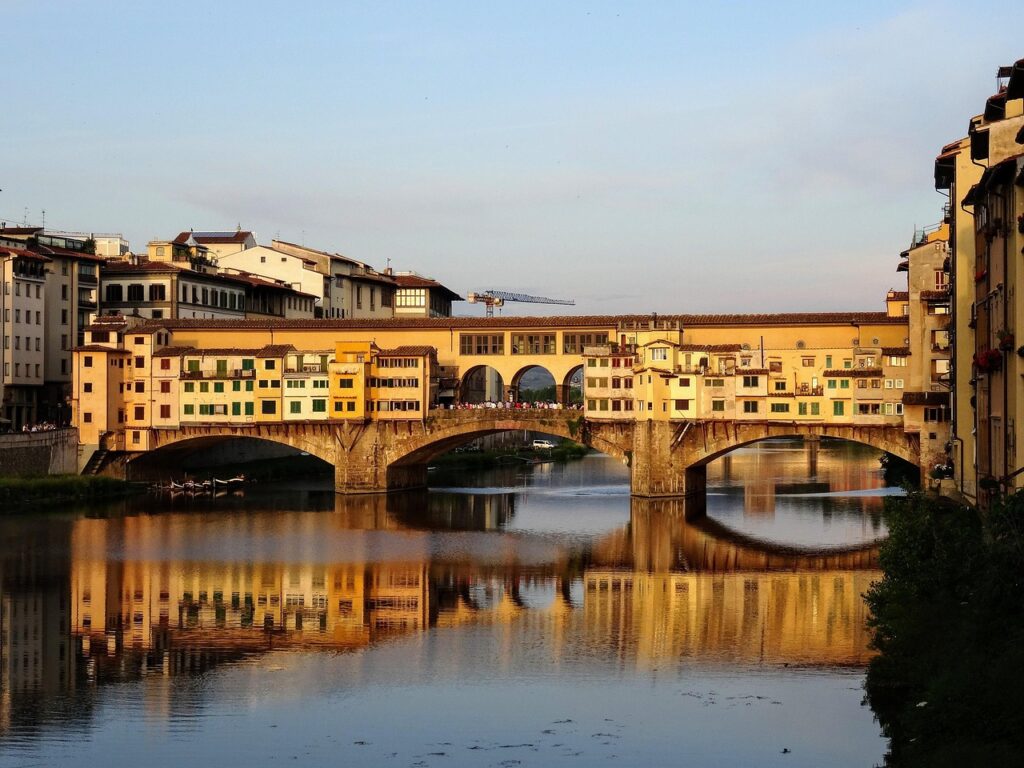
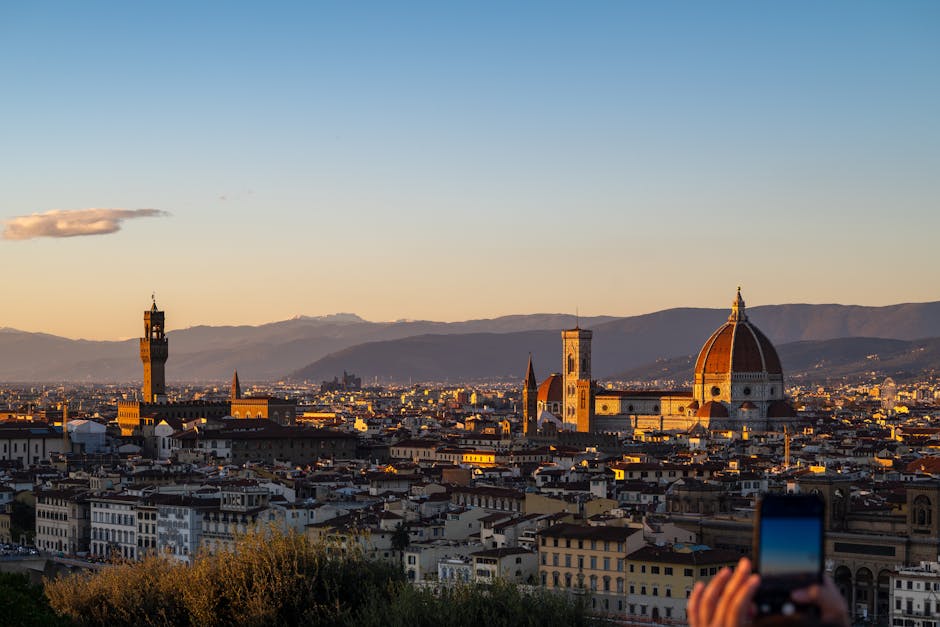
Florence is a city where history is written into every stone, façade and side street. Among its treasures that often remain hidden from the general public, the Vasari Corridor — or “Corridoio Vasariano” — stands out as one of the most fascinating and secret passages on the Italian peninsula. Built in the late 16th century by Giorgio Vasari at the request of Grand Duke Cosimo I de’ Medici, this elevated corridor links the Palazzo Vecchio, Florence’s political heart, to the Palazzo Pitti, the Medici residential seat after they moved to the south bank of the Arno. The route winds above the rooftops, crosses the Galleria degli Uffizi, runs along the riverbank and spans the Ponte Vecchio through a private passage, offering views few people ever get to see.
Today the Vasari Corridor is a rare experience, accessible through limited guided tours that let you feel the overlap of power, art and private life of one of the most influential dynasties of the Renaissance. More than a simple passage, the visit tells an intimate story: how the Medici moved safely between their residences while controlling what the public could see, and shaping their image through monumental architecture. The corridor also functions as a roaming museum, displaying a collection of self-portraits, objects and decorative fragments gathered over centuries, and opening onto windows and viewpoints that reveal unique perspectives on Florence.
For the modern visitor, the Vasari Corridor is more than a tourist attraction: it’s an immersion into a time when architecture served authority and family glory. The visit requires preparation and patience — advance booking, adherence to strict rules (photos often limited, small group sizes, restricted routes) and curiosity for historical detail. In this article you’ll find not only a descriptive account of the itinerary and the experience, but also all the practical information you need: exact addresses, prices, typical opening times, booking tips, how to get there, what to see nearby and how to make the most of your visit.
Before setting off on this journey through a gallery suspended above Florence, note that access can change depending on the season, restorations and institutional events. The information below reflects the most recent situation and should serve as a planning guide: always check the official calendars of the Musées Civici Fiorentini and the Galleria degli Uffizi before you travel. Now lace up your comfortable shoes: the Vasari Corridor awaits, between history, art and secret views.
History and architecture of the Vasari Corridor
The Vasari Corridor was commissioned in 1565 by Cosimo I de’ Medici to Giorgio Vasari, a renowned architect and painter. Its primary purpose was to allow the Grand Duke and his court to move safely between the Palazzo Vecchio, on the north bank of the Arno (Piazza della Signoria), and the Palazzo Pitti, on the south bank (Piazza de’ Pitti 1). The corridor addressed practical security concerns but also served a symbolic aim: to control sightlines and public encounters and to assert Medici power through monumental architecture that dominated the city.
The original route, roughly one kilometre long, rises through existing and new structures, follows the upper loggia of the Galleria degli Uffizi (Piazzale degli Uffizi 6), clings to façades and passes through private houses before crossing the Ponte Vecchio via a covered span. The corridor is an example of Renaissance urban genius: it incorporates windows, resting rooms and niches, and provides carefully placed observation points to oversee the city. Over time Vasari and his successors modified, adapted and restored sections, sometimes adding decorative fragments or functional fittings for the comfort of ducal travellers.
For centuries, the corridor was accessible only to the Medici, their guests and close entourage, making it a symbol of privilege. After the fall of the Medici and various political upheavals, the corridor gradually fell out of continuous use. In the 20th century some parts were opened to the public as a museum, but access remained extremely limited due to structural and conservation constraints. The most famous section remains the stretch that runs above the Ponte Vecchio — an iconic scene where the corridor overlooks the jewelers’ shops on the bridge, offering a perspective unique to this vantage point.
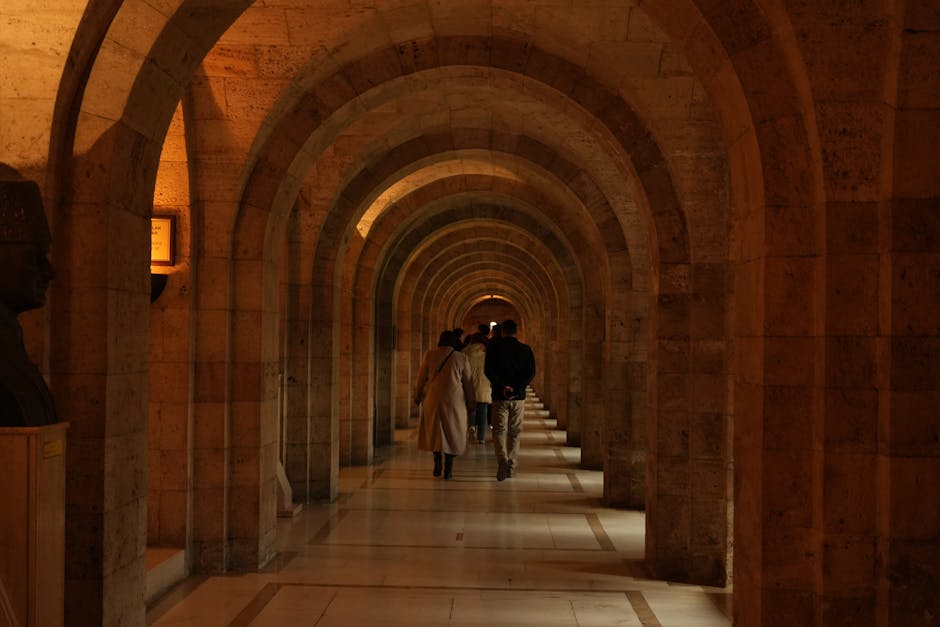
Architecturally, the Vasari Corridor mixes Renaissance elements (vaults, arcades, proportions) with later Baroque adaptations. The structure is fragile in places; periodic restorations are carried out to ensure its preservation. Visitors often notice variations in ceiling height, irregular window openings and walls sometimes adorned with self-portraits, friezes and museum objects — a true cabinet of curiosities in motion.
What the visit is like: route, highlights and vibes
The Vasari Corridor tour is offered as a mandatory guided route, with limited group sizes to protect the site and ensure a high-quality experience. The departure point is usually the Galleria degli Uffizi (Piazzale degli Uffizi 6, 50122 Firenze FI), where access to the corridor is controlled. After an entry check and a short briefing, the small group enters the corridor through a dedicated door and begins to ascend and traverse the gallery above. Guides, often specialists in Florentine history, put each stop into context: why a window was placed there, the anecdote behind an inscription, or the original use of a particular room.
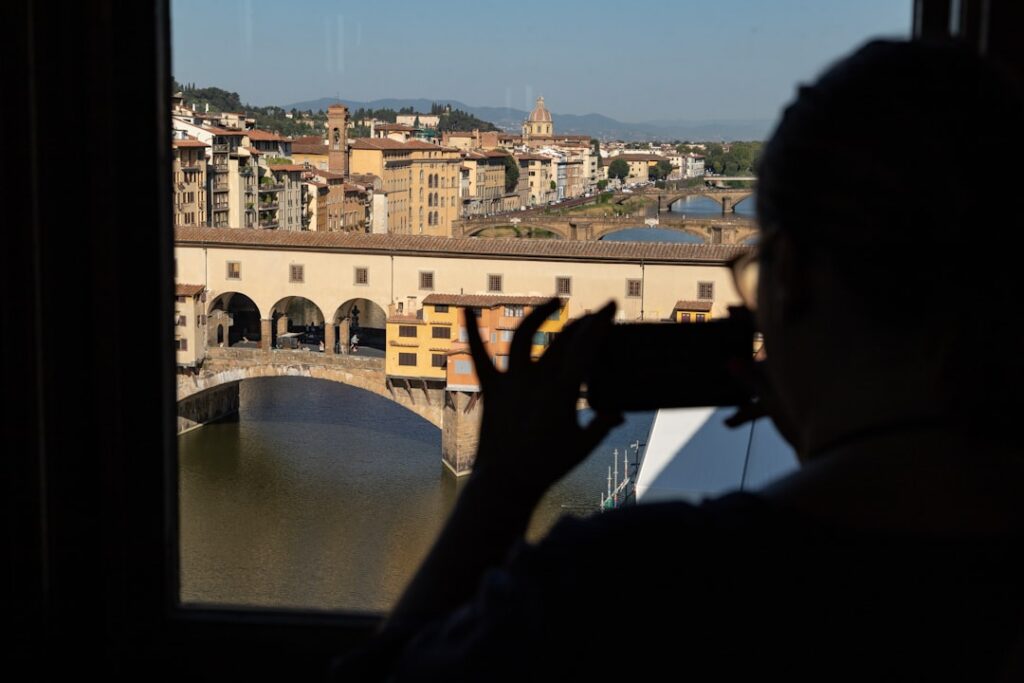
Among the highlights is the section that overlooks the Galleria degli Uffizi: from these upper windows you get a distinctive view of the roofs, the central courtyard of the palace and the lines of visitors wandering through the museum complex. Further on, walking above the Ponte Vecchio is a thrill: you cross a historic tunnel over the jewelers’ shops, with openings that look out onto the Arno and allow you to photograph (when permitted) angles that are impossible from the bridge itself.
The visit continues to the Palazzo Pitti (Piazza de’ Pitti 1, 50125 Firenze FI) where the corridor historically ended, sometimes concluding with a small display of objects or self-portraits gathered along the route. The guide will share anecdotes about the Medici, legendary escape stories and recent restorations that enabled the partial reopening of the corridor to the public. The dominant feeling is one of privacy and elevation: you’re removed from the city’s flow, suspended in a space that for centuries was reserved for the elite.
A few rules almost always accompany the tour: no large bags or bulky items, keep to the silence in some sections and sometimes photography is forbidden inside to protect artwork and pigments. Bring your curiosity and a good pair of shoes: although the distance isn’t huge, the route includes steps and level changes. Also expect the visit to be relatively short: tours usually last between 60 and 90 minutes, since conservation measures require a limited flow of visitors.
Practical information: addresses, prices, schedules and bookings
To prepare your visit, here are the essential details, including exact addresses and references for the main sites related to the Vasari Corridor:
- Galleria degli Uffizi — Piazzale degli Uffizi, 6, 50122 Firenze FI. Phone: +39 055 294883. General opening hours: Tuesday to Sunday 08:15–18:30, closed Monday (hours may vary for events; check the official website).
- Palazzo Vecchio — Piazza della Signoria, 50122 Firenze FI. Phone: +39 055 2768325. Hours: generally open 09:00–19:00, closing times vary with season and public events.
- Palazzo Pitti and the Boboli Gardens — Piazza de’ Pitti, 1, 50125 Firenze FI. Phone: +39 055 294883. Hours: Pitti museums 08:15–18:50 (depending on sections), gardens vary by season.
- Ponte Vecchio — Ponte Vecchio, via Por Santa Maria, 50125 Firenze FI (public pedestrian crossing). The Vasari Corridor runs above this bridge.
Indicative prices (subject to change) for the guided Vasari Corridor visit:
- Standard ticket for the Vasari Corridor (guided tour): around €30.00 per person.
- Online booking/administration fee: around €4.00 per ticket.
- Combined Uffizi + Vasari Corridor ticket (when available): between €40.00 and €60.00 depending on season and type (including reservations).
- Reduced rates for students, seniors or members of partner institutions: variable; proof of eligibility is usually required.
Specific times for Vasari Corridor tours: generally tours run by reservation, often in the morning and early afternoon (for example departures at 10:30 and 14:30), with small groups. Days and hours can change according to the tourist season and conservation closures. Bookings are made through the official Galleria degli Uffizi website or authorised agencies. It is strongly recommended to reserve several weeks in advance, especially in high season (April to October) and during public holidays.
Practical tip: keep a printed or digital copy of your ticket, arrive 20–30 minutes before the departure time, and check the security rules (prohibited items, health requirements, etc.). In case of cancellation by the organiser, refund and rebooking policies are described at the time of booking.
What to see nearby: suggested routes and trusted spots
Visiting the Vasari Corridor fits perfectly into a day dedicated to Florence’s historic centre. Here’s a suggested itinerary and places to combine for a complete experience, with addresses and local tips.
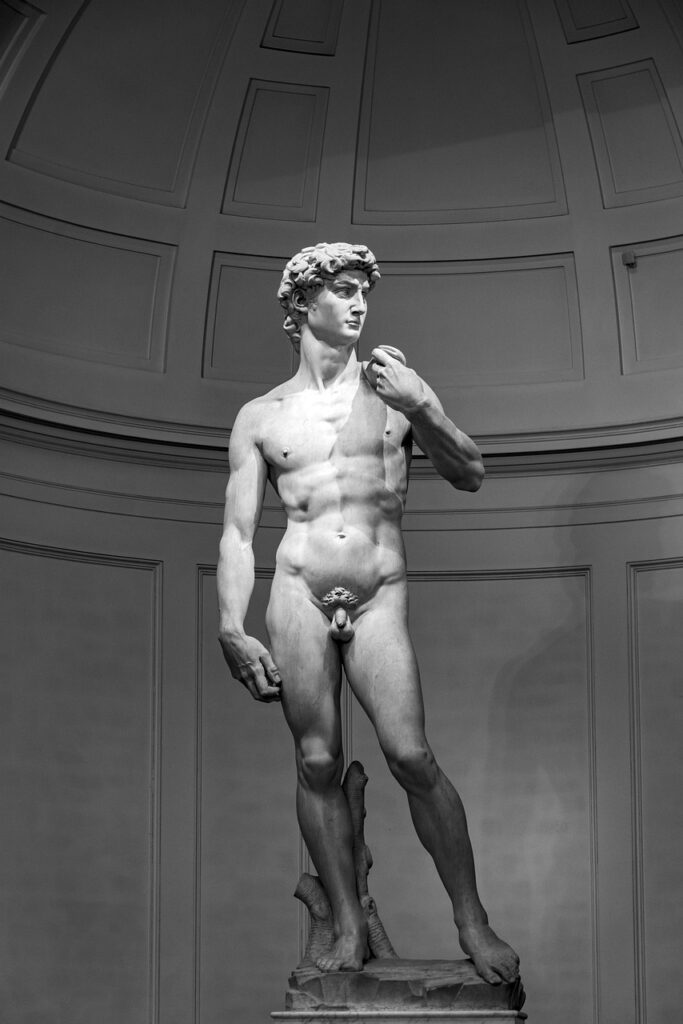
Morning: start with the Galleria degli Uffizi (Piazzale degli Uffizi, 6). If you have a combined ticket, plan to visit the most iconic rooms (Botticelli, Leonardo da Vinci, Michelangelo). Then follow with the guided Vasari Corridor tour which often departs from the same complex.
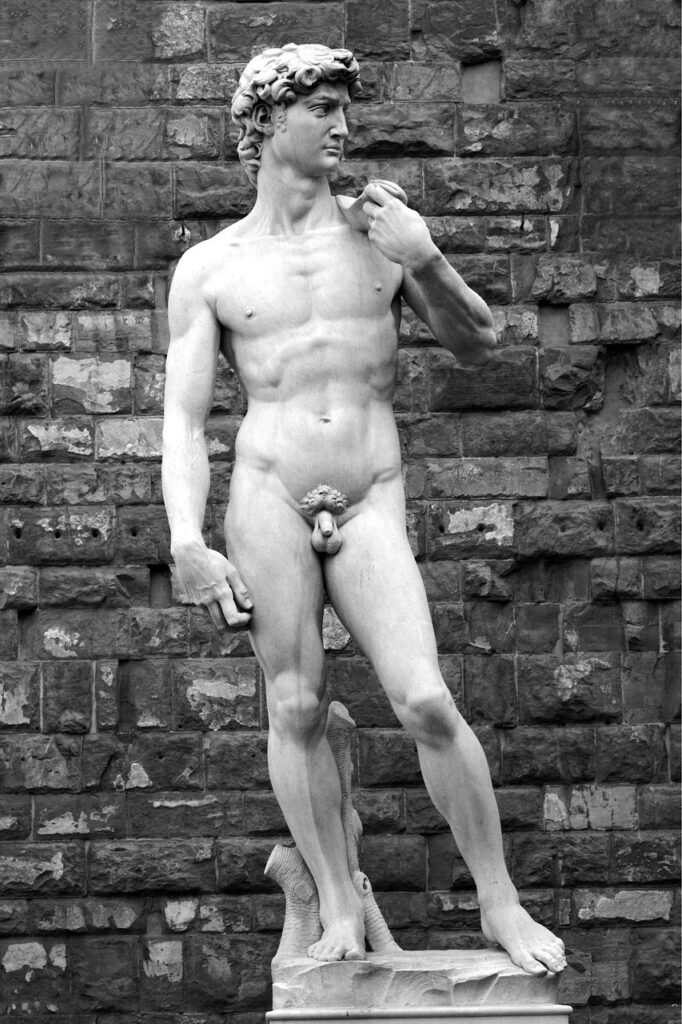
- Piazza della Signoria — The central square where Palazzo Vecchio stands (Piazza della Signoria, 50122 Firenze FI). Enjoy the outdoor sculptures: the copy of Michelangelo’s David, the Fountain of Neptune and the Loggia dei Lanzi. Great for photos late morning.
- Cattedrale di Santa Maria del Fiore (Duomo) — Piazza del Duomo, 50122 Firenze FI. Climb Brunelleschi’s dome for panoramic city views. Hours: generally 10:00–17:00 for the climb, with separate ticketing.
- Palazzo Pitti and the Boboli Gardens — After the corridor, wander through the Boboli Gardens (Piazza de’ Pitti, 1). Garden admission: around €10–12; opening times vary by season.
Lunch and good local spots: for a typical meal, choose a trattoria or osteria near the Ponte Vecchio. A few suggestions:
- Trattoria 4 Leoni — Via dei Michelozzi, 9r, 50125 Firenze FI. Specialties: Florentine steak, homemade pasta. Hours: 12:00–15:00 / 19:00–23:00.
- Osteria del Cinghiale Bianco — Borgo San Jacopo, 43r, 50125 Firenze FI. Historic atmosphere and traditional Tuscan dishes.
Late afternoon: stroll along the Arno and watch the sunset from the Ponte Santa Trinita for memorable views. If you want to extend the day, book a night tour of the Duomo or a baroque concert in a local church — Florence has a busy cultural calendar, particularly in summer.
 Click here to book a timed ticket for the Uffizi and Accademia
Click here to climb Brunelleschi’s dome with panoramic views
Click here to reserve entry to Pitti Palace and Boboli Gardens
Click here to reserve skip-the-line entry to Palazzo Vecchio
Local practical tips and recommendations to make the most of it
Preparing a visit to the Vasari Corridor requires more attention than for an average attraction. Here are practical tips to make your experience smooth, respectful and memorable.
- Book in advance: spaces are very limited. Book at least 2–4 weeks ahead in high season and check official availability via the Galleria degli Uffizi website.
- ID and proof: some reduced tickets require a student card or ID. Keep them handy.
- Bags and accessories: no large bags or suitcases. Backpacks must be small; when in doubt, bring a waist pack or small pouch for essentials.
- Photography: rules vary: some sections allow photos without flash, others forbid them. Follow the guide’s instructions and never use flash.
- Comfort: wear comfortable shoes, bring a water bottle (tap water refill points are common in the city centre) and dress for the season — corridors can be cooler than outside.
- Language: guided tours are often offered in Italian and English; check the language when booking. Private French tours can be arranged on request through specialised agencies.
- Respect the site: the corridor is a fragile historic work. Avoid touching walls or surfaces and any behaviour that might cause damage.
One final tip: combine your visit with less crowded times of the day (early morning or late afternoon) to avoid fatigue and enjoy soft light over the Arno. If possible, book a weekday tour: the crowds tend to be smaller than on weekends.
Frequently asked questions
Here are precise answers to the questions visitors most often ask about the Vasari Corridor:
- Can you visit the Vasari Corridor without a reservation? No, access is strictly by reservation through official circuits or authorised agencies. Walk-up spots are extremely rare.
- How long does the visit last? On average between 60 and 90 minutes; the exact length depends on the day’s programme and conservation restrictions.
- Is the tour suitable for children? Yes, but be mindful of constraints (silence requested, no distractions, no heavy strollers). Older children will get more out of the historical anecdotes.
- Can you take photos? Sometimes partially allowed; follow the guide’s instructions. Flash is generally prohibited.
- Are there toilets along the route? Facilities are scarce inside the corridor itself; use the museums’ restrooms before departure.
Conclusion
The Vasari Corridor is far more than a mere passage between two palaces: it’s a concentrated dose of history, architecture and power. Walking inside the corridor is like stepping into the footsteps of the Medici, feeling the archetypal protection the family demanded for their movements, and contemplating Florence from rare angles. The experience, short but intense, combines the thrill of exclusivity with the deep narrative of a hidden museum. For the attentive traveller, every window, every crack in the wall and every fragment tells a story of power, art and aristocratic daily life.
Organising the visit requires serious preparation: book ahead, check times and prices, follow conservation rules and choose the best time slot to fully enjoy the panorama. In return, visitors are granted an almost unique privilege: photographic perspectives impossible from the street, direct contact with the architectural intimacy of the Renaissance, and a renewed understanding of how public and private spaces evolved over the centuries in Florence.
Finally, don’t forget to extend the experience: wander Piazza della Signoria, visit the Galleria degli Uffizi, climb the Duomo’s dome and cross the Ponte Vecchio at sunset. These complementary moments will help place the Vasari Corridor in its urban and human context. Whether you’re a history buff, architecture lover or simply a curious traveller, the Vasari Corridor offers a window — literally and figuratively — onto a Florence few get to observe. Book your visit, come with questions, and let the corridor reveal its secrets.