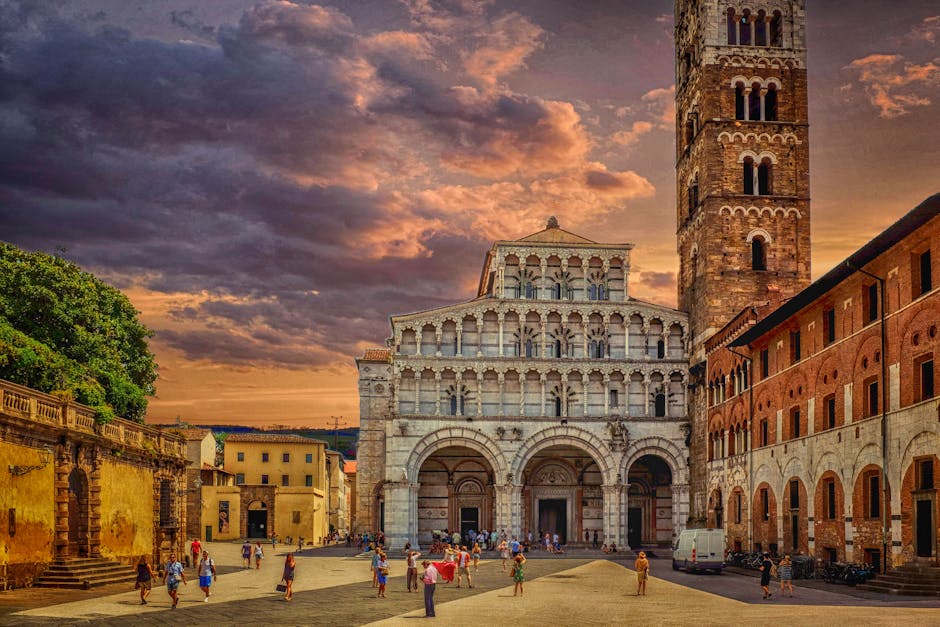






Introduction: why leave Florence for a day in Lucca
Heading from Florence for a one-day escape to Lucca means stepping into a slower-paced pocket of Tuscany. Roughly an hour and a quarter by train from the stazione di Firenze Santa Maria Novella, Lucca charms with intact city walls, cozy squares, medieval towers and family-run trattorie serving authentic Tuscan fare. If you’ve already ticked off Florence’s big draws — the Duomo, the Uffizi, the Ponte Vecchio — Lucca offers a gentler alternative: a place to walk, look up and let church bells echo over terracotta roofs.
This « Lucca in 24 Hours » guide is built to make the most of a day trip from Florence: how to get there, a walkable route, precise addresses for monuments, typical opening hours and ticket prices, plus practical tips so every minute counts. I also map out sensory routes — where to sit for a morning coffee, which streets to choose to avoid crowds, where to climb for the best city view, and which restaurant to book for a memorable dinner after a day of wandering.
Lucca is best discovered on foot, along its famous Mura di Lucca, but also by popping into artisan workshops, small churches like the Cattedrale di San Martino, and museums that tell the town’s story. The itineraries here follow the pace of a single day: a monument-packed morning, a more reflective afternoon of museums and gardens, then a cultural and culinary evening. I include practical details like exact addresses (for your GPS), typical opening times, standard ticket prices in euros, and local tips — for instance how to avoid the Torre Guinigi queue or which city gate to use in the morning for a bike ride.
You’ll also find photo suggestions and visual cues (inserted as image markers) to help you prepare your camera or phone: the view from Torre Guinigi at sunset, the curve of the Piazza dell’Anfiteatro in the early morning, or the romantic perspective of an alley near the Basilica di San Frediano.
 Click here to book your timed Uffizi Gallery entry with audio guide
Getting from Florence to Lucca: train, bus and car (times, costs, addresses)
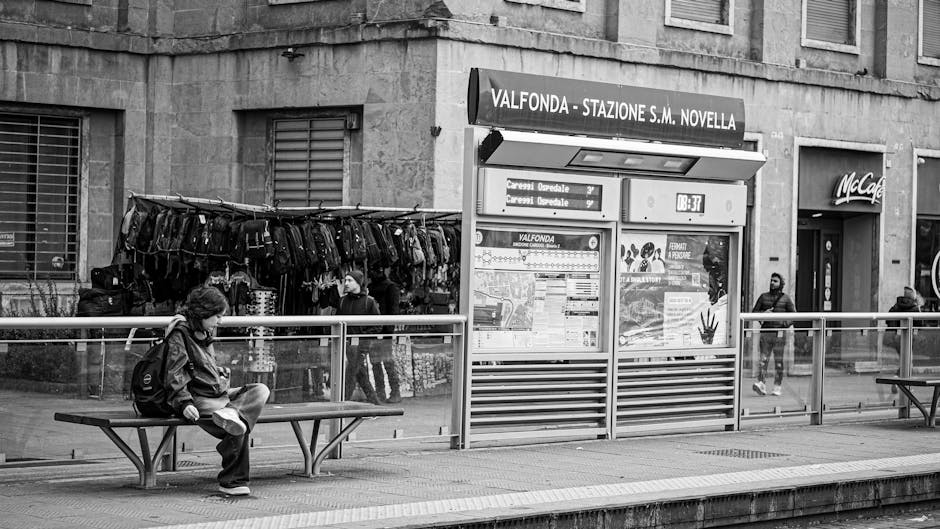
The easiest and most common option is the regional train. From the stazione di Firenze Santa Maria Novella (address: Piazza della Stazione, 50123 Firenze FI, Italy), take a regional train toward Lucca. Some regional services require a change at Pisa Centrale or Prato depending on the timetable; journey times typically range from about 1h10 to 1h30. A one-way regional ticket usually costs between €6.00 and €8.50 (indicative; prices vary by season and discounts). Trains run regularly throughout the day, roughly every one to two hours outside peak times. Check Trenitalia or the Tuscany regional site the day before travel.
Lucca’s station is Stazione di Lucca (address: Piazza Giuseppe Verdi, 55100 Lucca LU, Italy). The historic centre is a 10–15 minute walk from the station: cross Via Fillungo or follow signs toward the city walls. Taxis and local buses are available outside the station if you prefer.
By car, the Florence–Lucca drive is about 80 km via the A11 (Firenze-Mare). Without traffic it takes around 1h10. Parking can be tricky: the centro storico is largely ZTL (traffic-restricted). The most convenient public car parks are Parcheggio Guinigi (Viale Alberto Papi) or the large lot near the station. Rates vary — expect roughly €1.50–€2.00/hour depending on location.
Long-distance buses (FlixBus, if available) can be a cheaper alternative but are often slower. To make the most of your day, leave early (look for trains from Florence around 7:30–8:30) and plan a late return from Lucca; aim for a return train around 19:30–21:00 to enjoy a full day.
Morning in Lucca: the walls, Piazza dell’Anfiteatro and Torre Guinigi
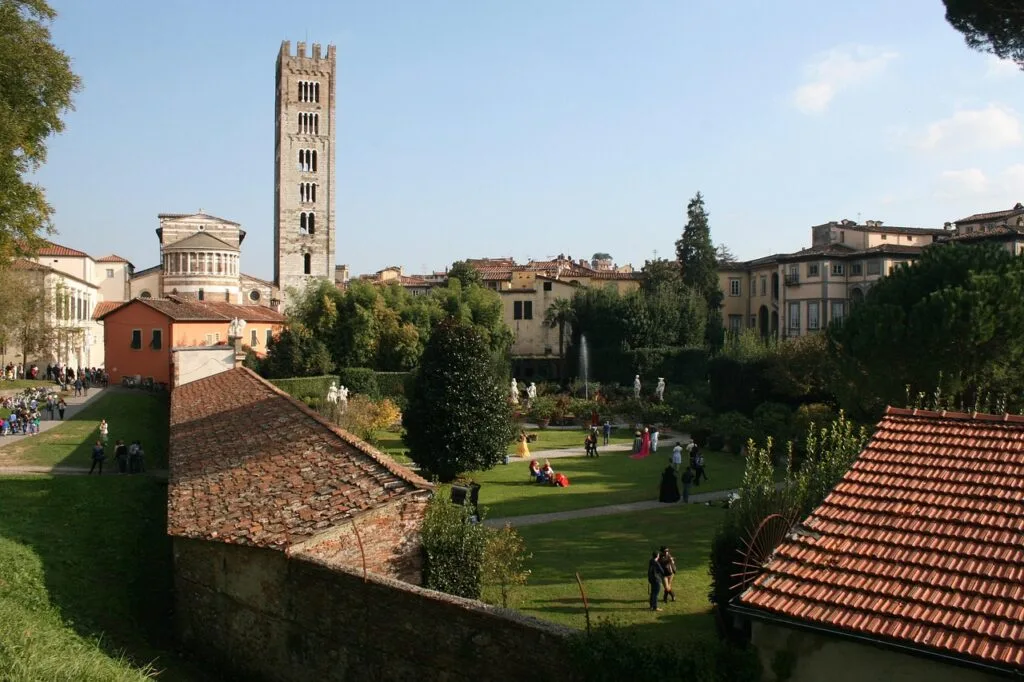
Start at opening time to make the most of the cool air and soft morning light. Head to the Mura di Lucca (a common access point is Viale Giosué Carducci, Lucca): the tree-lined ramparts form a roughly 4 km long promenade around the town. It’s perfect for a brisk walk, a run or renting a bike. The promenade is open 24/7 and free to use. In the morning, favour the stretch between Piazza Napoleone and Porta Elisa for expansive views over rooftops and the surrounding hills. Grab breakfast on a terrace nearby, for example the café facing Piazza Napoleone.
Next, wander to the famous Piazza dell’Anfiteatro (address: Piazza dell’Anfiteatro, 55100 Lucca LU, Italy). This elliptical square, built on the remains of a Roman amphitheatre, has kept its unique shape: curved house facades form almost a perfect ring. In the morning it’s quieter and ideal for photographing the colourful fronts and grabbing a coffee. There’s no entrance fee; shops and cafes usually open between 9:00 and 10:00.
A short walk away, the Torre Guinigi (address: Via Sant’Andrea, 3, 55100 Lucca LU, Italy) is a must-see. It’s famous for the rooftop garden with a small grove of oak trees that overlooks the town. Typical opening hours: around 9:00–19:00 (seasonal; sometimes 9:30–17:30 off-season). Admission: roughly €5.00–€7.00 (discounts for youth/students). You’ll climb about 230 steep stone steps — it’s a workout, but the panoramic view of Lucca and the Apuan Alps is a great reward. Arrive at opening time or book ahead if that option is available to avoid lines.
Afternoon culture: Cattedrale di San Martino, Museo Nazionale di Villa Guinigi and artisan streets
The afternoon is perfect for diving into Lucca’s art and history. Start at the Cattedrale di San Martino (address: Piazza San Martino, 55100 Lucca LU, Italy). This is the town’s cathedral, with a Romanesque façade and chapels filled with artworks, including the famous Volto Santo (when visible during visits) and the altarpiece « Transito di San Martino. » Typical hours: 9:30–17:30 (may vary with religious services). Entry to the cathedral is sometimes free, but access to certain chapels or the treasury can be ticketed — plan about €3.00–€5.00 for museum sections.
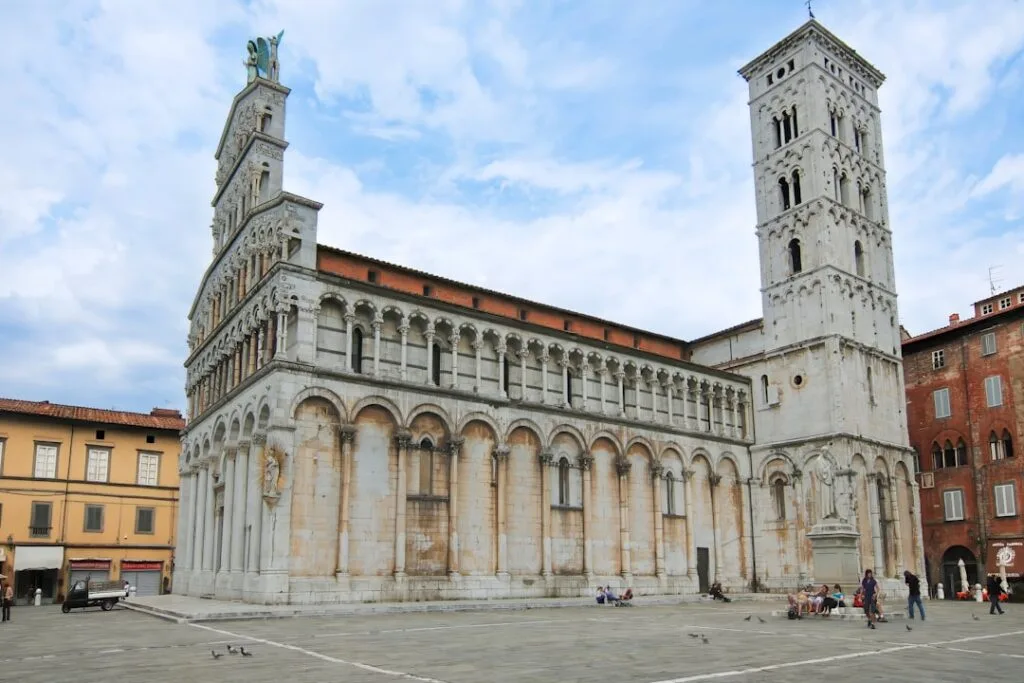
A 5–10 minute walk away, the Museo Nazionale di Villa Guinigi (address: Via della Quarquonia, 1, 55100 Lucca LU, Italy) houses a strong collection of medieval objects and illuminated paintings. Hours: often 8:30–19:30 in high season, reduced in winter (check the official site). Indicative price: €4.00–€8.00 depending on temporary exhibitions. This visit puts the morning’s sights into context — you’ll learn how Lucca evolved from Roman times through the Renaissance.
Don’t miss the Basilica di San Frediano (address: Piazza San Frediano, 55100 Lucca LU, Italy) with its golden mosaic façade and Romanesque apse. Typical hours: roughly 9:00–18:00; entry is usually free or by voluntary donation, though guided visits may have a fee. Inside, admire the 12th-century mosaic and the baptistery paintings.
Between cultural stops, get lost down streets like Via Fillungo (artisan shops, local products and ceramics) and Via Pescheria to sample specialties. Practical tip: hunt down small corner delis to try buccellato (Lucca’s traditional sweet bread) or pick up a bottle of local olive oil to take home.
Evening: Lucchese cuisine, Teatro del Giglio and after-dark walks
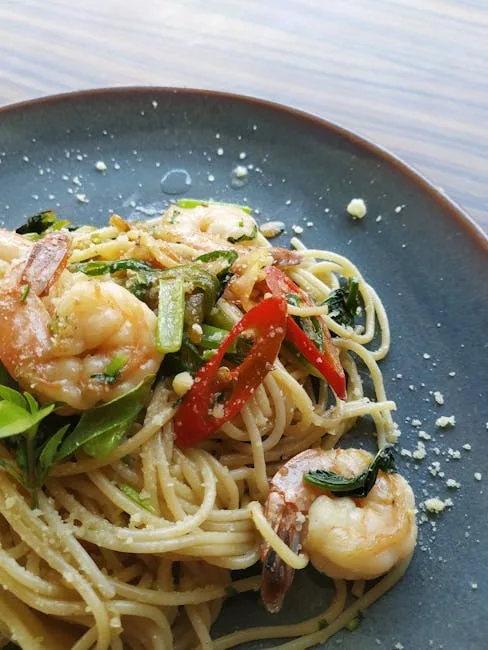
After a day of discovery, evenings in Lucca are relaxed and convivial. For a classic dinner, book a table at a well-known trattoria — for example Trattoria da Leo (Via della Fratta, 24, 55100 Lucca LU) or Ristorante Giglio (Piazza San Giovanni, 55100 Lucca LU). Expect regional dishes like tordelli lucchesi (stuffed pasta), baccalà alla lucchese, or seasonal zuppa di farro. A full meal typically costs between €20 and €40 per person, excluding wine.
For a cultural night out, check the schedule at the Teatro del Giglio (address: Via Giuseppe Verdi, 9, 55100 Lucca LU, Italy). This historic theatre hosts operas, concerts and plays. Tickets range from €10 to €50 depending on the show. Performances typically start in the evening (20:30 or 21:00).
After dinner, take another stroll on the walls at sunset for a different perspective — streetlights come on and the town calms down. Bars and small squares like Piazza San Michele or Piazza del Carmine are perfect for a nightcap. Local tip: order a glass of vino santo or a house-made limoncello at a tiny osteria to round off the evening.
Click here to reserve concert tickets in Lucca and nearby cities
Practical tips for an efficient, comfortable day
– Tickets and schedules: always double-check official museum and tower hours in the week before you go (especially off-season). Many attractions adjust times for local events.
– Money and payments: most places accept cards, but carry some euro coins for corner cafes, tips and small purchases.
– Shoes and bag: wear comfortable walking shoes (cobblestones are common), bring a small backpack with water and your guide, and pack a light jacket depending on season. In summer wear a hat and carry water; in winter a waterproof layer can be handy.
– Reservations: Torre Guinigi can be busy on certain days — arrive early or book if possible. For dinner, booking after 19:30 is often necessary on weekends.
– Accessibility: the walls are accessible, but some towers and historic buildings have narrow stairs and aren’t well suited to reduced mobility. Check ahead if you have accessibility needs.
– Crowd levels: June–September see moderate to high visitor numbers; October–April is quieter but some opening hours are reduced. Spring and autumn are ideal for weather and light.
Conclusion: one day, a thousand impressions — why Lucca is worth the trip from Florence
Lucca in 24 hours from Florence guarantees a day where every step tells a story. You’ll experience a town that has kept its medieval soul while offering warm contemporary moments: a walk on the walls where joggers and cyclists mix with strollers, a coffee break in a sunlit piazza, a climb up a tower for a view that puts things in perspective. The addresses and practical info here — from the stazione di Firenze Santa Maria Novella to the Stazione di Lucca, from sights like the Torre Guinigi and Cattedrale di San Martino to local trattorie — will help you plan a smooth, rich and restful day.
Beyond a simple tourist checklist, give yourself time to listen: to the bells, the laughter in an osteria, the rustle of leaves along the walls. Lucca is a city to live slowly and photograph thoughtfully — hence the suggested shots above to capture the light. Remember that Tuscany is a living region: hours and prices can change, so checking details the day before is a small but wise step. Safe travels, and may your Lucca stopover from Florence be full of discoveries, flavors and moments that linger.