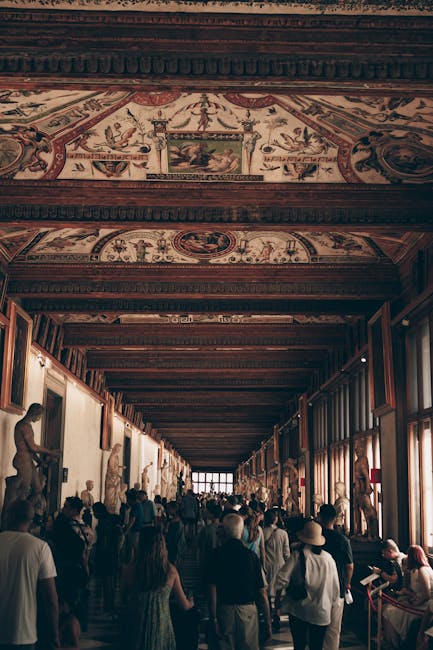






Introduction
The Galleria degli Uffizi is one of Italy’s — and the world’s — most iconic museums. Located in the heart of Florence, it houses an exceptional collection of works that shaped the history of Western art. A stroll through the Uffizi does more than display paintings: it tells the story of the birth of the Renaissance, the stylistic shifts in Italian painting, and the artistic exchanges between the Tuscan, Venetian and wider European schools. For the traveler hungry for striking images — mythological figures, sacred Madonnas, portraits with arresting expressions — the visit becomes a full immersion into Florence’s soul.
The Galleria degli Uffizi is at Piazzale degli Uffizi 6, 50122 Firenze FI, Italy. The building, designed in the 16th century by Giorgio Vasari as offices (hence the name « uffizi » = offices), was gradually converted into a public gallery. The sequence of rooms follows chronological and thematic threads: from medieval panels to the masterpieces of the Quattrocento and Cinquecento, then on to Baroque and classical paintings. Each room sets up surprising dialogues between artists — Botticelli opposite Michelangelo, Leonardo resonating with the Flemish masters — all worth lingering over.
Visiting the Uffizi also means feeling Florence through its light and perspectives. The layout of the rooms, the windows that open onto the Arno and the Ponte Vecchio, and the immediate proximity to the Piazza della Signoria create a museum route that naturally extends into the city. A good walk doesn’t stop at the must-sees; it includes contemplative pauses in front of lesser-known paintings that are just as revealing of pictorial techniques: tempera on wood, oil on canvas, successive glazes, preparatory drawings. Understanding these techniques enriches the reading of the works and makes them come alive.
Before you enter, it’s useful to plan: buy your ticket online, choose the right time (early morning or late afternoon), know where the must-see rooms are and which masterpieces you absolutely want to see. This article offers a guided route through the rooms and works not to miss, with practical information — addresses, opening hours, prices in euros — and local tips to make the most of your day in Florence. Whether you’ve seen reproductions in books or you’re a complete newcomer, a visit to the Uffizi promises visual revelations and a lasting emotional experience.
Keep in mind that a successful Uffizi walk combines pace and curiosity: alternate prolonged contemplation with movement to take in the whole collection without fatigue. This article will serve as your roadmap, with detailed explanations of major works and practical recommendations — plus visual cues to enrich your on-site visit.
Botticelli and Florentine Renaissance: the essentials
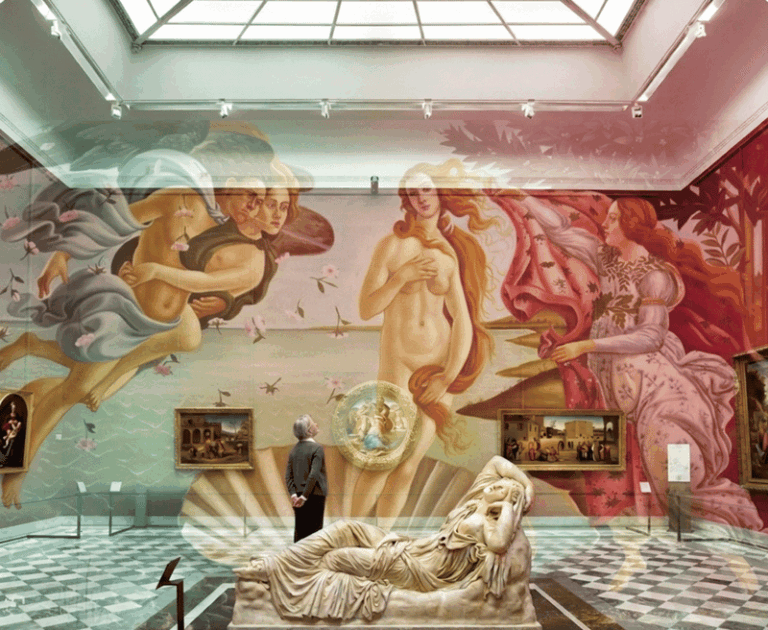
When you mention the Galleria degli Uffizi, Sandro Botticelli’s name inevitably comes up. His paintings fill several rooms and provide one of the emotional high points of the visit. The Nascita di Venere (The Birth of Venus) and Primavera (Spring) are two masterpieces, each loaded with allegory, classical symbolism and a command of line that made Botticelli famous. These works, painted in tempera on panels, were originally commissioned privately by influential Florentine families and synthesize the humanist ideal of the Renaissance: a return to ancient themes, ideal beauty and poetic sensitivity.
The Birth of Venus, often at the center of visitor flows, demands both visual and intellectual attention. Observing the delicacy of the contours, the diagonal composition, the figures’ poses and the color nuances reveals Botticelli’s technical mastery. Primavera, featuring mythological figures (Venus, Mercury, the three Graces, Flora), requires time: each character is an allegory, each gesture ties to a literary source or symbolic trait. Studying the details — flowers, fabrics, expressions — unveils a world full of references to the poetry of the era and Florentine culture.
Practical tips for appreciating these works:
- Arrive at the Uffizi early in the morning to avoid the crowds around the most famous paintings.
- Bring a printed guide or an audio app to decode the symbols in Primavera and the Birth of Venus.
- Take a few minutes to step back and observe the painting’s spatial arrangement: Botticelli often works in successive planes that only appear from a certain distance.
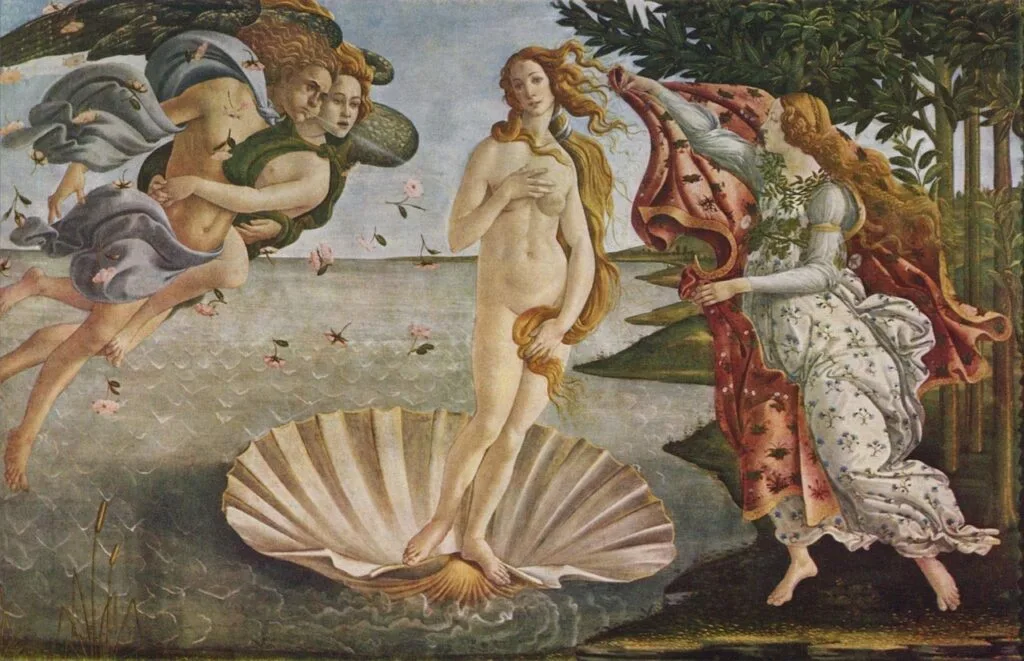
The rooms housing Botticelli also contain lesser-known but equally rich pieces, like portraits and small mythological scenes that complete an understanding of his art. Take time to study the rendering of garments, the finesse of hair, and how light is suggested through color rather than strict linear perspective. These deeper visits enhance the feeling of truly “meeting” the Florentine Renaissance.
Leonardo, Michelangelo and Raphael: masterpieces of the Quattrocento and Cinquecento
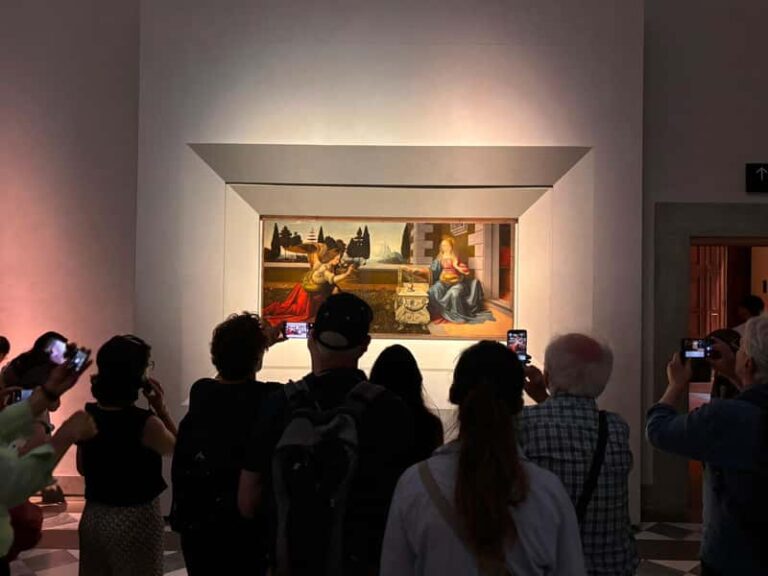
The Uffizi also hold major works by Leonardo da Vinci, Michelangelo Buonarroti and Raffaello Sanzio — three names that embody artistic perfection in the Italian Renaissance. In Leonardo, the Annunciazione (Annunciation) is a work of extreme refinement: distant landscape, delicate modeling of faces, and a subtle rendering of materials. Observing the handling of light and the airy atmosphere is an exercise in technical and intellectual admiration.
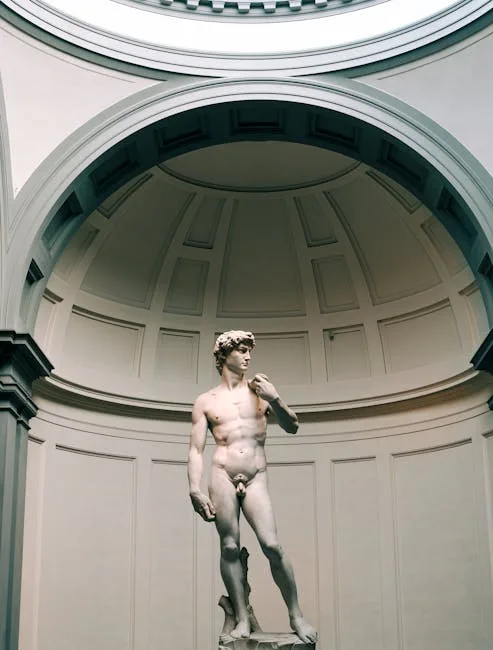
Michelangelo’s Tondo Doni is unique: a circular panel painting (tondo) commissioned by the wealthy Doni family. The sculptural strength of the figures, the muscular tension and the bold use of color echo Michelangelo’s career as a sculptor. Standing before it, you sense the shift from narrative painting to an almost sculptural approach to the human body.
Raffaello appears through Madonnas and compositions defined by balance and harmony. The Madonna del Cardellino (Madonna of the Goldfinch), for instance, perfectly showcases his mastery of composition, the softness of faces and the spatial organization that made his paintings icons of Renaissance classicism.
Visiting tips for these rooms:
- Identify beforehand which rooms display these works — they’re often on the museum’s central route — to make the most of your time.
- If you’re a photographer, note that non‑flash photography is generally allowed; follow conservation rules and any no‑photo signs.
- For a closer reading of anatomical details and expressions, consider a specialized Renaissance tour that breaks down composition and drawing techniques.
Also take time to study the preparatory drawings when they’re on display: line sketches, studies of hands or faces reveal the thinking behind the final gesture. These workshop documents show hesitations, corrections and the genesis of a composition, making the encounter with the works far more instructive.
Baroque, Titian and Caravaggio: dramatic contrasts and powerful portraits
After the clear classicism of the Quattrocento, the Uffizi route leads visitors into more dramatic periods. Titian’s Venetian paintings (Tiziano Vecellio) add an intense coloristic dimension: his portraits and mythological scenes use color as an expressive, almost tactile means. A typical example is his masterful portrait, where the texture of fabrics and the subject’s psychological presence captivate the eye.
Caravaggio, leader of Baroque naturalism, stands out for his chiaroscuro effects and dramatic compositions. Caravaggio’s work at the Uffizi, notably the Medusa (painted on a shield), illustrates his taste for iconic violence and direct emotional representation. The radical use of light and shadow intensifies the figures’ physical presence and creates a visual urgency that contrasts with the calm of Renaissance Madonnas.
The rooms devoted to the Baroque period also offer portraits, still lifes and religious scenes that explain the shift in artistic tastes in the 17th century: from ideal control to sensory expressiveness. The contrasts between Titian and Caravaggio show how painting evolved to embrace both chromatic sensuality and narrative power.
Practical tips:
- Approach each painting by checking perspective and the direction of light: these elements are often the key to reading Baroque scenes.
- Use an audio guide to understand the iconographic context of mythological and religious scenes, which are often complex and full of symbols.
- If you visit in summer, favor late‑afternoon closing hours for softer interior light — fewer reflections on protective glass.
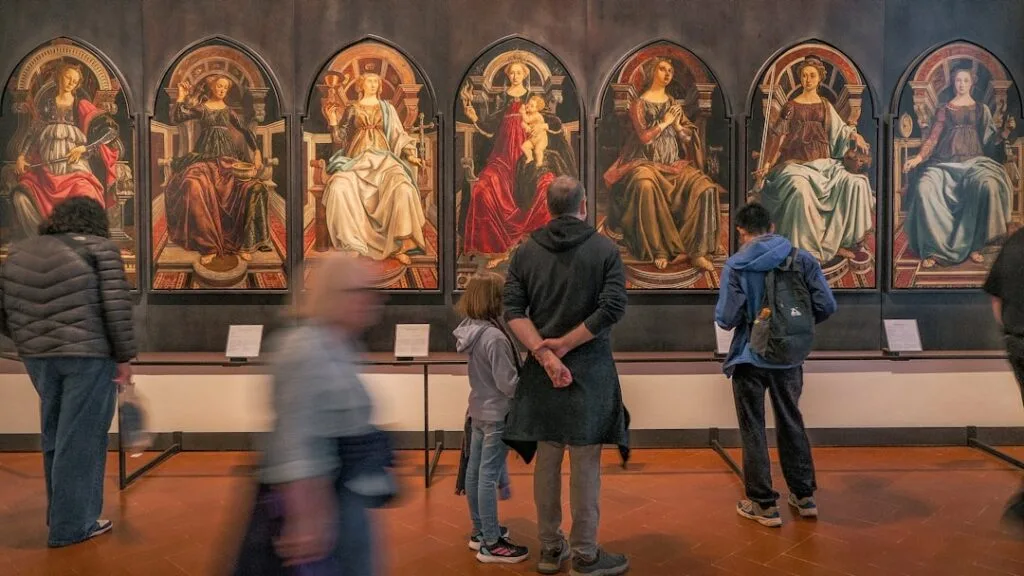
See the essentials of the Uffizi without losing an hour in line
The warm light streaming through the large windows and brushing the frames immediately announces the heartbeat of the masterpieces.
1. Timed entry ticket + audio guide app
Budget ticket with reserved slot and audio guide app: freedom to choose your route and contextual explanations for Botticelli, Michelangelo and Leonardo, without the pressure of guided tours.
- ⏱️ Duration: 48 hours (access on the selected day)
- 🎟️ Included: Timed entry + audio guide via app
- ⚡ Access: Gate 1, priority entry according to reserved time
- 🎧 Format: Self‑guided visit with digital audio guide
 Book with the audio guide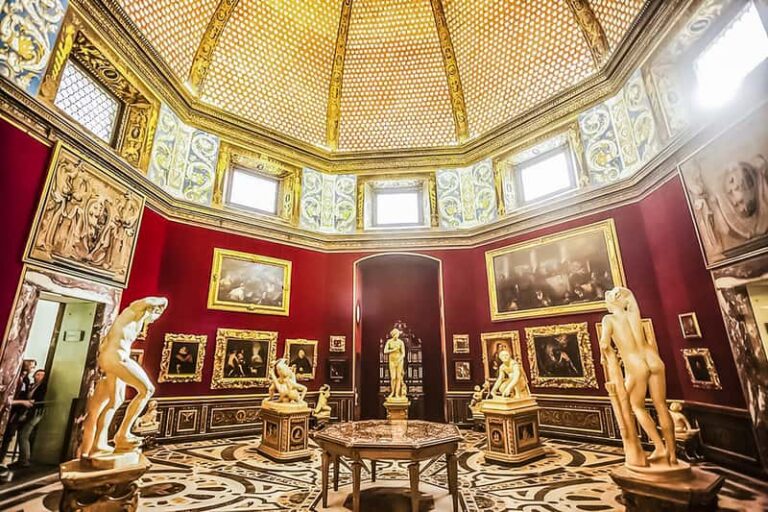
2. Standard timed ticket (short visit)
Ideal option for a 2‑hour stop: entry at a precise time, a concentrated route focused on the masterpieces and a free digital audio guide for a quick, targeted read.
- 🕒 Duration: 2 hours (recommended slot)
- 🎟️ Included: Entry ticket + free digital audio guide
- 🚩 Start: Entry point varies by option chosen
- 👌 Ideal for: Time‑pressed travelers or first‑time visitors
3. 24‑hour reserved access — flexibility and priority entry
Flexible ticket offering reserved access and priority entry within the day: perfect if you want to return to a work or enjoy the terrace after your visit.
- ⏱️ Duration: 24 hours (access during the chosen day)
- ⚡ Access: Priority entry guaranteed, timed entry slot
- 💡 Highlight: Flexibility to return to a painting or visit the terrace
- ❌ Not included: Transfers and drinks (bar accessible separately)
Practical guide: tickets, opening times, addresses and local tips
Address: Galleria degli Uffizi, Piazzale degli Uffizi 6, 50122 Firenze FI, Italy. Museum phone: +39 055 23886 (general info number for Florence museums). Official hours are generally: Tuesday–Sunday 08:15–18:30. The gallery is often closed on Mondays. Hours can vary on public holidays or in high season — check the official site before your visit to confirm.
Prices: rates vary by season and museum policy. As a guide, a full-price ticket is often between €20 and €25. Reduced fares (EU young adults, seniors under certain conditions) generally range from about €2 to €12. Admission is frequently free for children under 6. Online tickets often include a booking fee of around €4. It’s strongly recommended to book ahead — especially in high season — as queues can be very long.
Practical local tips:
- Online booking: buy your ticket on the official site or through an authorized reseller; choose a morning timeslot for a bit more peace.
- Cloakroom: in summer the museum may require large bags to be left at the cloakroom; bring a light bag for the visit.
- Visit length: allow at least 2–3 hours to see the main rooms. For a deeper immersion, plan 4 hours or half a day.
- Access: nearest tram stop — “Line T1”, stop “Uffizi/Piazza della Signoria” (check local lines). Many visitors prefer to walk if you’re staying in the historic centre — Piazza della Signoria and the Ponte Vecchio are a few minutes away.
- Dining: there are cafés and kiosks nearby. For a sit-down meal after the visit, try a traditional Tuscan restaurant on the south bank of the Arno or over in Oltrarno.
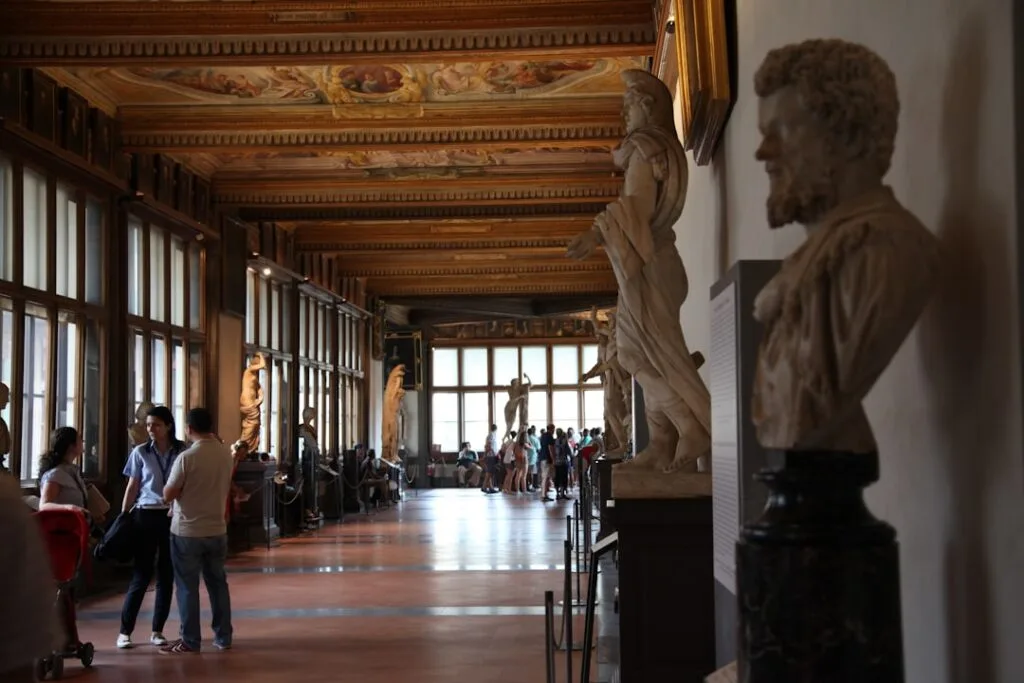
Accessibility: the museum offers facilities for visitors with reduced mobility, but routes and some rooms can be narrow. Check with staff in advance for access arrangements or adapted tickets. Finally, respect the rules: no flash, no food or drink in the rooms, and keep voices low.
Around the Uffizi: Piazza della Signoria, Palazzo Vecchio and Ponte Vecchio
The Uffizi visit naturally continues into the city: on exit, Piazza della Signoria unfolds like an open‑air museum. Address: Piazza della Signoria, 50122 Firenze FI. It’s the civic square par excellence, dominated by Palazzo Vecchio (Piazza della Signoria, 50122 Firenze FI) whose Arnolfo tower stands as a symbol of Florence’s political power. Palazzo Vecchio also offers decorated rooms and city views from the tower — book ahead if you want to climb.
Ponte Vecchio (Ponte Vecchio, 50125 Firenze FI) is a short walk away: this medieval bridge lined with jewelers and goldsmiths offers a classic view of the Arno and is one of Florence’s most iconic images. Stroll the bridge at sunset for ideal light and a romantic atmosphere. Other places to note for extending the walk: Chiesa di Santa Maria del Fiore (Duomo, Piazza del Duomo, 50122 Firenze FI) and Biblioteca Nazionale Centrale (Piazza dei Cavalleggeri 1), both 10–15 minutes on foot.
Local tips for after the museum:
- Walk along the Arno: head to Oltrarno to discover artisan workshops, cafés and panoramic views from the Boboli Gardens (Piazza Pitti 1, 50125 Firenze FI).
- Handmade shopping: for authentic souvenirs, avoid the touristy shops on Ponte Vecchio and instead explore Oltrarno’s side streets for jewelry and leather workshops.
- Tuscan aperitivo: after the visit, try an “aperitivo” at a local bar — a great way to keep chatting about the works you saw at the Uffizi.
Photography and viewing tips: how to see more than just look
Photographing at the Uffizi requires care: most rooms allow photos without flash, but some sensitive works may have restrictions. Be discreet: avoid tripods and long poses that block others. To capture a painting’s essence, favor close details — hands, faces, textures — and wide shots to understand the composition.
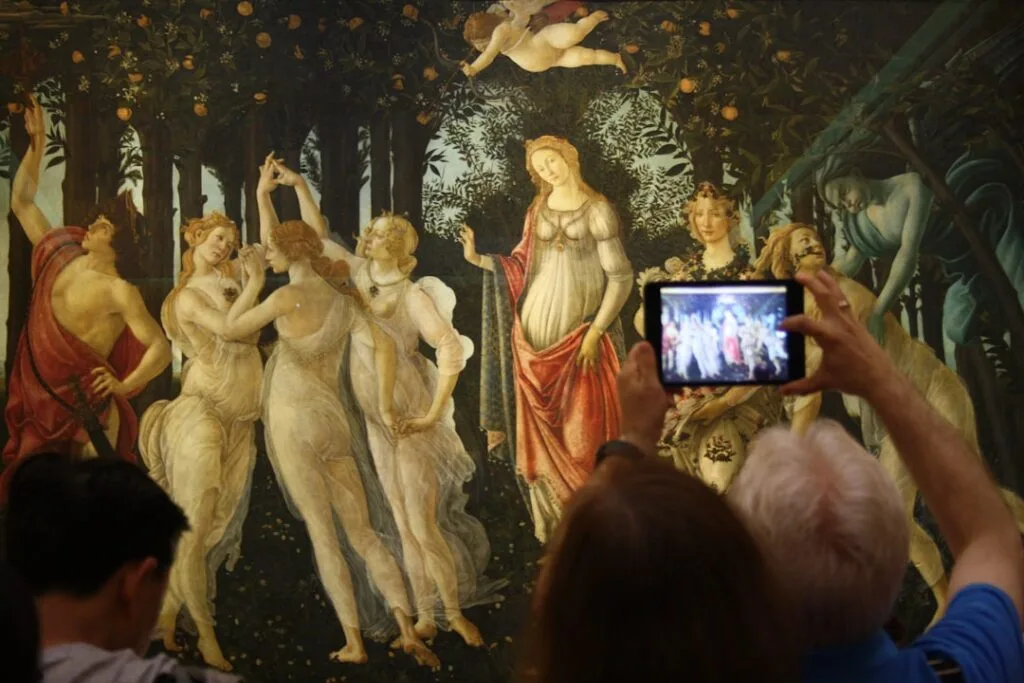
Viewing is also about understanding technique. Here are some approaches to deepen your reading:
- Composition: spot the main lines that organize the image (diagonals, symmetries, layered planes).
- Light: note the light source and how it models volume. The Renaissance favors diffuse light, while Baroque uses dramatic chiaroscuro.
- Color: study the color palettes — typically Venetian painters use rich reds and golds, while Florentines favor subtler, line‑driven ranges.
- Iconographic details: identify attributes (objects, animals, plants) that give meaning to mythological figures or saints.
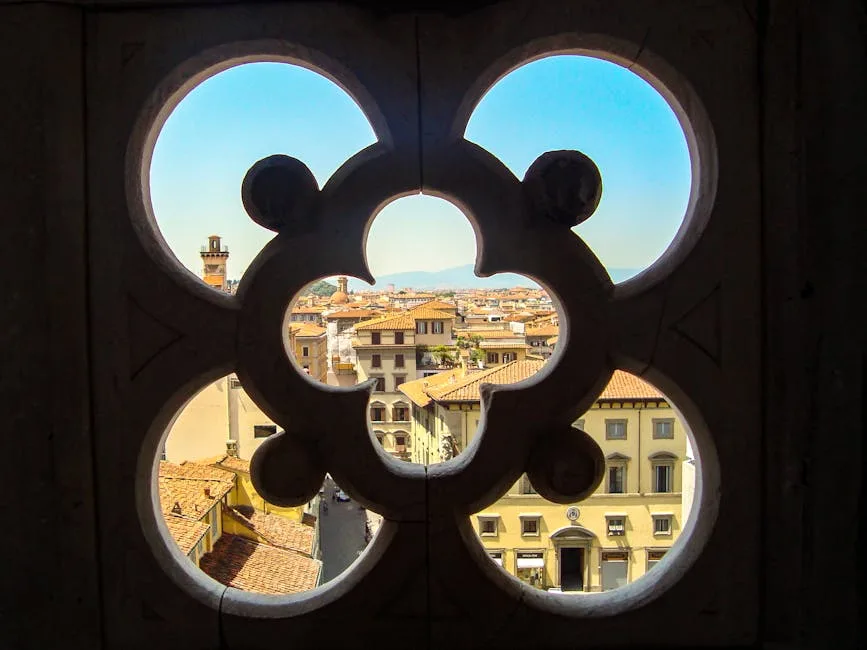
Finally, allow yourself a contemplative pause: sitting for a few minutes in front of a masterpiece lets impressions accumulate and turns a rushed visit into a memorable experience.
Conclusion
A walk through the Uffizi is far more than a sequence of famous works: it’s an immersive journey through Florence’s cultural and aesthetic history. From Botticelli to Michelangelo, from Titian to Caravaggio, the museum offers a living timeline that highlights major breaks and continuities in Western art. By combining practical preparation — ticketing, opening hours, addresses — with a curious, methodical eye, you’ll turn your visit into a lasting experience. The prices in euros, the exact location (Piazzale degli Uffizi 6, 50122 Firenze FI) and the opening times (generally Tuesday–Sunday 08:15–18:30, closed Monday) will help you plan your Florentine stop without stress.
Don’t forget to explore the surroundings: Piazza della Signoria, Palazzo Vecchio and Ponte Vecchio will extend the museum’s story into the urban fabric, while the lanes of Oltrarno and the Boboli Gardens will offer sculptural and landscape breaths. Adopt a varied pace — close observation and contemplative distance — to catch the nuances of each school and technique. And finally, let the city work its magic: Florence often reveals itself after the visit, in a café, an artisan’s workshop or a glance from the banks of the Arno. Enjoy your visual journey and your stroll through the Uffizi, where every canvas is a doorway to the past and an invitation to discovery.