





INTRODUCTION
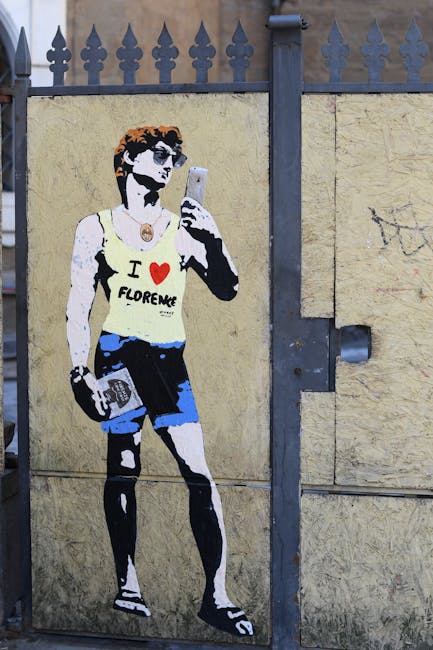
Strolling along the Arno in Florence feels like leafing through a sketchbook where history, architecture and modern life intertwine. While the city is best known for its Renaissance masterpieces — the Ponte Vecchio, the Uffizi Gallery and the Palazzo Pitti — it also shows a livelier, unexpected face: street art. In the alleyways of the Oltrarno, on the riverbanks and around the bridges, tags, murals, stickers and contemporary installations converse with ancient stone and weathered façades. This Arno street art walk invites you to see Florence from a different angle, to notice details, plays of light and shadow, and interventions that tell the story of the city today.
This guide has a twofold aim: to give you a practical route — with exact addresses, opening hours and pricing — and to offer an immersive reading of the works and places you’ll encounter. You’ll find must-see stops (museums, squares and gardens) and discoveries in the Oltrarno, Florence’s bohemian quarter where street art is particularly vibrant. Local tips will help you make the most of your walk (best times, camera gear, precautions) and better understand the meaning behind the works, whether they’re by established local artists or short-lived collective initiatives.
This route won’t break the bank: many works are visible from the street for free. That said, a few stops are worth paying for — especially when you want to admire the jaw-dropping museum collections or lose yourself in historic gardens that offer spectacular views over the Arno. Prices, opening hours and addresses given here were correct at the time of writing; check official updates before you go, as fees and opening times can change with the season. Expect to encounter colorful murals, minimalist interventions on street signs, clandestine stickers and collaborative works that showcase a city that’s alive and evolving.
 Click here to purchase your timed-entry ticket for the Uffizi Gallery
Click here to reserve your skip-the-line Accademia Gallery ticket to see David

Start your walk at first light if you can: the low morning sun on the Arno creates reflections that highlight the juxtaposition of old and new. Bring comfortable shoes, an offline map and a portable charger for your camera — you’ll want the extra power. Above all, be respectful: take photos and share them, but don’t damage the works and respect private property.
From Ponte Vecchio to the Lungarno: Lines and Reflections
The natural starting point is the Ponte Vecchio, Florence’s emblem and the gateway to the Oltrarno. Address: Ponte Vecchio, 50125 Firenze FI, Italy. Despite its tourist reputation, the area around the bridge is a prime spot to spot early contemporary interventions on shopfronts and façades. The bridge itself, built in 1345, is closed to car traffic and offers a unique mirrored view of the Arno.

From Ponte Vecchio, head down the Lungarno degli Acciaiuoli (approximate address: Lungarno degli Acciaiuoli, 50123 Firenze FI) heading southwest: along the river you’ll notice walls peppered with stickers, small-scale murals and playful reworks of shop signs. The contrast between medieval façades and contemporary interventions makes a rich visual curtain for photographers.
A recommended stop is the small square near Piazza Mentana where local artists sometimes paint live. The vibe is friendly — people chat, swap addresses for alternative galleries and discover urban impressions captured on crumbling walls. Along the Lungarno delle Grazie, evening light brings out modern pigments against old stone; try to be there at sunset for dramatic photos.
- Practical tip: use the morning to avoid the Ponte Vecchio crowds.
- Access hours: public areas are open 24/7; take care at night for safety reasons.
- Cost: free; expect to spend on coffee or gelato nearby (roughly €2–€5).
Oltrarno and Santo Spirito: Workshops, Studios and Street Murals
Oltrarno is the beating heart of contemporary creativity in Florence. Make your way to the Basilica di Santo Spirito at Piazza Santo Spirito, 30R, 50125 Firenze FI. The basilica itself, touched by Filippo Brunelleschi, is a Renaissance gem (the nave is free to enter; guided visits to certain chapels may cost). Around the square, lanes like Via dei Serragli and Via Santo Spirito reveal artisan workshops and painted walls, often the result of international artist residencies.
The piazza hosts a Monday morning market where antique dealers mix with local creators — a great opportunity to discover screen prints, zines and limited art prints from street artists. As you wander, you’ll come across works by locally known names celebrated for their compositional skill and social messages. The atmosphere is artisanal and alternative: many cafés invite you to sit and watch art being made live.
Don’t miss open studios: some artists welcome visitors (usually free entry but donations appreciated). Murals here range from photographic collages to political stencils, as well as figurative and abstract wall paintings. Oltrarno is also where artists love to play with traffic signs — humorous and poetic tweaks that surprise passersby.
- Local tip: keep voices down near noise-sensitive studios; always ask permission before photographing an artist at work.
- Hours: studios often open in the afternoon (roughly 14:00–19:00); Santo Spirito Basilica usually open 9:00–19:00 depending on the season.
- Cost: studio visits are generally free; buy a small print to support creators (€10–€100 depending on the piece).

Palazzo Pitti and the Boboli Gardens: Institutional Art Meets Urban Interventions
One of the most striking contrasts is where institutional art meets street art. The Palazzo Pitti dominates the river’s south bank at Piazza de’ Pitti, 1, 50125 Firenze FI. Once the Medici residence, it now houses several museums. Opening hours: generally Tuesday to Sunday from 8:15 to 18:50 (closed Mondays) — check the official site to confirm. Price: a standard combined ticket for the Palazzo Pitti and the Giardino di Boboli is approximately €16–€20 (indicative; discounts may apply).

The Giardino di Boboli (entrance: Piazza de’ Pitti, 1) is a must-stop. This maze of sculptures and perspectives occasionally features contemporary installations that enter into a dialogue with Baroque statues — small, temporary works that invite reflection on time and decay. Paths also offer panoramic views of the Arno and the historic center: an ideal setting to pair classical photos with modern urban shots.
For street art fans, the exterior walls of the Palazzo are home to stickers, paste-ups and carefully executed tags. These works are often ephemeral and are replaced regularly, making the spot a living observatory of the local scene. At day’s end, the light falling across the gardens reveals subtle modern pigments against ancient stone.
- Practical tip: buy tickets in advance to avoid queues (online tickets recommended, especially in high season).
- Boboli hours: usually 8:15–16:30 off-season; extended hours in summer.
- Price: combined Palazzo Pitti + Boboli tickets roughly €16–€20; student and senior discounts available.
Click here to book your ticket for Palazzo Pitti and the Boboli Gardens
Click here to book your ticket for Palazzo Pitti and the Boboli Gardens
Contemporary Murals and Artists to Know
Florence has an active street art scene that mixes local figures with international visitors. Common practices include political stencils, photographic collages, collaborative murals and interventions on street furniture. You’ll find them mainly in Oltrarno, San Niccolò and along the Arno’s banks.
Some hotspots: check the walls in the Quartiere di San Niccolò (notably Via di San Niccolò and adjacent streets) for colorful murals exploring the neighborhood’s identity; the area between Ponte alle Grazie and Porta Romana often hides more experimental pieces. The scene changes quickly: ephemeral installations can appear overnight, the product of collective actions or urban festivals.
To learn more, connect with alternative galleries and local collectives that sometimes run paid guided tours (€10–€25 depending on duration). These tours let you meet artists, access private studios and get the background on the political or social context of the works. It’s a great way to deepen your walk and support the local scene.
- Tip: join a guided tour for a fuller understanding (typical price €10–€25).
- Ethics: respect the works, avoid contributing to vandalism and don’t trespass on private property to photograph walls.
- Photo gear: wide-angle lenses for murals, a telephoto for details, and protection from harsh light.

Practical Tips for a Successful Walk
Here are concrete recommendations to help you get the most out of your Arno art walk:
- Best time of year: spring (April–May) and early autumn (September–October) for great light and pleasant temperatures.
- Best times of day: early morning to avoid Ponte Vecchio crowds and enjoy soft light; late afternoon for strong contrasts on walls.
- Getting around: the historic center is best explored on foot; ATAF bus stops serve outer neighborhoods if needed.
- Budget: the walk is mostly free. Allow €15–€25 if you plan to visit a museum (Uffizi, Palazzo Pitti) or join a guided tour.
- Safety: Florence is generally safe; stay alert for pickpockets in busy tourist areas.
- Respect: photograph without touching, ask permission for portraits of artists, support creators by buying a print or limited edition.

CONCLUSION
The Arno street art walk offers a layered reading of Florence: the museum city is also a laboratory. Between the reflections at Ponte Vecchio, the workshops of Oltrarno, the gardens of Palazzo Pitti and the lively lanes of Santo Spirito, each step reveals a new window onto contemporary creativity. You’ll experience an ongoing dialogue between monumental history and today’s voices — often ironic, sometimes outspoken, and always full of visual surprises.
To make the most of this experience, pair curiosity with preparation: check museum opening hours and prices (for example the Galleria degli Uffizi — Piazzale degli Uffizi, 6, 50122 Firenze FI — usually open Tuesday to Sunday, times and fees vary, with a standard ticket around €20 depending on season), buy tickets online when necessary and favor off-peak hours for photography. Support the local scene by visiting studios, buying small works or joining guided tours. And always respect public space and artists — the future of street art depends on caring practices and respect for places.
Click here to book your Uffizi Gallery ticket with audio guide
Whether you’re a photographer, a contemporary art lover or simply a curious wanderer, this walk along the Arno promises endless discoveries. Keep an eye out for change: works evolve, vanish and reappear, making each visit a unique exploration. Florence, with its timeless heritage and contemporary energy, also tells its story through pigments on stone — a living narrative to breathe in fully.