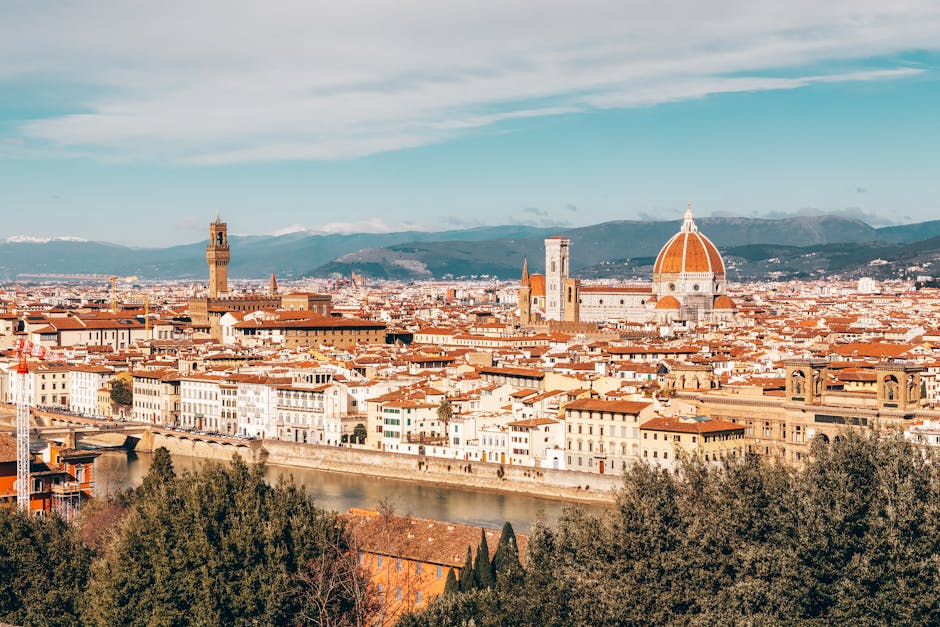






Introduction: The Arno as a Guiding Thread Through Florentine Architecture
Strolling along the Arno in Florence is like reading a novel of stone and water where each bank tells a different chapter. From the imposing Duomo crowned by Brunelleschi’s dome to the Renaissance façades mirrored in the river’s calm surface, this route is both chronological and thematic: it shows how the water organized the city, attracted patrons and inspired architects. This guide-report offers a themed walk focused on the Arno, highlighting iconic spots, exact addresses, opening times and ticket prices, plus immersive descriptions so you can feel Florence’s pulse before you even arrive.
The walk naturally begins at the civic and political heart — Piazza della Signoria — then flows toward the bridges that mark historical stages: Ponte Vecchio, Ponte Santa Trinita, and the riverfronts (Lungarni) lined with palaces, churches and gardens. Every building along the river gives a specific reading of the city: civic, commercial, religious and residential architecture. As you follow the bank, the contrasts between medieval urbanism and Renaissance humanist projects become clear. Florence is not a static museum; it’s a staged city where the Arno acts as the visual and acoustic axis.
This text is aimed at readers who want more than a checklist of monuments. It guides you step by step — with precise addresses, Euro prices and schedules — to build a coherent visit lasting roughly half a day to a full day depending on your pace. You’ll find practical tips (best times to photograph, access, combined tickets, transport), vivid descriptions that spark the imagination (stone textures, the aroma of Tuscan cooking drifting from riverside trattorie, light playing on bridge arches) and recommendations to extend the walk with intimate visits like the Giardino di Boboli or the Museo Galileo.
Before you set off, remember that Florence also reveals itself in micro-details: a wrought-iron shop sign, a flower-filled balcony, the reflections of colorful shutters on the water. This themed stroll along the Arno combines must-see monuments with lesser-known viewpoints to compose a rich, sensory itinerary. The following sections detail the key stops, offer alternatives depending on time and season, and explain how to optimize your time so you can enjoy both the architecture and the river atmosphere of Florence.
 Click here to book your ticket to climb Brunelleschi’s Dome

Ponte Vecchio and the Goldsmiths’ Quarter: Ancient Architecture and Riverside Trade
Florence’s most famous bridge, Ponte Vecchio, is as much a monument as it is a little suspended neighborhood. Address: Ponte Vecchio, 50125 Firenze, Italy. The bridge’s current appearance dates to the 15th century after medieval flood-driven reconstructions, and it’s world-renowned for the goldsmith shops that line its upper level. The structure is characterized by medieval stone arches, projecting windows and small loggias that offer direct views over the Arno. Walking across, the mingled scents of jewelry polish and tourist stalls blend with the river’s murmurs.
Immersive description: picture arriving from Piazza della Signoria, passing the Loggia dei Lanzi and, after a few steps, feeling the hum of commerce that has survived centuries. The bridge, with its irregular openings, sets up an architectural rhythm — low arches, inset shops, worn stone frames — that tells the story of a mercantile city. Golden reflections from the shop windows sway gently on the water, especially at sunset, while anglers and photographers jostle for the best vantage point.
Opening times and costs: the bridge itself is open 24/7 and free to cross. Shops vary in opening hours — typically 10:00–19:00 in high season — and close earlier in winter. Practical tip: visit early in the morning (around 7:00–8:00) to beat the crowds and capture the low-angle light on the façades. If you want a more cultural experience, take the Medici’s secret corridor, the Corridoio Vasariano, which overlooks the bridge; access is via guided tours from the Galleria degli Uffizi (advance booking recommended). The bridge’s commercial architecture is a vivid example of how public and private spaces intertwine in Florence.
Local tips: keep your bags zipped and avoid overly persistent street vendors. For a panoramic view without the crowds, head to one of the terraces on Lungarno Acciaiuoli to the east or enjoy a gelato while watching the boat traffic.
Click here to discover Alessandro Dari’s Museo del Gioiello

The Lungarno Banks: Palaces, Façades and Renaissance Perspectives
The two banks of the Arno, collectively called the Lungarno, form an open-air gallery of civic and residential architecture. Must-see addresses include Palazzo Pitti (Piazza de’ Pitti, 1, 50125 Firenze), Palazzo Corsini (Lungarno Corsini, 16, 50123 Firenze) and the grand townhouses lining the Lungarno degli Acciaiuoli. These palaces show how noble families and bankers shaped the river’s south bank with austere façades, inner courtyards and hidden gardens.
Immersive description: walking along the Lungarno is like reading a succession of pediments and cornices, with each palazzo displaying its own vocabulary: rusticated stonework, mullioned windows, carved mouldings and lintels topped with family crests. The path offers framed perspectives cut by bridge arches; long reflections and strong backlighting make architectural observation feel almost cinematic. The scent of riverside cafés and the gentle lap of boats enrich this sensory experience.
Opening times and prices: Palazzo Pitti houses several museums including the Galleria Palatina (Address: Piazza de’ Pitti, 1, 50125 Firenze). Approximate prices: Galleria Palatina around €16–20, Boboli Gardens (Piazza de’ Pitti, 1) around €10. Typical hours: Galleria Palatina 8:15–18:50 (closed Mondays depending on season), Boboli Gardens 8:15–16:30 (hours vary by season). There are often combined tickets (Palazzo Pitti + Boboli) that lower the total price — check before buying to save time and money.
Practical tips: favor the south bank at dusk for photos of façades bathed in golden light. If you like narrow alleys, turn off onto Via de’ Bardi and Via de’ Guicciardini to see carved doorways and secret gardens not visible from the Lungarno. For history buffs, the Opera del Duomo sometimes offers combined routes that include guided walks along the river with specialist guides.
Click here to book your ticket for Palazzo Pitti and Boboli
Riverside Museums and Monuments: Uffizi, Museo Galileo and Palazzo Vecchio
The river also shapes Florence’s cultural geography: on the north side, just steps from the Arno, stand major institutions. The Galleria degli Uffizi (Piazzale degli Uffizi, 6, 50122 Firenze) is essential for understanding how architecture staged power. Hours: usually Tuesday to Sunday, 8:15–18:30; closed Monday. Price: around €20 (full price, varies by season and exhibit). The entry lets you appreciate not only masterworks of painting but also Vasari’s architectural staging of the courtyard that extends toward the Arno.
The Museo Galileo (Piazza dei Giudici, 1, 50122 Firenze) sits even closer to the water; it displays scientific instruments and globes that illuminate a period when Florence invented new ways to measure space. Address: Piazza dei Giudici, 1, 50122 Firenze. Hours: often 9:30–18:00; Price: around €10. These museums offer complementary viewpoints: one on art, the other on science — two facets of the same golden age.
Palazzo Vecchio (Piazza della Signoria, 50122 Firenze) is the civic heart and sits a few minutes from the Arno. It generally opens from 9:00 to 19:00; price: around €12–15 for access to the rooms and the tower (guided options extra). Its massive façade, bell tower and loggia are key elements for understanding the urban fabric that constantly dialogues with the river.
Practical tips: to avoid crowds at the Uffizi, book online at least 48 hours in advance and aim for an early morning visit. Museo Galileo is perfect for a quieter stop; its displays suit travelers who like to combine architecture with technical history. Finally, visiting Palazzo Vecchio gives a panoramic perspective if you climb the tower: from the terrace, the Arno draws a graceful curve that visually links all the monuments described above.
Click here to climb Arnolfo Tower and enter Palazzo Vecchio
Practical tips: to avoid crowds at the Uffizi, book online at least 48 hours in advance and aim for an early morning visit. Museo Galileo is perfect for a quieter stop; its displays suit travelers who like to combine architecture with technical history. Finally, visiting Palazzo Vecchio gives a panoramic perspective if you climb the tower: from the terrace, the Arno draws a graceful curve that visually links all the monuments described above.
Click here to book your ticket for the Uffizi Gallery
Click here to buy your ticket for the Museo Galileo
Click here to book your ticket for Palazzo Vecchio
Secondary Bridges and Viewpoints: Ponte Santa Trinita and the Evening Quays
Ponte Santa Trinita (Piazza Poggi / Lungarno degli Acciaiuoli, 50125 Firenze) is less touristy than Ponte Vecchio but essential for architecture lovers: its elegant arches and elliptical profile are a masterpiece of Renaissance engineering and design. Address: Ponte Santa Trinita, 50125 Firenze. The bridge offers priceless photo angles on the riverfront façades and the river’s profile, especially during golden hour. Access is free 24/7.
Immersive description: stop by the balustrade and watch how light grazes the palaces’ cornices; reflections on the water seem to paint a shifting watercolor. The bridge is also a starting point for quieter walks: Lungarno Serristori and Lungarno Acciaiuoli are full of cafés where locals come in the evening with a glass in hand to watch the lights play on the water.
Practical info: the quays along the Arno are open at all times, but businesses (cafés, small restaurants) usually operate from about 8:30 to midnight depending on season. For night photos, scout for historic lampposts and tree silhouettes that structure the perspectives. If you’re interested in a river activity, several operators offer boat rides (prices vary, roughly €15–€30 for a one-hour mini-cruise) from the steps near Ponte alle Grazie; book during high season.
Local tips: quay safety is good by day, but at night stick to well-lit, populated areas. For a unique architectural angle, climb the steps facing Santa Trinita and use a wide-angle lens to capture the whole bridge and the opposite façades.

Recommended Route and Practical Tips for a Successful Walk
Suggested itinerary (estimated duration: 3–6 hours depending on visits):
- Start: Piazza della Signoria (Piazza della Signoria, 50122 Firenze). Take in Palazzo Vecchio and the Loggia dei Lanzi. Time: 30–45 min.
- Make your way down to the Arno toward the Ponte Vecchio. Cross the bridge and enjoy the shops. Time: 30–60 min.
- Walk along the Lungarno degli Acciaiuoli toward Ponte Santa Trinita for great viewpoints. Time: 30 min.
- Cross to the south bank to visit Palazzo Pitti and, if time allows, the Boboli Gardens. Time: 1–2 hours (depending on museums/gardens).
- Return along the north bank, stopping at the Museo Galileo or the Galleria degli Uffizi (reservation recommended). Time: 1–2 hours.
Transport and access: Florence’s historic center is largely pedestrian. Parking is scarce and expensive: prefer peripheral car parks (Villa Costanza for the tram) and use the tram network or walk. Santa Maria Novella train station (Piazza della Stazione, 50123 Firenze) is a 15–20 minute walk from Piazza della Signoria.
Budget estimate: depending on visits (Uffizi €20, Palazzo Pitti €16, Boboli €10, Museo Galileo €10, Palazzo Vecchio €12) and light meals, expect to spend €40–€80 per person for a day that includes two museums and one meal. Many churches and bridges remain free; some museums offer reduced rates for youth, students and seniors — bring ID.
Local practical tips:
- Booking: reserve Uffizi and combined tickets online to skip the lines. Museums often have timed entry slots.
- Best times: early morning (7:00–9:00) for exteriors, late afternoon for sunset photos on the Arno.
- Photo gear: a wide-angle lens, a small smartphone pole and comfortable shoes for uneven cobbles.
- Dining: favor small trattorie along the Lungarni (e.g. Trattoria La Casalinga, via dei Michelozzi 9r, 50125 Firenze) for authentic Tuscan cooking. Expect mains around €10–€18.

Bonus: Alternative Walks and Small Architectural Discoveries
For those wanting to dig deeper into the Arno/architecture theme, here are some interesting extensions:
- Downriver along the Arno: walk toward Ponte all’Indiano for modern views and contemporary riverside developments.
- Smaller bridges: Ponte alle Grazie — address: Lungarno della Zecca Vecchia, 50124 Firenze — offers another angle on the city’s profile and modern installations near the quays.
- Riverside churches: Basilica di Santa Maria Novella (Piazza Santa Maria Novella, 18, 50123 Firenze) and Basilica di Santa Croce (Piazza di Santa Croce, 16, 50122 Firenze) have façades and interiors that complement the riverbank’s architectural story.
These micro-walks are perfect for curious visitors who want to see how religious architecture converses with civic buildings around the river. They’re also a great way to escape the main crowds while discovering sculpted details, old wooden doors and flower-filled inner courtyards.
Click here to book your skip-the-line ticket for Santa Maria Novella
Conclusion: The Arno, an Open-Air Museum and a Sensory Itinerary
The themed walk along the Arno is much more than a tourist route: it’s a method for reading Florence. Linking bridges, palaces, museums and gardens, the itinerary reveals how the river organized the city, determined strategic sites and inspired its urban aesthetics. Each stop — Ponte Vecchio, Palazzo Pitti, the Uffizi, Museo Galileo, Palazzo Vecchio, and the secondary bridges — contributes a piece of the puzzle: commerce, power, science, residential life and leisure. The precise addresses, hours and prices provided here make it easy to plan an efficient and enjoyable day of sightseeing.
An attentive visitor will notice that the Arno alters the way you see things: it frames perspectives, creates reflections and establishes a riverine temporality where the city seems to breathe. The practical tips (reservations, best times, photo gear) will help you make the most of your time and capture the city at its best. To extend the experience, explore gardens like Boboli or the alleys perpendicular to the Lungarno: Florence reveals itself in layers, and the Arno is the key that opens each one.
In short, whether you’re a history buff, photographer, architect or casual stroller, follow the Arno’s liquid thread: it will lead you through a Florence that tells, brick by brick, a story of beauty and power. And above all, give yourself time to stop — the city should be savored like a good wine: slowly, noting aromas and textures. Enjoy your journey along the Arno.