





Introduction
Florence, or Firenze in Italian, is one of the most iconic cities of the European Renaissance. In just three days you can fully immerse yourself in the artistic, architectural and cultural spirit that shaped the modern West. This immersion goes beyond simply admiring masterpieces: it means feeling the stone of the cathedrals, tracing the footsteps of great masters in their workshops, tasting Tuscan flavors at historic markets, and taking in the city from its most inspiring viewpoints. This guide lays out an itinerary for travelers who want to experience Florence intensely—not at a breakneck pace, but with a focus on quality visits, smooth logistics and authentic local experiences.
Over three days you’ll visit the must-sees: the Cattedrale di Santa Maria del Fiore and Brunelleschi’s dome, the Galleria degli Uffizi with Botticelli and Leonardo, the Galleria dell’Accademia to admire Michelangelo’s David, the Palazzo Pitti and the Giardini di Boboli, plus the winding streets of the Oltrarno where artisans’ workshops and family-run trattorie thrive. You’ll also discover quieter moments: the golden light bathing the Arno at sunset, the morning hum of the Mercato Centrale, and the calm of a Franciscan basilica at prayer time.
This route mixes practical information (exact addresses, opening hours, indicative prices in euros), immersive descriptions and local tips to make each day run smoothly (ticket reservations, best times for photos, how to avoid queues, what to wear to visit a church). You’ll also find food recommendations and suggestions to extend your stay depending on your interests: more art, more nature, or more tastings. The goal: to leave Florence feeling you’ve lived a complete Renaissance immersion—your head full of images, your taste buds happy, and your heart inspired.

Day 1 — In the heart of medieval and religious Florence
Start your first day with the essential Cattedrale di Santa Maria del Fiore, commonly called Florence’s Duomo. Address: Piazza del Duomo, 50122 Firenze FI. The cathedral is usually open from 10:00 to 17:00 (hours vary by season and religious ceremonies). For a full visit to the Duomo complex (cathedral, dome, baptistery, Museo dell’Opera del Duomo and Giotto’s bell tower), choose the official combined ticket for around €18 (indicative price). Climbing the Cupola di Brunelleschi (Brunelleschi’s Dome) requires a timed reservation: count on 463 narrow steps and a spectacular visual reward over the city and the interior frescoes.
Right next door is the Battistero di San Giovanni, located at Piazza del Duomo, 50122 Firenze FI. Opening hours: 8:15 – 10:15 and 11:15 – 19:30 (check the official notice board for seasonal variations). Admission: about €6. The baptistery is famous for its bronze doors, notably Lorenzo Ghiberti’s « Gates of Paradise, » a monumental relief to study up close to appreciate the craftsmanship.
Continue on to the Galleria dell’Accademia, home to Michelangelo’s David. Address: Via Ricasoli, 58/60, 50122 Firenze FI. Hours: generally 8:15 – 18:50, closed on Mondays. Indicative price: €12 – €16 depending on season and temporary exhibitions. The impact is powerful: the statue, carved from a single block of marble, dominates visitors with its stature and intense expression. Take time to admire the other sculptures and the paintings, which tend to be less crowded.
 Click here to book your Brunelleschi Dome ascent ticket
Click here to book a skip-the-line ticket for the Galleria dell’Accademia
Click here to reserve your Brunelleschi Dome ascent ticket
Click here to book your skip-the-line Accademia ticket to see David

Practical tips for day one: arrive early at the Duomo or reserve a timed slot online for the dome to avoid long lines. Wear comfortable shoes—the historic center’s cobbles are uneven. Dress respectfully to enter places of worship (shoulders and knees covered). For lunch, head to the Mercato Centrale (Piazza del Mercato Centrale, 50123 Firenze FI): stalls are generally open from 10:00 to 24:00, with dishes starting at around €6—perfect for an authentic, quick break.
Day 2 — Museums, palaces and Florence’s civic soul
Day two should be dedicated to museum masterpieces and Florence’s civic life. Start early at the Galleria degli Uffizi, located at Piazza della Signoria, 6, 50122 Firenze FI. Hours: generally 8:15 – 18:50, closed on Mondays. Tickets: with online reservation between about €20 and €30 depending on rate and exhibition. The Uffizi houses major paintings: Botticelli’s « The Birth of Venus » and « Primavera, » works by Leonardo da Vinci, Michelangelo, Titian and Caravaggio. For a fuller experience, book a 90-minute guided tour to understand the political, religious and artistic contexts that produced these works.
After the Uffizi, cross the Piazza della Signoria to visit the Palazzo Vecchio (Address: Piazza della Signoria, 50122 Firenze FI). Hours: 9:00 – 19:00 (closing times may vary). Price: around €12 – €16. The city palace is a microcosm of Florentine political history, with rooms decorated by Vasari and a terrace offering a direct view over the Loggia dei Lanzi. Climb the Torre di Arnolfo for a panoramic view (separate ticket may apply).
In the afternoon, head across the Arno to the Oltrarno neighborhood. Visit the Palazzo Pitti (Address: Piazza de’ Pitti, 1, 50125 Firenze FI) and the Giardini di Boboli. Palazzo Pitti hours: 8:15 – 18:50, Boboli: 8:30 – 19:00 depending on season. Combined tickets for Pitti and Boboli: around €16 – €20. The formal gardens offer terraces, classical sculptures and views over Florence—a perfect place to digest art and unwind.
Click here to book skip-the-line tickets for the Uffizi Gallery
Click here to book a skip-the-line ticket for Palazzo Vecchio
Click here to book a ticket for Palazzo Pitti and the Boboli Gardens
Click here to book skip-the-line tickets for the Uffizi Gallery
Click here to reserve a skip-the-line ticket for Palazzo Vecchio
Click here to book a ticket for Palazzo Pitti and Boboli Gardens

Practical tips for day two: buy skip-the-line tickets for the Uffizi and Palazzo Vecchio several days in advance, especially in high season. Walk across the Ponte Vecchio for the jewelers and photo ops; the evening golden hour gives a magical reflection on the Arno. If you have the energy, book a guided tour of artisan workshops in the Oltrarno to see leatherworking, goldsmithing and restoration—it’s a living immersion into Florence’s craft traditions.

Day 3 — Neighborhoods, churches and panoramas to close the immersion
For the final day, alternate churches, local markets and panoramic viewpoints. Start at the Basilica di Santa Croce (Address: Piazza di Santa Croce, 16, 50122 Firenze FI), generally open from 9:30 to 17:30. Admission: around €8 – €12. Santa Croce is the « Pantheon » of illustrious Italians: Michelangelo, Galileo and Machiavelli have funerary monuments here, along with Giotto frescoes.
Continue to the San Lorenzo neighborhood and the Mercato di San Lorenzo (Via dell’Ariento, 50123 Firenze FI). For a typical lunch try a schiacciata or a bistecca alla fiorentina at an osteria recommended by locals. The Mercato Centrale Firenze (Piazza del Mercato Centrale) is ideal for sampling a variety of products: cheeses, cured meats, fresh pasta and artisanal desserts. The central market opens early (generally 8:00 – 24:00 for food stalls) and prices range from about €4 to €25 depending on the dish.
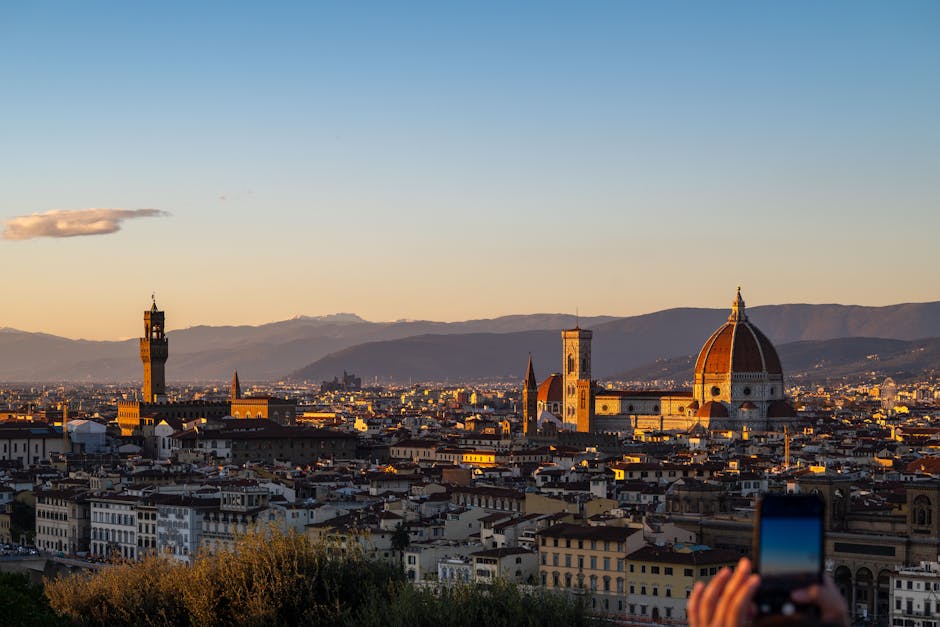
Finish the afternoon with a climb to Piazzale Michelangelo for an unforgettable panorama of the Duomo, the Ponte Vecchio and the whole city. Address: Piazzale Michelangelo, 50125 Firenze FI. The site is accessible 24/7; there is no entrance fee. The climb can be done on foot (about 20–30 minutes from the Ponte Vecchio) or by bus (Line 12, stop « Piazzale Michelangelo »). Sunset from the piazzale is a must—colors over the rooftops and the Duomo silhouette make the perfect final visual memory of a Renaissance immersion.
Practical tips for the day: bring water and a hat in summer; stairs and slopes to Piazzale Michelangelo can be steep. If you want photos without crowds, arrive at the viewpoint 30 to 45 minutes before sunset. For a memorable final dinner, book a table at an Oltrarno trattoria specializing in Tuscan cuisine (near Via Romana or Santo Spirito)—order a bistecca alla fiorentina for 2–3 people, indicative price €40 – €70 depending on cut and sides.
Practical information, transport and local tips
Getting around Florence is easy: the historic center is compact and perfect for walking. Here are useful addresses and information to organize your movements and optimize your immersion.
Transport from the airport
– Amerigo Vespucci Airport (Peretola) — Address: Via del Termine, 50136 Firenze FI. The « Vola in Bus » shuttle to Santa Maria Novella station (Piazza della Stazione, 50123 Firenze FI) takes about 20–30 minutes, fare: about €6 one way. Taxis: fixed fare around €20 – €25, depending on traffic.
– Firenze Santa Maria Novella (SMN) train station: central arrival point; located at Piazza della Stazione, 50123 Firenze FI.
Tickets and passes
– Skip-the-line tickets: Uffizi, Accademia, Duomo — reserve online to avoid long waits.
– Firenze Card: 72 hours of access to main museums (Uffizi, Palazzo Pitti, Accademia, Museo dell’Opera del Duomo) for a variable price (often around €85), valid for 72 hours from first activation. Check if your pace makes the card worthwhile.
Hours and seasons
– High season: May to September — expect larger crowds and book several days ahead.
– Low season: November to February — some exhibitions may be suspended but you’ll enjoy shorter queues and wetter weather.
– Siesta: many shops close between 13:00 and 16:00; museums generally stay open without interruption.
Safety and practical tips
- Watch out for pickpockets in very touristy areas (Ponte Vecchio, train stations, main squares). Use an inside pocket or a zipped bag.
- For church visits, wear respectful clothing (shoulders and knees covered).
- Always book popular restaurants in advance, especially evenings and weekends.
- Get a data plan or a local SIM card so you can access digital tickets and maps in real time.
Finally, leave time to wander aimlessly: it’s often down a side street that you’ll stumble on a small marquetry workshop, a leather shop full of unique finds, or a pastry shop serving a still-warm cantuccio. Those moments are the essence of a Renaissance immersion: not just seeing the art, but living where it was made.

Conclusion
Three days in Florence are enough for a total Renaissance immersion if you combine smart logistics, advance reservations and a willingness to pay attention to details. By following this itinerary you’ll see not only the icons—the Duomo and its dome, the David at the Accademia, the Uffizi’s masterpieces, Palazzo Pitti and the Boboli Gardens—but you’ll also taste the everyday life that keeps the city beating: lively markets, focused artisans in the Oltrarno, family-run trattorie and panoramas that tell the story from the hills.
The secret to a true immersion is to alternate must-sees with contemplative pauses. Climb a dome at dawn to watch Florence wake up, then deliberately get lost in alleys to discover a workshop or a tiny church. Book your main museum entries, but leave room for the unexpected: a temporary exhibition, a chamber concert in a chapel, or a local producers’ market. The city offers a full sensory palette—visual through the artworks, tactile through stone and sculpture, olfactory and gustatory through Tuscan cuisine, and auditory through church choirs and footsteps on the cobbles.
Before you leave, take a final moment at Piazzale Michelangelo at sunset: watch the Duomo’s silhouette emerge, breathe the warm air, and let the feeling of having touched the soul of the Renaissance sink in. Florence isn’t just an open-air museum; it’s a living city where history, art and daily life continue to converse. Take away images, tastes and stories—and perhaps a new perspective inspired by the masters who made this city one of the world’s great cultural capitals.
