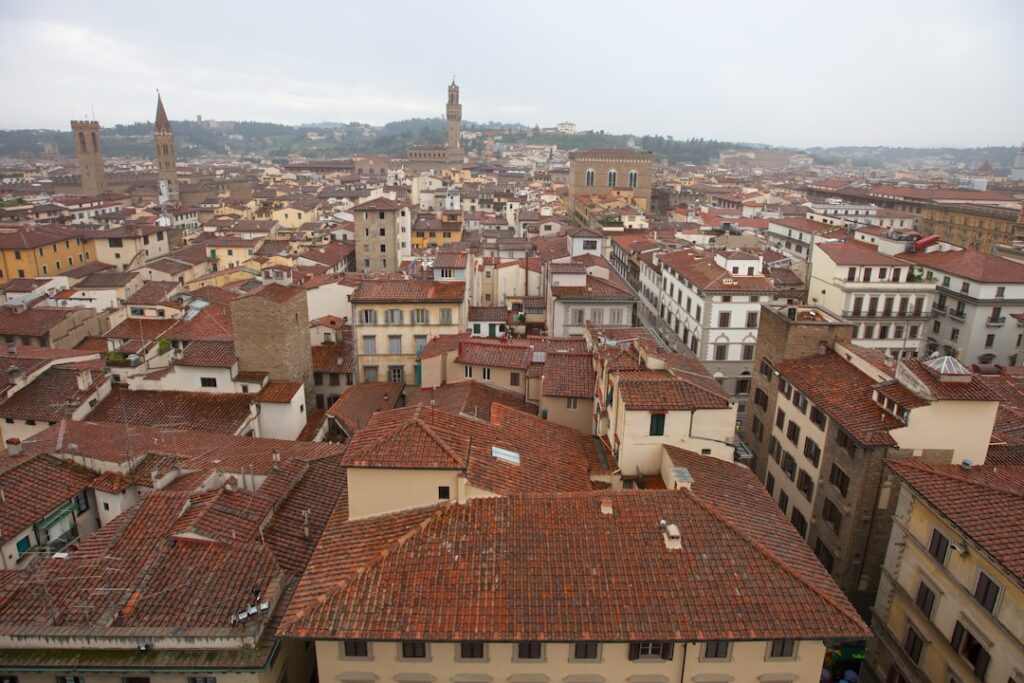






Introduction: A Cultural Immersion in Florence’s Museums
Florence is more than the birthplace of the Renaissance — it’s a living museum where every alley, palace and church tells a story of art, invention and family rivalries. Getting lost in Florence means accepting that around every corner you might find a work that shifts your sense of beauty. The city’s museums concentrate masterpieces in painting, sculpture and urban design — from fragile canvases by Italian masters to polished marbles that seem to breathe. For the patient, curious traveler, visiting Florence’s museums is a string of intense emotions, details to decode and fresh perspectives on geniuses like Botticelli, Michelangelo and Leonardo da Vinci.
This comprehensive guide walks you through the essentials: the Galleria degli Uffizi, the Galleria dell’Accademia, the Palazzo Pitti complex and Boboli Gardens, the Museo dell’Opera del Duomo and other often-overlooked but fascinating institutions. Each section gives the exact address, typical opening hours, approximate price in euros, an immersive description of the collections and practical tips to make the most of your visit — how to avoid crowds, which works you absolutely shouldn’t miss, where to rest between rooms and how to book ahead.
Before you enter the museums, a few basic rules: Florence attracts millions of visitors every year, so online booking is often essential to avoid long lines. Bring comfortable shoes — some routes include worn stone staircases. Note that photography rules vary by museum: some rooms allow photos without flash, others ban cameras entirely. And take the time to absorb: when facing an iconic painting, step back, take in the color and gesture, then move in for a closer look at the brushwork or sculptural finish.
In this guide I offer not only practical information but also sensory approaches for each museum: where to look first, surprising details to seek, small lighting effects that make a sculpture glow, and where to grab lunch without wasting time. Whether you’re a seasoned art lover or a curious traveler, this route will help turn a day of museum visits into a true emotional journey through Florence’s artistic heart.

The Galleria degli Uffizi: The Temple of Renaissance Painters
Address: Piazzale degli Uffizi, 6, 50122 Firenze FI, Italia.
Opening hours: Usually Tuesday to Sunday from 8:15 to 18:50 (closed on Mondays). Some public holidays may affect hours.
Price: Approximate full fare ~€20 (standard entry), online reservations often add about €4 booking fee. Reduced fares for young people, students and certain categories — check the official site.
The Galleria degli Uffizi is arguably one of the most famous museums in the world. Housed in the palace designed by Giorgio Vasari for Cosimo I de’ Medici, the building itself sets the stage for Renaissance grandeur. From the entrance, a long corridor leads to rooms bathed in soft light, designed to showcase the fragility and brilliance of the paintings. Must-see works include Botticelli’s Primavera and The Birth of Venus, Leonardo da Vinci’s Annunciation, and masterpieces by Titian, Raphael and Caravaggio. Each painting carries context — Medici patronage, mythological and religious influences, and exceptional mastery of pigments and glazes.

Visitor tip: book a morning slot to avoid the afternoon crowds. An ideal visit lasts 2 to 3 hours if you focus on the highlights; allow 4 hours or more if you plan to read labels and take breaks. Prefer an audio guide or a themed guided tour (for example: Botticelli and myth) to grasp the connections between works. Note: the room with The Birth of Venus is often packed — view it from the mezzanine or wait for the end of a guided group to enjoy a quieter moment.
 Click here to book your Uffizi Gallery timed-entry with audio guide
Click here to book your Uffizi Gallery ticket with audio guide

Galleria dell’Accademia: The Powerful Presence of Michelangelo
Address: Via Ricasoli, 58/60, 50122 Firenze FI, Italia.
Opening hours: Usually Tuesday to Sunday from 8:15 to 18:50 (closed on Mondays). Hours may vary during temporary exhibitions.
Price: Approximate full fare ~€12 (standard entry), online booking fees often +€4. Reduced rates for young people and specific categories.
The Galleria dell’Accademia lives up to its iconic reputation thanks to its absolute masterpiece: Michelangelo’s David. Seeing David in person is a visceral experience — the statue impresses by scale, anatomical canon and the intensity of its gaze. Michelangelo sculpted this block of white marble to embody strength and contained tension, and the room’s lighting reveals every muscle, tendon and vein. Around David, the gallery displays other works by Michelangelo, Flemish and Italian paintings, and a collection of musical instruments and artifacts connected to the artist’s workshop.

Visitor tip: arrive at opening if David is your priority — souvenir photos often require patience. Many visitors feel a physical reaction before the statue: take time to walk around, study the back finishing, note the hand positions and the poised confidence in the stance. Educational panels at the entrance provide useful context on the original commission and marble-carving techniques.
Other treasures and complementary experiences
- The « Prigioni » (or « Slaves ») by Michelangelo — moving unfinished fragments that reveal the relationship between idea and execution.
- Collection of instruments and paintings — useful to understand Florence’s artistic environment in the 15th and 16th centuries.
- Gift shop and bookstore — great for finding specialist editions on Michelangelo.
Practical: the gallery is compact and often crowded; favor a morning visit outside peak season (November–February) for a more intimate experience. Families will find educational resources, but the approach can be intense for very young children. If you have difficulty standing for long periods, plan breaks at a nearby café or aim for midday when some guided groups move on.
Click here to book your Accademia ticket to see David with audio app
Click here to book your Accademia ticket to see David with an audio guide

Palazzo Pitti and the Boboli Gardens: Courtly Splendor and Private Collections
Address: Piazza de’ Pitti, 1, 50125 Firenze FI, Italia (Palazzo Pitti). Garden access from Piazza de’ Pitti or via Costa San Giorgio.
Opening hours: The palace museums (Galleria Palatina, Royal Apartments) generally open from 8:15 to 18:50; Boboli Gardens hours depend on the season (for example 8:30–18:00 in summer, reduced hours in winter). Check the official site for seasonal schedules.
Price: Combined palace + garden access typically ranges between €16 and €25 depending on options (combined museums, temporary exhibitions). Reduced rates and family tickets available.
The Palazzo Pitti was the main residence of the Medici and later the grand dukes of Tuscany — today it houses several museums and collections: the Galleria Palatina (royal collection paintings), the Royal Apartments (decor and furniture), the Museo degli Argenti (silverware collection), and the Gallery of Modern Art. But the soul of the place is arguably the Boboli Gardens, an exemplary Italian garden where fountains, ancient statues and sculpted groves punctuate the stroll.

Walking the garden, you’ll hear water from the basins, feel the shade of cypresses and discover landscape arrangements that influenced European gardens for centuries. From the Forte di Belvedere or the Bardini Terrace you get spectacular views over the city and the Arno. Inside the palace, richly decorated rooms reveal court life: tapestries, painted ceilings, family portraits and cabinets of curiosities.
Practical tips for your visit
- Start in the gardens early in the morning to enjoy the light and cooler air — the uphill walks can be tiring, but the viewpoints are worth it.
- Buy a combined palace + gardens ticket for savings and simpler planning. Check for partial closures for private events.
- If the weather is bad (rain), focus on the palace’s indoor museums; in good weather, save time for Boboli and Bardini.
The neighborhood around Pitti also has artisan workshops and authentic cafés for a post-visit break. For a more exclusive experience, look for themed guided tours (silverwork, garden themes, frescoes) — these give access to stories often left out of standard routes.
Click here to book your Pitti Palace and Boboli Gardens ticket
Click here to book your Pitti Palace and Boboli Gardens ticket

Museo dell’Opera del Duomo and the Duomo Circuit
Address: Piazza del Duomo, 9, 50122 Firenze FI, Italia.
Opening hours: Usually open every day, typical hours 9:00–19:00, sometimes adjusted seasonally; check the official site.
Price: Combined ticket for the Duomo complex (Opera Museum, Dome, Giotto’s Bell Tower, Baptistery) approx. ~€20–€25. Reduced rates for children and young European residents.
The Museo dell’Opera del Duomo preserves works made for the cathedral Santa Maria del Fiore and the Baptistery: Ghiberti’s original Gates of Paradise, fragments of the marble façade, sculptures by Donatello and wooden models of Brunelleschi’s dome. The museum offers a unique way to understand the timeline of the Duomo building works: you can see the original sculptures removed for conservation, projects and technical details explaining the feat of Florentine architecture.

The museum visit fits ideally into a broader route: climb Brunelleschi’s Dome to appreciate the scale of the project (note: the climb is demanding), then descend to see the Gates of Paradise in the museum and finish with the Baptistery. In the museum, labels explain both religious symbolism and technical innovations — for example, how Brunelleschi solved the challenge of a self-supporting dome without metal armature.
Practical tips for the Duomo circuit
- Book a timed slot for climbing the dome and the bell tower: places are limited and often sold online in advance.
- The climb to the dome includes about 463 steps: allow 45–60 minutes depending on crowding; there is no elevator.
- The museum offers audio guides and explanations in multiple languages; families can opt for adapted tours.
At the end of your visit, stroll around Piazza del Duomo to catch the shifting light on the marble façade at sunset: often the most photogenic moment. If you want to dive deeper, several books on Brunelleschi and Ghiberti’s techniques are available in the museum shop.
Click here to book your ticket to climb Brunelleschi’s Dome
Click here to book your ticket to climb Brunelleschi’s Dome with panoramic views

Small museums and lesser-known gems: Bargello, Museo Galileo and Museo Marino Marini
Beyond the « big names », Florence offers a constellation of more intimate but equally rich museums. Here are three not to miss: the Museo Nazionale del Bargello, the Museo Galileo and the Museo Marino Marini.
Museo Nazionale del Bargello — Address: Via del Proconsolo, 4, 50122 Firenze FI. Typical hours: 8:30–19:00, closed certain days — approximate price €8–€10. Housed in a former palace, the Bargello is the reference point for Italian sculpture: works by Donatello (the bronze David), Verrocchio and Michelangelo. The place’s tighter atmosphere makes it possible to contemplate marbles and bronzes without the crowds of the Uffizi.

Museo Galileo — Address: Piazza dei Giudici, 1, 50122 Firenze FI. Typical hours: 9:30–18:30, approximate rates €10–€12. This science museum displays ancient astronomical and scientific instruments, including globes, telescopes, and measuring devices. For history-of-science enthusiasts, it’s a revelation: discover how observation and instrumentation accompanied the rise of modern science.

Museo Marino Marini — Address: Piazza San Pancrazio, 1, 50121 Firenze FI. Hours and prices vary, approximate rate €6–€8. Dedicated to sculptor Marino Marini, this museum traces the shift between traditional Italian sculpture and 20th-century modernity, offering an interesting dialogue between classical formats and formal experimentation.
General tip for these museums: combined tickets and themed guided tours (sculpture, history of science, modern sculpture) give coherence to your route and often unlock discounts. In every case, check for temporary exhibitions that can reveal unexpected facets of the permanent collections.
Click here to book your Bargello museum ticket
Click here to book your Bargello museum ticket
Click here to book your Museo Galileo ticket
Click here to book your Museo Galileo ticket

General Practical Tips for Visiting Florence’s Museums
Here’s a list of concrete tips to organize your museum stay in Florence effectively:
- Book online: for the Uffizi, Accademia, Duomo and Palazzo Pitti, booking is recommended, especially in high season (April–September).
- Choose morning or late-afternoon slots: fewer people and gentler light.
- Check closing days: many museums close on Mondays or have reduced hours on some public holidays.
- Pack light: small bag, water bottle, comfortable shoes. Crowds and worn stairs demand mobility and stamina.
- Respect photography rules: flash is often forbidden; some works may be photographed at all.
- Consider the Firenze Card: if you plan to visit many museums over 48–72 hours, calculate whether the card is worth it (priority access is often included).
- Take a break: cafés and small trattorie around the museums provide excellent pauses — favor an aperitivo halfway through to recharge energy and focus.
Click here to buy a 5-day pass for Uffizi, Pitti and Boboli
Click here to buy your 5-day pass for Uffizi, Pitti and Boboli

Conclusion: How to Turn Visits into Memorable Experiences
Visiting Florence’s museums isn’t just about collecting Instagram shots of masterpieces: it’s about adopting a pace, a process of domestication. A good visit combines preparation (bookings, quick reading on major works), active curiosity (allow yourself to be surprised by an unexpected room), and pauses to digest what you’ve seen. Prioritize: a few museums explored in depth are better than an exhausting whirlwind of sites. For example, a half-day at the Uffizi followed by a Duomo visit and an evening at Pitti/Boboli offers a logical progression from painting to architecture to court life.
To keep memories vivid, take notes on your impressions, the works that moved you and why. Buy a reproduction or a small book in each museum: a tangible memento that extends the visit. If you travel with a group or family, alternate art sessions with relaxation: a café, a park, a gelateria will help younger or less engaged visitors recharge for the next rooms.
Finally, remember that Florence evolves: temporary exhibitions, restorations and rearrangements can change the experience from year to year. Check official museum websites for the most accurate information (prices, hours, temporary shows) and don’t hesitate to hire a local guide for a contextualized view that blends art history, anecdotes and studio secrets. That way your visits will be not only informative but deeply personal — and you’ll leave with memories that resonate long after you return home.
