





Introduction
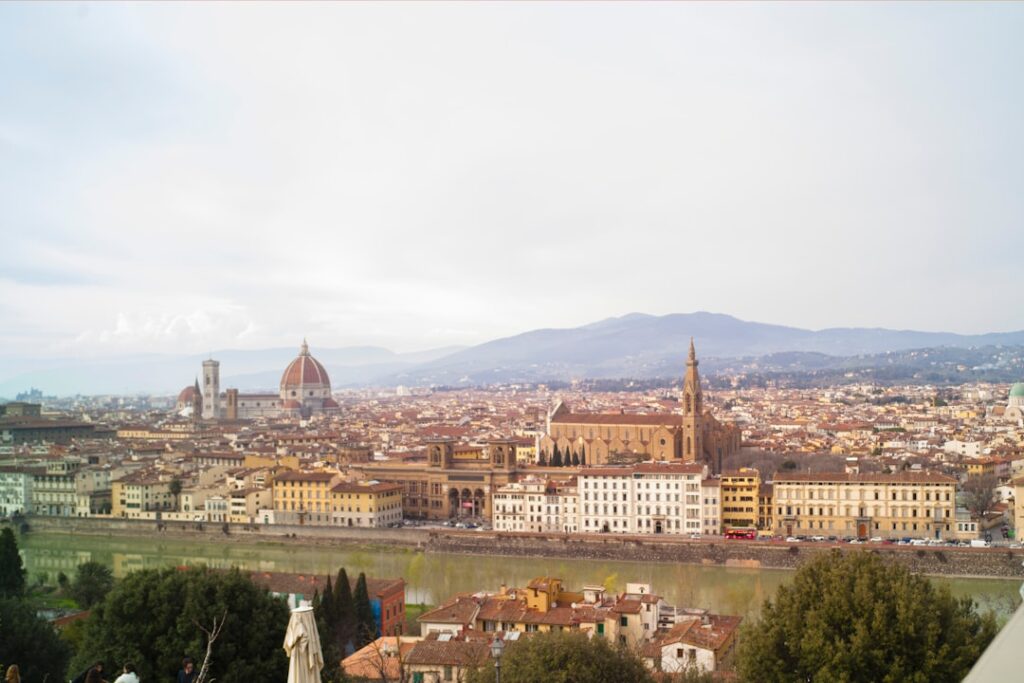
Florence, the cultural capital of Tuscany, embodies the Renaissance like no other city. Wander its cobbled lanes and you’ll find a dense web of artworks, pioneering architecture and palaces that testify to a golden age where art and science met. Themed tours focused on the Renaissance turn a visit into an immersive journey: instead of seeing isolated landmarks, you follow a narrative thread — artists, patrons, architectural innovations, artisan workshops — that reveals the coherence and vitality of this period.
This article lays out itineraries and practical tips to build an in-depth themed visit in Florence, with detailed profiles of the main monuments and museums, exact addresses, indicative prices in euros, opening hours, and local advice to optimize your experience. The thematic approach goes beyond museums: it includes workshops, panoramic viewpoints, lesser-known churches and the gardens that inspired artists. Whether you’re passionate about Michelangelo, Botticelli, Brunelleschi or the patron families like the Medici, the routes below give you a rich, contextualized way to read the city.
The Florentine Renaissance was many things: engineering (Filippo Brunelleschi’s dome), sculpture (Michelangelo), painting (Sandro Botticelli, Fra Angelico), but also social organization (guilds, banks) and artisanal know-how (goldsmithing, leatherwork, mosaics). A themed tour will help you spot connections — for example how the Medici family funded key works now on display in the Galleria degli Uffizi and the Palazzo Pitti, or how structural innovations made the rise of Santa Maria del Fiore possible. The routes below detail must-see stops, options to dig deeper into each theme, ticket-purchasing tips and crowd-avoidance hacks.
Finally, this article includes practical recommendations: the best time to visit each site, alternatives when a place is fully booked, useful local transport (tram T1, ATAF lines), where to enjoy a bistecca alla fiorentina after a long day, and how to savor night views when light turns stone to gold. Read through these sections to compose your own themed itinerary and get ready to experience Florence not just as an open-air museum but as a living city where the Renaissance still inspires.
La Cattedrale di Santa Maria del Fiore e il complesso de l’Opera del Duomo
Start any Renaissance-themed visit at Florence’s spiritual and technical heart: the Cattedrale di Santa Maria del Fiore (the Duomo). Address: Piazza del Duomo, 50122 Firenze, Italia. The site includes several distinct but related elements: the Cathedral itself, Brunelleschi’s dome (la Roccia), Giotto’s Campanile, the Baptistery of San Giovanni and the Museo dell’Opera del Duomo.

Filippo Brunelleschi’s dome (the competition won in 1418) marked a technical turning point: for the first time since antiquity a self-supporting dome was built without a full wooden centering. The visitor route lets you climb up to the lantern via a narrow staircase (be prepared for a physical workout). The Opera del Duomo ticket covers access to the Museo dell’Opera, the dome climb, the Baptistery, the Campanile and the cathedral (depending on the formula). Indicative price: €18.00 (full price, undated, online booking recommended; prices may change).
Opening hours (indicative): Cathedral — typically 10:00–17:00 (hours vary with season and religious celebrations); Museo dell’Opera del Duomo — often 09:00–17:30; Campanile di Giotto — 08:15–19:00; Baptistery of San Giovanni — 08:15–10:15 and 11:15–19:15 (check the official site for special closures). Note the cathedral can close temporarily for religious services.
Immersive description: standing on the square, the polychrome façade of white, green and pink marble grabs your eye. Inside, the central nave reveals stained glass and frescoes, but it’s the climb to the lantern that gives a visceral sense of Renaissance engineering: pass through workshops, small windows, and suddenly face the painted inner hemisphere by Giorgio Vasari and Federico Zuccari. Giotto’s Campanile offers a different vantage point: a succession of sculpted levels and, from the top, a brilliant view over Florence’s roofs and the dome itself.
Practical tips: book well in advance in high season; buy the combined ticket online to choose a time slot. Climb early to avoid queues and the heat in the stairwell. Large bags may be refused on the ascent; dress appropriately for the cathedral (shoulders and knees covered). Arrive at Piazza del Duomo 15 minutes before your reserved slot. The Museo dell’Opera is excellent for understanding the construction process and seeing original fragments (portals, sculptures) removed for conservation.
 Click here to book your ticket to climb Brunelleschi’s dome
Click here to book your ticket to climb Brunelleschi’s dome
Galleria degli Uffizi and the pictorial story of the Renaissance
The Galleria degli Uffizi is one of the world’s foremost museums for understanding Renaissance painting. Address: Piazzale degli Uffizi, 6, 50122 Firenze FI, Italia. Opening its rooms filled with masterpieces, the Uffizi trace the stylistic development of Florentine painting from the International Gothic to the mature achievements of the 15th and 16th centuries.

Highlights include: The Birth of Venus (Sandro Botticelli), Primavera (Botticelli), works by Leonardo da Vinci, drawings and paintings by Michelangelo, Raphael and Titian. A thematic route can be organized around workshops: watch how Botticelli stylizes figures and uses line, then move to Leonardo for a more scientific approach to perspective, sfumato and anatomy.
Indicative prices: standard online tickets around €20.00–25.00 (varies with exhibitions and season; reservation supplements often apply). Opening hours (indicative): usually 08:15–18:30, closed on Mondays. Temporary exhibitions may affect hours or require a separate fee.
Immersive description: the Uffizi rooms follow a historic and thematic logic; the long gallery overlooks the Arno and the view from certain windows is almost as rewarding as the paintings. Take your time in front of a work and you’ll notice details missed in a quick pass — the rendering of fabric, the treatment of hair, botanical symbols, the interaction of characters. Labels and audio guides are valuable for spotting restorations, attributions and connections with patrons like the Medici.
Practical tips: book timed tickets online well ahead, especially in July–August. Favor an early-morning or late-afternoon visit to avoid crowds. If you’re doing an artist-focused themed visit, note the rooms where their works are displayed and dedicate time for concentrated viewing. The Uffizi can be tiring: plan a coffee break at the museum café or a stroll across the Ponte Vecchio after your visit.
Click here to book your ticket for the Uffizi Gallery
Click here to book your ticket for the Uffizi Gallery
Galleria dell’Accademia, Michelangelo and sculpture reborn
For a route centered on sculpture and Michelangelo’s genius, the Galleria dell’Accademia di Firenze is unmissable. Address: Via Ricasoli, 58/60, 50122 Firenze FI, Italia. The star of the show is, of course, Il David, the monumental statue carved by Michelangelo Buonarroti between 1501 and 1504.
Indicative price: standard ticket around €12.00 + variable booking fees; reductions for youth/students. Opening hours (indicative): 08:15–18:50, closed on Mondays (check the official site for temporary exhibitions and holiday closures).
Immersive description: standing before David, you feel the physical and emotional impact: the contrapposto stance, the muscular tension and the concentrated expression convey a fusion of anatomical study and heroic sensibility. The museum also houses works by artists contemporary to Michelangelo, paintings and an important collection of artist plasters and tools. Don’t miss the rooms dedicated to workshop sculptures and Michelangelo’s unfinished pieces — they reveal his methods and the transition from raw block to finished form.
Practical tips: book a timed ticket for a specific slot; avoid peak hours (11:00–15:00). The museum gets noisy in high season due to tour groups; a morning visit offers a more contemplative experience. For a deeper dive, combine the visit with Casa Buonarroti (Via Ghibellina, 70), where drawings and personal items of Michelangelo are displayed.
Click here to book your ticket for the Accademia Gallery
Click here to book your ticket for the Accademia Gallery
Palazzo Vecchio, Piazza della Signoria and civic power
The Palazzo Vecchio and Piazza della Signoria embody Florence’s civic power during the Renaissance. Address: Piazza della Signoria, 50122 Firenze FI, Italia. The palace serves as both a museum and the historic seat of municipal institutions.
Indicative price: museum ticket around €12.00–16.00 depending on route (navigable rooms, towers, temporary exhibitions). Opening hours (indicative): 09:00–19:00 (hours may vary by season and events). The route includes the Arnolfo Tower (stair access may be paid or included depending on ticket), the private apartments, the Sala dei Cinquecento and richly decorated rooms by Vasari.
Immersive description: Piazza della Signoria is an open-air museum: copies and originals (moved indoors) punctuate the square — the replica of David, the Fountain of Neptune and Benvenuto Cellini’s Perseus group. Entering Palazzo Vecchio means stepping into a space where architecture stages power; the frescoes, ceremonial rooms and the lord’s apartments show how art was used to legitimize authority and celebrate political victories.
Practical tips: climb the tower for panoramic views of Florence — a great photo spot early in the morning or at sunset. Check for official events: some rooms can be closed for receptions. Use the audio guide to understand political symbolism and spot Vasari’s interventions. After the visit, cross Via dei Leoni to reach the Uffizi or the Ponte Vecchio within minutes.
Click here to book your ticket for Palazzo Vecchio
Click here to book your ticket for Palazzo Vecchio
Palazzo Pitti, Giardino di Boboli and the patrons’ itineraries
The Palazzo Pitti and the Giardino di Boboli offer a view of the late Renaissance and the evolving taste of Florence’s great patrons, especially the Medici family and the Grand Dukes of Tuscany. Address: Piazza de’ Pitti, 1, 50125 Firenze FI, Italia. The complex includes several museums (Galleria Palatina, Galleria d’Arte Moderna, Museo degli Argenti) and gardens overlooking the Arno.

Indicative price: combined museum + garden ticket around €16.00–20.00; gardens alone around €10.00. Opening hours (indicative): Palazzo Pitti 08:15–18:50; Boboli 08:15–18:30 (may vary by season). Check for closures and temporary exhibitions.
Immersive description: Palazzo Pitti is less focused on a single narrative than on a collection built over centuries of power; the Galleria Palatina displays portraits, mythological scenes and decorative ensembles that reflect princely taste. The Giardino di Boboli, with its geometric paths, antique statues and artificial grottos, is a living laboratory of landscape design that influenced royal gardens across Europe. From the garden terrace, the view of the Duomo and Ponte Vecchio reveals Florence’s cultural geography.

Practical tips: combine an interior visit with a garden stroll for a full day. Bring water and a hat in summer — shaded areas are limited. The gardens are perfect for watching light on façades and taking photo breaks. Some sections of the Palazzo Pitti may require separate tickets (silverware, historic costumes).
Click here to book your ticket for Palazzo Pitti and Boboli
Click here to book your ticket for Palazzo Pitti and Boboli
Themed itineraries, workshops and local tips
A city like Florence lends itself to many thematic angles: “Renaissance Architecture and Engineering,” “Workshops and Artistic Production,” “The Medici and Cultural Policy,” or “Religious Iconography and the Reform of Images.” Here are concrete proposals and tips for organizing them.
Itinerary 1: Brunelleschi and engineering
- Morning: Museo dell’Opera del Duomo (Piazza del Duomo, 50122) — explore models and tools.
- Midday: climb Brunelleschi’s dome (reservation required).
- Afternoon: visit the Biblioteca Medicea Laurenziana (Piazza San Lorenzo, 9, 50123 Firenze) for old plans and drawings.
These sites let you study construction techniques, structural calculations and the innovation of the double dome. Book slots outside peak hours for a better experience.
Itinerary 2: Painting and workshops
- Morning: Galleria degli Uffizi (Piazzale degli Uffizi, 6) — Botticelli, Leonardo.
- Midday: visit a restoration lab (often accessible by appointment).
- Afternoon: visit the Museo di San Marco (Piazza San Marco, 3) for Fra Angelico and the painted cells of the monks.
Complement this with a hands-on workshop: some schools offer half-day tempera or fresco classes. Great for understanding materials and the production chain between master and workshop.
Click here to reserve a spot at the jewelry atelier
Local practical tips
- Buy dated online tickets for the Uffizi, Accademia and Opera del Duomo to avoid endless queues. Official sites are generally cheaper than resellers.
- Consider the Firenze Card if you plan to visit many museums in 72 hours: indicative cost €134.00 (check official rates before purchase). The pass sometimes includes skip-the-line reservations depending on current terms.
- Transport: Florence is very walkable; for longer hops use the tramvia T1 (central) or ATAF buses. Taxis are expensive; prefer walking or a folding bike to cross the historic center (many streets have traffic restrictions).
- Eating: try a bistecca alla fiorentina — indicative price for a dish for two in a reputable trattoria: €40–80 depending on cut and season. For a sweet break, taste a craft gelateria near the Duomo.
- Safety: Florence is generally safe; watch your belongings in very touristy areas and avoid aggressive street vendors. Quiet windows for photos: early morning (06:30–09:00) or late afternoon.
Finally, for a deeper experience, book themed guided tours with art historians or specialist guides — they provide reading keys and anecdotes that labels don’t offer.
Conclusion
Florence reads like a big book of the Renaissance: each façade, square and museum is a page that, read in order and context, reveals an era of cultural and technical innovation. Themed tours turn the city into a narrative route where connections between artists, patrons and institutions gradually unfold. From the Duomo and its technological achievement, through the pictorial galleries of the Uffizi, Michelangelo’s monumental sculpture at the Accademia, to the patrons’ palaces and gardens, you build a living story.
Favor preparation: book dated tickets, choose morning slots to enjoy the soft light on the marbles and to avoid crowds, and complement visits with workshops and lesser-known museums for a fuller picture. The addresses and hours provided here will help plan your route, but always check official museum sites for last-minute changes, holidays or liturgical closures.
Finally, open yourself to the sensory experience: the texture of marble, the smell of leather in an artisan workshop, the panorama from Boboli terrace at sunset, and the flavors of rustic Tuscan cuisine. These elements round out the intellectual understanding and make your immersion in the Florentine Renaissance truly memorable. Florence doesn’t just display the Renaissance: it lives it, breathes it and shares it. Enjoy your trip and happy discoveries tracing the masters’ footsteps!
