


Introduction
Florence is a city where history, art and faith reveal themselves on every street corner. Fringed by the Arno, the historic heart of the Tuscan city stretches out in a sequence of bridges, squares and façades that make the dialogue between civic architecture and sacred buildings visible. A cultural walk along the Arno isn’t just a scenic stroll: it’s an invitation to step inside, often into the half-light of a nave, to discover hidden chapels, forgotten frescoes, glittering altarpieces and the way the river’s light sculpts stone and polychromy. This route brings together churches that either sit directly on the Arno or in the neighborhoods immediately bordering it, especially the Oltrarno — the craftsmen-and-workshops quarter facing the historic center — a perfect spot to feel the authentic spirit of Florence.
Contenu de l'article
The walk can start on the north bank and head toward the Oltrarno, or the other way around. Each church has its own story, often tied to a confraternity, a patrician family or a workshop of famous artists such as Masaccio, Bronzino or Pontormo. You’ll find Renaissance and Baroque masterpieces, along with medieval and Romanesque traces. Some churches are famous for particular chapels — internationally renowned — while others charm with their intimacy and modest details: reliquaries, ex-votos, wooden panels, marquetry altars. For the curious traveler, the combination of Arno views and interior visits gives a complete reading of Florence’s cultural landscape.
This article offers a structured route, with exact addresses, practical information (opening hours and prices), immersive descriptions of each building and local tips to make the most of your visit (best times to go, transport, dress code, combined ticket options). Practical details here reflect common practices in Florence, but it’s always recommended to double-check hours and prices before you set out, especially during religious holidays or cultural events that can change opening times. Finally, the walk doesn’t forget the pleasure of food stops: historic cafés, modest trattorie and tiny gelaterie hide in the laneways along the route, offering welcome breaks between visits.
Whether you’re a lover of sacred art, a photographer chasing the ideal light on façades or simply a wanderer drawn to the river’s atmosphere, this walk will guide you through seven must-see churches that each, in their own way, tell the intimate story of Florence’s relationship with the Arno.
 Click here to book your ticket to see the David

Basilica di Santa Felicita — Facing the Ponte Vecchio
Address: Piazza di Santa Felicita 6R, 50125 Firenze
Opening hours: Generally 9:30 – 18:30 (closing times vary for services)
Price: Free entry to most areas; guided access to the Bronzino/Pontormo Chapel possible from €3 to €6 depending on the circuit.
The Basilica di Santa Felicita is one of Florence’s oldest churches, sitting literally opposite the Ponte Vecchio on the Oltrarno bank. Its simple layout hides pictorial treasures, notably works by the Mannerist Jacopo Pontormo (the “Madonna with Child and Saints” and the frescoes of the Cappella Capponi), which transform the interior into a theatre of subtle colors and suspended emotion. Upon entering, you immediately feel the Arno’s influence: light from the side windows changes throughout the day, bringing out the pinks and blues of the paintings.
The Capponi Chapel is a must for lovers of Mannerist painting; Pontormo painted floating figures and a composition that breaks with the conventions of classical Renaissance art. If you’re a photographer, aim for late afternoon when the low light enhances the angels’ reliefs and the glow of the gilding. Note: access to the chapel may require a small fee and can be limited to certain time slots. A short guided visit often provides insights on recent restorations and the workshops responsible for the interventions.
Practical tips:
- Arrive early in the morning to avoid the crowds on the Ponte Vecchio and enjoy the façade in soft light.
- Respect mass times (check the schedule posted at the entrance): some chapels close during services.
- Dress appropriately (shoulders and knees covered) — bring a light shawl if it’s warm.

Chiesa di Santo Stefano al Ponte — In the Shadow of the Ponte Vecchio
Address: Piazza Santo Stefano, 50122 Firenze
Opening hours: Generally 10:00 – 17:30; times may vary for events and services
Price: Free entry, donations appreciated; occasional guided visits €4 – €8.
The Chiesa di Santo Stefano al Ponte is tucked at the foot of the Ponte Vecchio, between the tourist bustle and the lanes that lead to the Piazza della Signoria. Despite its central location, the church retains a surprisingly contemplative atmosphere. The interior is elegant, typical of later reworkings after medieval sieges, with richly decorated side altars and a series of paintings depicting episodes from the life of Christ and patron saints.
The church’s position makes it an ideal first stop on a walk along the Arno’s north bank: it’s easily reached after watching the jewelers’ comings and goings on the Ponte Vecchio. The forecourt offers a rare perspective: on one side you have the sober façade; on the other, the Arno spreading its golden reflections. For a more intimate experience, seek out the quiet moments between services, when light filters through the stained glass and paints colored patterns on the wooden pews.
Practical tips:
- Use the church forecourt for photos of the river and bridge before going inside.
- If you’re short on time, visit during off-peak hours (11:00–14:00 or after 16:00).
- Check the information panels in Italian and English usually available at the entrance to learn more about the iconography.
Click here to book your ticket for the Palazzo Vecchio
Basilica di Santa Maria del Carmine — The Brancacci Chapel
Address: Piazza del Carmine 14, 50125 Firenze
Opening hours: Brancacci Chapel: generally 10:00 – 17:00; church: variable, often 9:00 – 18:00
Price: Entry to the Cappella Brancacci: around €5 – €10 (prices vary, sometimes included in combined tickets).
The Basilica di Santa Maria del Carmine, in the Santo Spirito neighborhood, is best known for the Cappella Brancacci — one of the jewels of Renaissance painting. The frescoes by Masaccio and Masolino, later continued by Filippino Lippi, depict scenes from the life of Saint Peter and mark a stylistic revolution: innovative perspective, naturalistic figures and dramatic staging. The Cappella Brancacci is often described as “the chapel that changed painting” for its role in spreading new techniques of representation.
The church itself was altered after floods and historical events; nonetheless, the impact of the frescoes remains intact. When you visit, give yourself time to stand in the middle of the chapel and observe the play of cast shadows, the use of chiaroscuro and how the painters structured scenes almost like cinematic tableaux. Groups and audio guides are common, but the atmosphere is usually respectful enough for a contemplative visit.
Practical tips:
- Book in advance for the Cappella Brancacci during high season — entry numbers can be limited.
- Allow at least 45 minutes if you want to read the panels and listen to audio commentary.
- After the visit, walk to the Lungarno to see the Arno from the small bridge opposite the church — ideal at sunset.
Chiesa di Ognissanti — Brotherhoods and Masterpieces
Address: Piazza Ognissanti, 50123 Firenze
Opening hours: Usually 9:00 – 18:00; check holidays and mass times
Price: Free entry to the church; donations welcome and private guided tours from €5 to €12.
The Chiesa di Ognissanti, located slightly back from the Arno’s north bank, has strong historical ties to religious orders and some Florentine families. The long, bright nave contains side chapels housing paintings and sarcophagi. One major draw is works by Ghirlandaio and Domenico Veneziano, as well as tombs adorned with metalwork.
Visiting Ognissanti helps you see how religious communities adapted to Florence’s urban fabric: large spaces for worshippers, richly endowed private chapels, and decoration meant to teach the Gospel through images. The atmosphere is often less touristy than in the immediate center, making the experience feel more authentic. Outside, Piazza Ognissanti is lined with cafés where it’s pleasant to enjoy an espresso after your visit.
Practical tips:
- Pick up the explanatory brochures often available in several languages at the entrance.
- If you’d like to attend a service, check in advance: schedules can change due to special events.
- The square is a good place to observe local life: traditional craftsmen and shops are nearby.

Chiesa di Santo Spirito — The Soul of the Oltrarno
Address: Piazza Santo Spirito, 50125 Firenze
Opening hours: Church 7:30 – 19:00 (times vary with services); museum/crypts sometimes paid and open 10:00 – 17:00
Price: Free entry to the church; small access fees for temporary exhibitions or visits to the oratory: €3 – €8.
The basilican Santo Spirito, with a nave layout influenced by Filippo Brunelleschi, is essential for understanding the sobriety and rigor of Renaissance architecture combined with a lively parish life. The large white nave, with its geometric volumes, offers a calm space where you can observe the staging of light and the arrangement of side altars. The Oltrarno, with its artisan workshops, gives the neighborhood a lively atmosphere that complements the visit.
The church often hosts baroque music concerts and contemporary art exhibitions, making it a dynamic place where past and present meet. The cloisters and chapels house quality works, and the bright interior façade creates a sense of uplift toward the choir. From Piazza Santo Spirito it’s easy to access alleys full of leather workshops, jewelers and small traditional trattorie.
Practical tips:
- If possible, attend a late-afternoon concert: the nave’s acoustics are remarkable.
- Cross the square for lunch at a local osteria — ask for Tuscan specialties like pappa al pomodoro or ribollita.
- Visit the workshops around the piazza to watch artisans at work after your church visit.
Click here to attend an evening classical music concert

Basilica di San Miniato al Monte — Panorama and Serenity
Address: Via delle Porte Sante, 50125 Firenze
Opening hours: Generally 8:00 – 18:00 (basilica); sanctuary and terraces accessible depending on weather
Price: Free entry to the basilica; certain areas (crypt, museum) may charge €3 – €5.
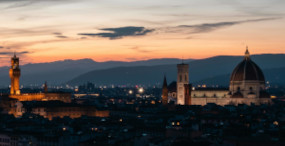
Overlooking Florence, the Basilica di San Miniato al Monte is often cited as one of the finest examples of Romanesque architecture in Tuscany. Perched on the hilltop, it offers not only an interior adorned with mosaics and an intricate marquetry floor, but also one of the most striking views of the Arno and the city as a whole. You can reach it by stairs or by bus from Piazza San Firenze; the climb is worth every step.
The interior, with its round arches, columns and rich marbles, produces a solemn atmosphere that contrasts with the bustle of the center. Gregorian chants and regular services add a spiritual layer to the visit, while the adjacent monumental cemetery, with its cypresses and old tombs, invites quiet reflection. For photographers, the outdoor terrace is a perfect viewpoint at sunrise or during the blue hour.
Practical tips:
- Climb early in the morning to avoid summer heat and enjoy the soft light on the façade.
- Combine the visit with a walk up to Forte di Belvedere or Piazza Michelangelo for complementary panoramas.
- Bring a jacket: the hill can be windy, even in summer.